
 By
By Quick Takeaways:
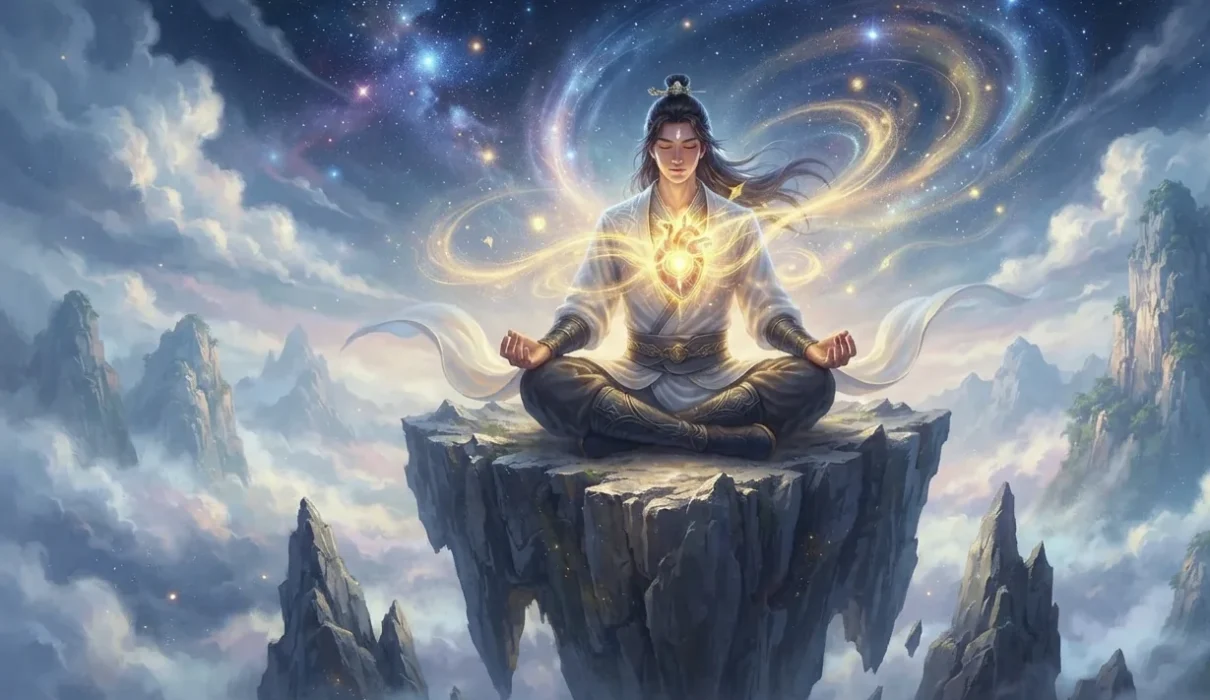
- A Dao Heart, sometimes translated as heart of the Dao, refers to a cultivator’s inner resolve, emotional stability, and genuine self understanding, separate entirely from raw power, realm, or technique
- A cracked or unstable Dao Heart is one of the genre’s most reliable ways to explain why a technically powerful character keeps failing, and it’s usually more interesting than any external villain
- Inner demons and heart demon tribulations are the direct narrative mechanism authors use to test a character’s Dao Heart, and these scenes are frequently the most psychologically revealing in the entire book
- The concept has genuine roots in real Daoist philosophy, specifically the idea of an unperturbed mind capable of remaining stable regardless of external circumstance
- Understanding this one concept explains why so many cultivation protagonists spend chapters meditating on their own doubts instead of just training harder
Dao Heart is the one concept that Western readers misunderstand the most. They often conflate it with willpower. It sounds abstract next to something concrete like qi or a numbered cultivation realm, and that abstraction is exactly why it deserves its own proper explanation.
Once you actually understand what a Dao Heart is doing in these stories, you start noticing it everywhere, and a huge number of plot points that seemed random suddenly make complete sense.
What a Dao Heart Actually Is
Not Power. Not Talent. Something Else Entirely
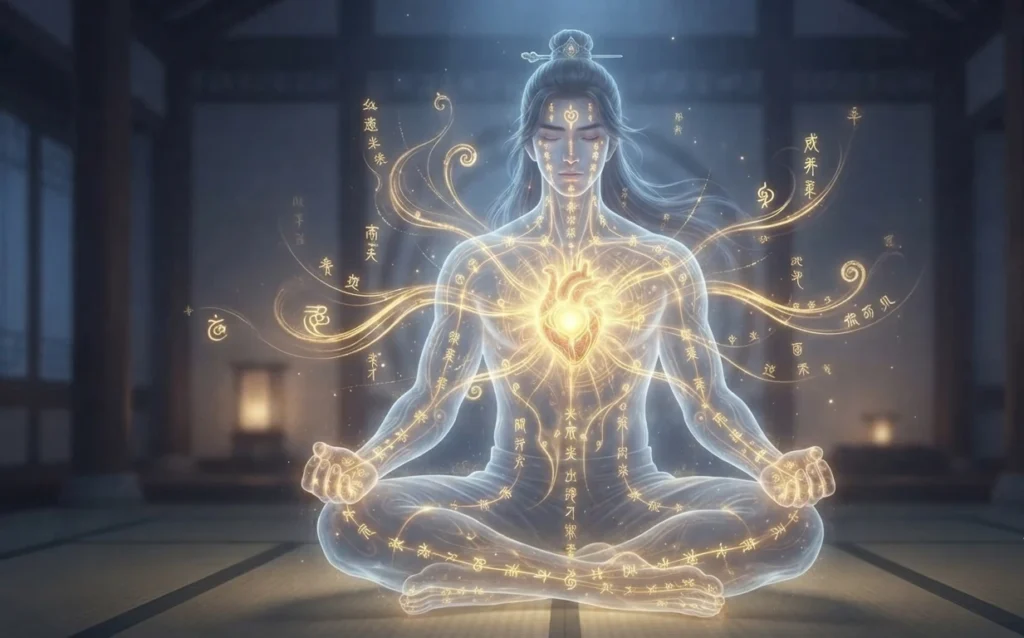
A Dao Heart is a cultivator’s inner resolve, their genuine emotional stability, and their honest self understanding of who they are and what they’re actually pursuing. It has nothing to do with how much qi someone can store, how rare their spiritual root is, or which realm they’ve reached.
You can be extraordinarily powerful and have a genuinely broken Dao Heart at the same time, and the genre treats that combination as a real and dangerous problem rather than a minor inconvenience.
A useful real-world comparison would be two highly skilled surgeons. Both possess identical technical ability, but only one remains calm when a difficult operation takes an unexpected turn. The difference is not knowledge. It is mental stability under pressure. Dao Heart represents that same difference within cultivation fiction.
Why the Concept Exists Structurally
Cultivation novels need some mechanism to stop raw power alone from solving every problem, or the genre would collapse into pure numbers going up with no genuine tension left. Dao Heart gives authors a second, independent axis of growth that doesn’t automatically improve just because a character trains harder or absorbs more qi.
A character can plateau in realm for an entire arc while their Dao Heart genuinely develops instead, through grief, through betrayal, through finally admitting something to themselves they’d been avoiding for hundreds of chapters. That’s often where the best character writing in the whole genre actually happens.
Dao Heart Across Popular Cultivation Novels
Although every author interprets the concept differently, several well known series illustrate how Dao Heart functions in practice.
| Novel | How Dao Heart Is Explored |
|---|---|
| Reverend Insanity | Fang Yuan’s unwavering pursuit of immortality demonstrates extraordinary conviction, even when readers strongly disagree with his morality. |
| I Shall Seal the Heavens | Meng Hao’s motivations evolve repeatedly as his understanding of responsibility and identity matures. |
| A Will Eternal | Bai Xiaochun’s fear of death becomes something he must gradually confront rather than simply escape. |
| Renegade Immortal | Wang Lin’s journey is shaped as much by grief and acceptance as it is by increasing cultivation. |
These stories approach Dao Heart differently, yet they all arrive at the same conclusion. Inner stability ultimately determines whether extraordinary power can be used effectively.
How a Dao Heart Forms
Built Through Genuine Experience, Not Training Montages
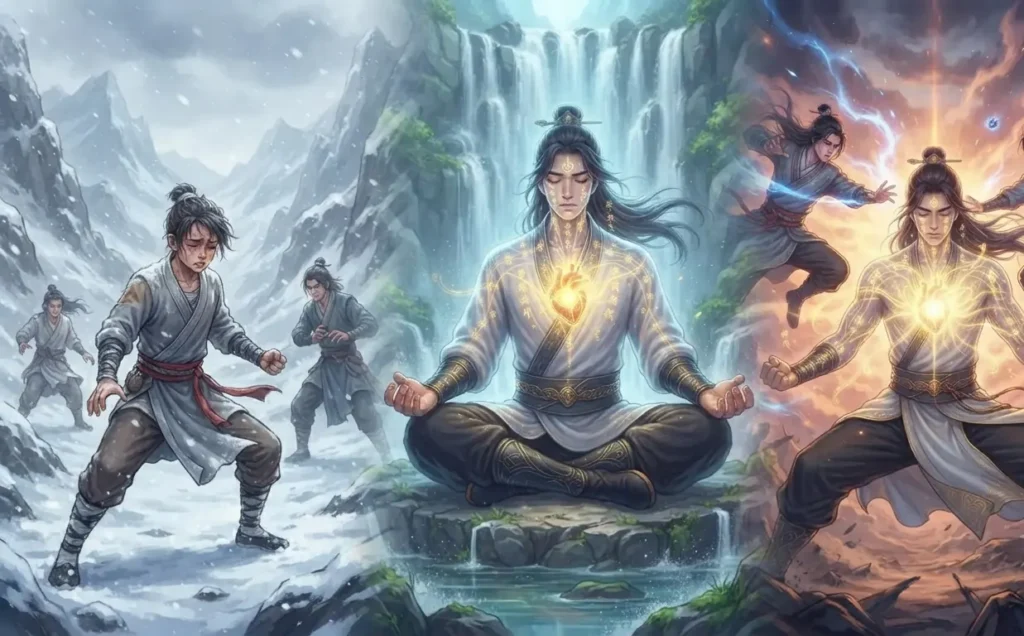
A stable Dao Heart isn’t something a character can simply meditate their way into overnight, and the strongest written cultivation novels are careful about this. It’s usually built cumulatively, through the character genuinely confronting fear, loss, moral compromise, or self doubt and coming out the other side with an honest, settled answer about who they are.
This is why the protagonists readers tend to remember longest usually have a specific formative wound sitting somewhere in their backstory, a betrayal, a death they couldn’t prevent, an early failure that haunted them for years. That wound isn’t just backstory decoration. It’s the raw material their eventual Dao Heart gets forged from, once they actually process it rather than simply suppressing it.
It Can Also Crack
Just as importantly, a previously stable Dao Heart can genuinely crack under new pressure. A character who seemed completely settled in who they are can be shaken by discovering a devastating truth, watching someone they love make an unforgivable choice, or being forced into an action that violates everything they believed about themselves.
This is one of the genre’s more emotionally honest structural choices. Growth in these stories isn’t presented as a permanent, one time achievement. It’s ongoing, and it can be undone by the right kind of blow, which gives even very powerful, very advanced characters genuine vulnerability that raw strength alone can’t protect them from.
Heart Demons and the Tribulation of the Mind
Where the Concept Actually Gets Tested
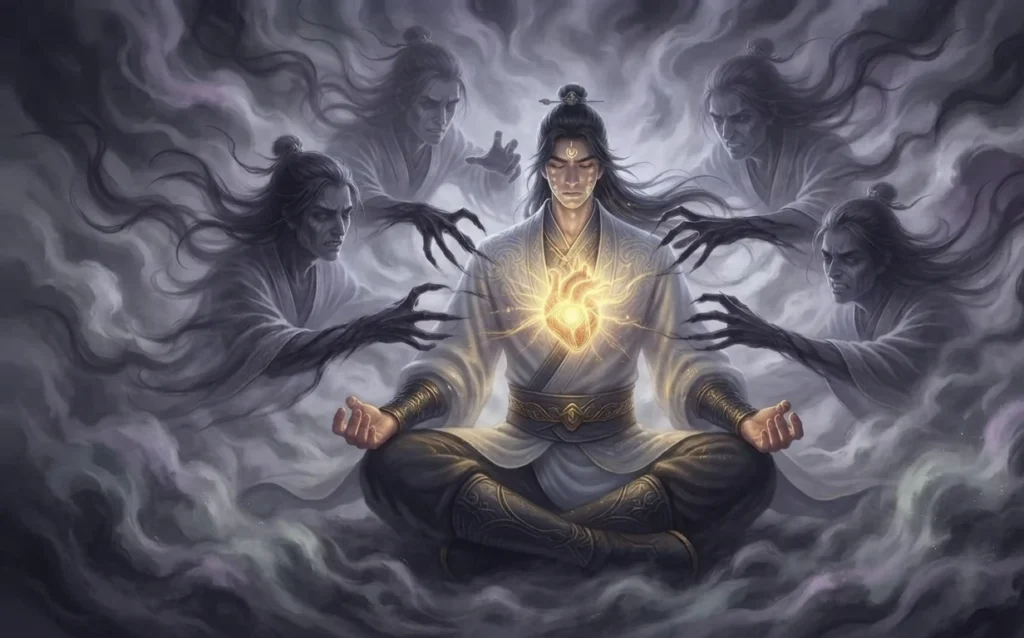
The most direct narrative device tied to Dao Heart is the heart demon, sometimes called an inner demon, a manifestation, often during a specific cultivation breakthrough or a moment of extreme crisis, of a character’s own doubts, fears, and unresolved guilt given a form they have to actually confront.
A heart demon tribulation typically isn’t a fight against an external enemy at all. It’s usually staged as an internal confrontation, sometimes visualized as literally facing down a version of yourself, or a manifestation of your worst memory, that says out loud everything you’ve been refusing to admit.
Failing this kind of tribulation frequently means becoming obsessed, corrupted, or permanently stuck, rather than simply dying the way failing a heavenly tribulation usually does.
Why These Scenes Land So Hard
I’ve read enough of these to have a genuine, specific opinion here. A well written heart demon sequence is often more affecting than any external battle in the same book, because it forces the author to actually articulate what the protagonist has been avoiding admitting to themselves the whole time.
It’s the one place in the genre where plot momentum has to pause completely so the character’s actual psychology can be put directly on the page.
The novels that skip this device or handle it lazily tend to feel noticeably shallower for it, even if their power systems and world building are otherwise excellent. Dao Heart is often the difference between a cultivation novel that’s simply entertaining and one that actually stays with you.
Why an Unstable Dao Heart Caps Everything Else
The Genre’s Built In Power Ceiling
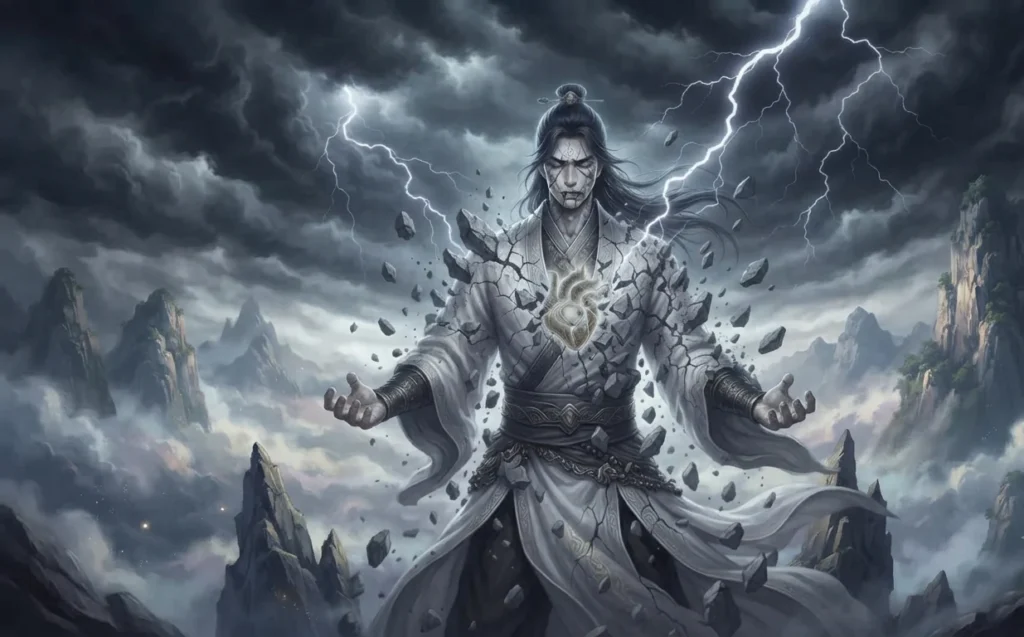
A recurring rule across cultivation fiction is that a character with a genuinely unstable Dao Heart eventually hits a hard ceiling, regardless of talent, resources, or accumulated technique.
Some novels frame this literally, an unstable Dao Heart makes higher realm breakthroughs actively dangerous or impossible to complete safely. Others frame it more subtly, through repeated failure, poor decisions under pressure, or a character sabotaging their own progress without fully realizing why.
Either way, the underlying message is consistent across the genre: raw power without genuine internal stability is a structure without a foundation, and eventually that structure fails at exactly the worst possible moment.
Why This Rule Actually Makes the Fiction Better
This is the concept, more than any other single genre convention, that gives cultivation fiction its genuine emotional depth. Without it, these stories risk becoming pure escalation, bigger numbers replacing bigger numbers with nothing else really at stake.
With it, a protagonist’s honest reckoning with grief or guilt becomes just as important to their eventual strength as any pill, technique, or spiritual root ever could be.
Why Western Readers Often Misunderstand Dao Heart

One reason Dao Heart feels confusing is that many English speaking readers instinctively compare it with willpower. That comparison only goes so far. Willpower suggests pushing through hardship regardless of emotion. Dao Heart is broader than that.
A cultivator with a strong Dao Heart is not someone who ignores grief or fear. They are someone who understands those emotions without allowing them to dictate every decision. Likewise, Dao Heart should not be confused with morality. Cultivation fiction contains heroes, antiheroes, and outright villains with remarkably stable Dao Hearts.
Fang Yuan from Reverend Insanity is perhaps the most famous example. His convictions are horrifying to many readers, but they remain internally consistent. His strength comes from absolute clarity rather than moral goodness.
By contrast, a kind and compassionate cultivator may possess a weak Dao Heart if they constantly abandon their principles whenever life becomes difficult. The genre rewards conviction more consistently than virtue. Understanding that distinction explains many character decisions that otherwise seem irrational.
The Real Philosophy Underneath the Trope
Xin, the Heart Mind
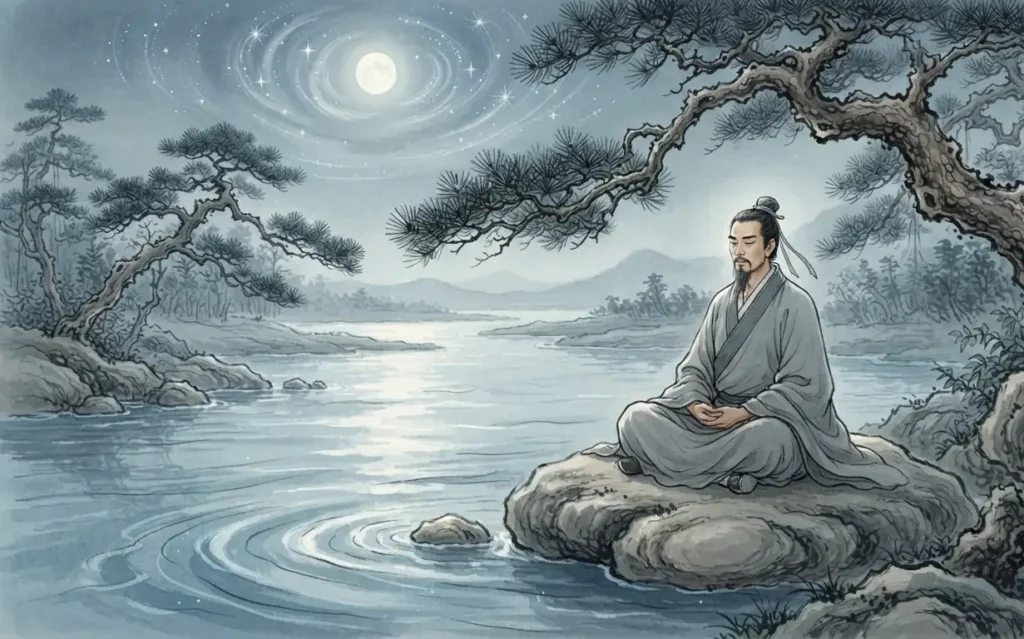
The concept draws directly on xin, 心, a foundational term in Chinese philosophy usually translated as heart mind, since classical Chinese thought didn’t draw the same sharp line Western philosophy often does between emotional feeling and rational thought. Xin refers to the seat of both, the place where genuine understanding and genuine feeling meet and, ideally, align.
A cultivator’s Dao Heart, in this light, is fiction’s dramatized version of a genuinely settled xin, a heart mind that isn’t torn between what it feels and what it knows to be true.
Zhuangzi and the Unperturbed Mind
The Daoist philosopher Zhuangzi wrote extensively about cultivating a mind that remains genuinely settled regardless of external circumstance, famously illustrated through parables about figures who respond to devastating personal loss with calm acceptance rather than despair, not because they don’t feel loss, but because they’ve genuinely made peace with the nature of change itself.
That’s the real philosophical target cultivation fiction is aiming at with Dao Heart, even when it gets dramatized through lightning filled tribulation scenes and literal inner demon confrontations rather than quiet philosophical reflection. The fictional version compresses centuries of genuine Daoist thought about equanimity into something you can actually watch a character fail or succeed at on the page.
Frequently Asked Questions
Is Dao Heart the same thing as cultivation realm?
No. Cultivation realm measures accumulated raw power and qi capacity. Dao Heart measures a character’s genuine inner stability, self understanding, and resolve. A character can be extremely high realm with a genuinely unstable Dao Heart, and the genre treats that specific combination as a real and dangerous problem.
What happens if a character fails a heart demon tribulation?
Consequences vary by author, but common outcomes include becoming obsessed or fixated on the unresolved issue that caused the confrontation, a corrupted or twisted cultivation path, or a permanent stall in growth. Death is less common here than in physical tribulations, since the failure is usually psychological rather than fatal.
Is Dao Heart a real historical or philosophical concept?
The specific term as used in fiction is a genre invention, but it draws directly on xin, the real and foundational Chinese philosophical concept of the heart mind, and on Daoist writing, particularly Zhuangzi, about cultivating a genuinely settled mind unshaken by external circumstance.
Can a Dao Heart be repaired after it cracks?
Yes, in most novels that use the concept seriously. Repair usually requires the character to genuinely confront and process whatever caused the crack in the first place, rather than simply training harder or waiting for time to pass, which is often the actual emotional core of a redemption arc.
Why do cultivation novels spend so much time on internal monologue and doubt?
Because Dao Heart is being actively tested during those passages. What looks like the plot slowing down is usually the author developing the character’s internal stability, which the genre treats as being just as important to eventual strength as any external training sequence or acquired technique.
Final Thoughts
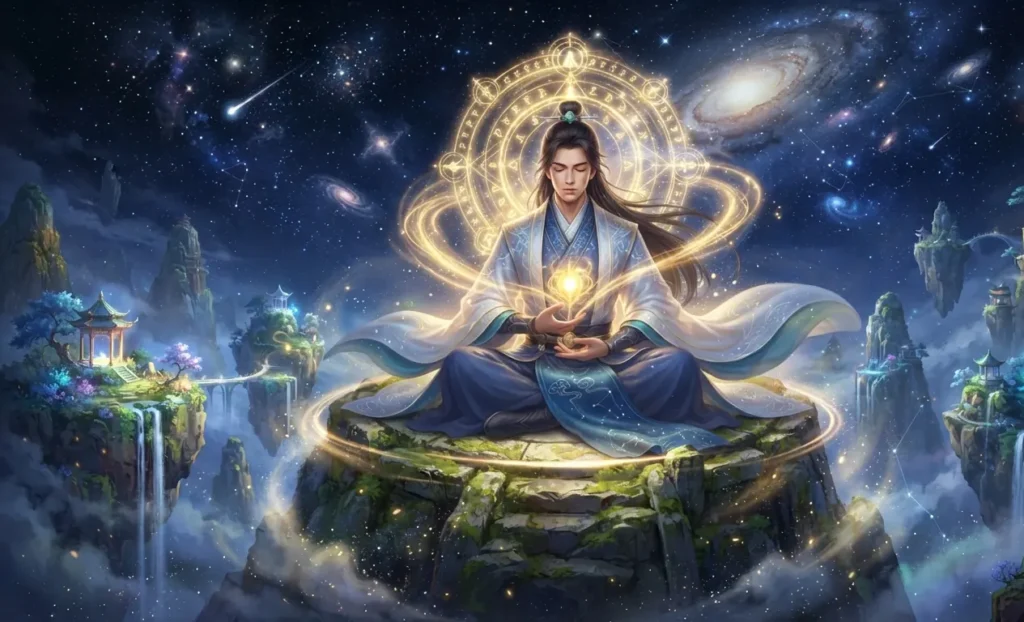
Dao Heart is the concept that keeps cultivation fiction from being purely mechanical, a character’s genuine relationship with their own fear, grief, and self honesty sitting right alongside every pill, technique, and realm breakthrough as something that actually determines how far they can go.
Once you know to watch for it, you’ll start noticing exactly which chapters are quietly doing this work, long before any lightning starts falling or any inner demon shows up to say the thing the protagonist has been avoiding for three hundred chapters.
Related Articles
- Best Xianxia Novels of 2026: From Hidden Gems to Legends
- 13 Best Cultivation Novels With No Harem [2026 Picks]
- 12 Best Cultivation Novels [Ranked by Genre Fans]
- 7 Female MC Cultivation Novels Where the Female MC Shines [2026]
- 9 Best Progression Fantasy Books 2026 [Ranked List]
- 13 Fantasy Genres Ranked: Which One Actually Suits You?
Furthur Reading
- Laozi. Tao Te Ching (Dao De Jing). Translated by D. C. Lau. Penguin Classics.
- Zhuangzi. The Complete Works of Chuang Tzu. Translated by Burton Watson. Columbia University Press.
- Stanford Encyclopedia of Philosophy. “Daoism.” and “Zhuangzi.”
- Stanford Encyclopedia of Philosophy – Heart Mind in Chinese Philosophy
1 Comment