
 By
By Quick takeaways:
- Spiritual roots (linggen) are the innate channels in a cultivator’s body that determine elemental qi affinity and absorption speed
- Fewer elements in your root means higher purity and faster cultivation – a single root beats a five-element root every time
- Talent grades run from heavenly (rarest) to waste (most common) – and most xianxia protagonists start at the bottom
- The “trash talent” origin is a story engine, not just a trope – it creates social stakes before the first fight scene
- Many series subvert the system with hidden or mutant roots that standard tests cannot detect
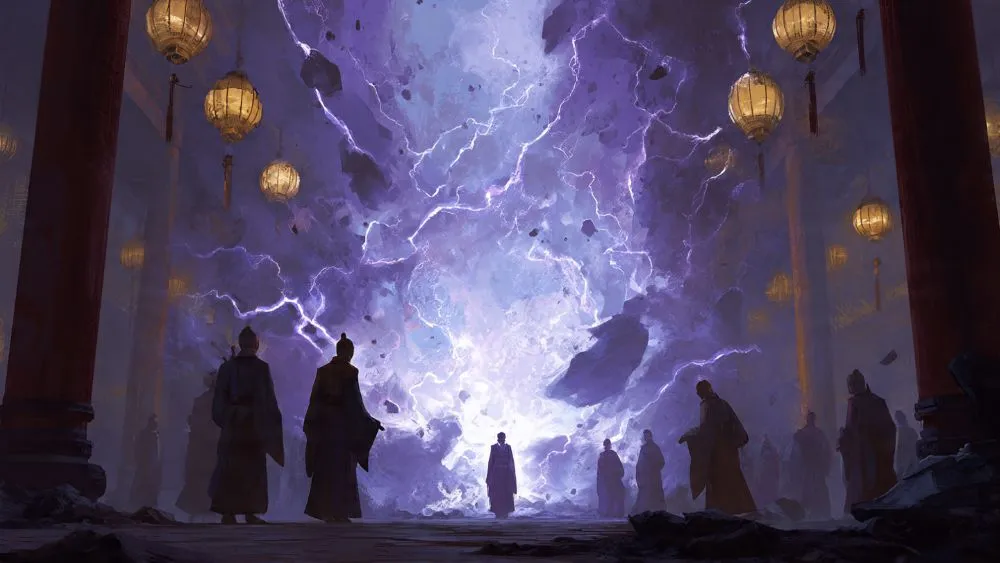
A young teenager stands before their clan elders, palm pressed to a testing stone. The room holds its breath. The stone glows, or fails to glow, and in that single moment, the rest of their life is decided. I have read that scene across dozens of xianxia novels over years, and it still lands every single time. Not because it is surprising, but because the stakes underneath it are so clearly drawn.
Spiritual roots are the system that gives that scene its weight. They are the foundational talent mechanic of the xianxia genre. The thing that determines who gets a place in a powerful sect, who gets premium cultivation resources, and who gets left behind.
Understanding how they work is the key to understanding why so many cultivation stories are structured the way they are.
What spiritual roots actually are
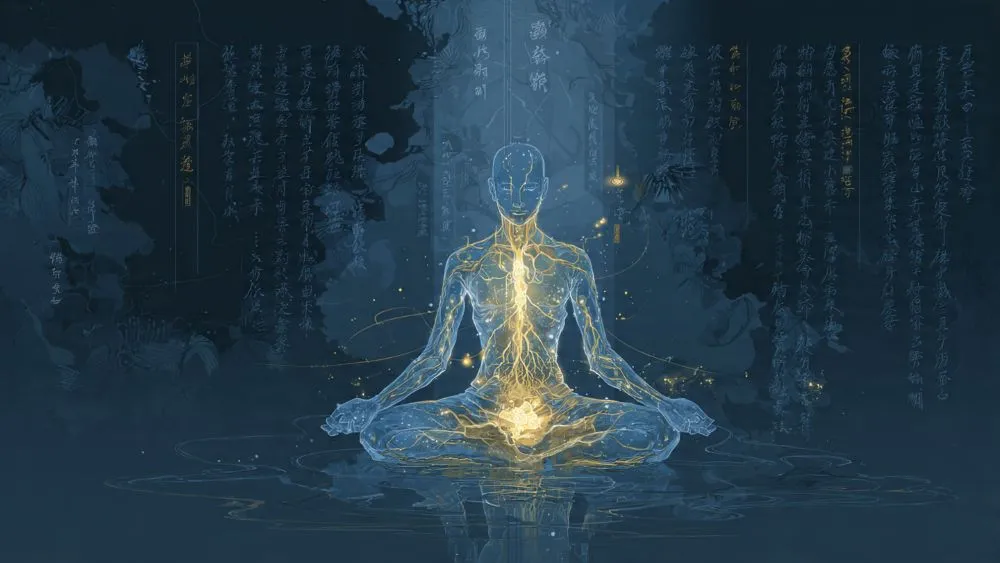
Spiritual roots (靈根, líng gēn) are the innate channels within a cultivator’s body that allow them to absorb, refine, and circulate elemental qi. Think of them as a built-in filtration system, some people’s filters are wide open and clean, others are clogged with the wrong mesh, and some have no filter at all.
The concept draws on the Chinese cosmological framework of the Five Elements: Metal, Wood, Water, Fire, and Earth. A cultivator born with a fire-aligned root draws in fire-natured qi with almost no resistance.
Their techniques grow stronger, their breakthroughs come faster, and their combat abilities naturally lean toward heat, combustion, and destruction. The root is not just a power measurement. It shapes the entire direction of someone’s cultivation path.
What makes this system interesting is the pure logic underneath it. A cultivator with a single pure root is considered elite not because they have access to more elements, but because every drop of Qi they absorb goes into one channel without dilution.
A five-element root sounds impressive, five affinities instead of one, but in practice, it means the absorption is split five ways, with each element weaker and slower than a specialist’s single channel.
Reader’s note: When I first started reading Coiling Dragon, I genuinely assumed five-element roots were the best outcome. More elements, more options seemed logical. It took a few novels before the specialist versus generalist logic clicked. A fire-root cultivator at peak fire comprehension will outpace a five-element cultivator in raw power output almost every time. The five-element root becomes useful only in very specific scenarios, usually when a story deliberately balances the secret to something greater.
The talent grade spectrum
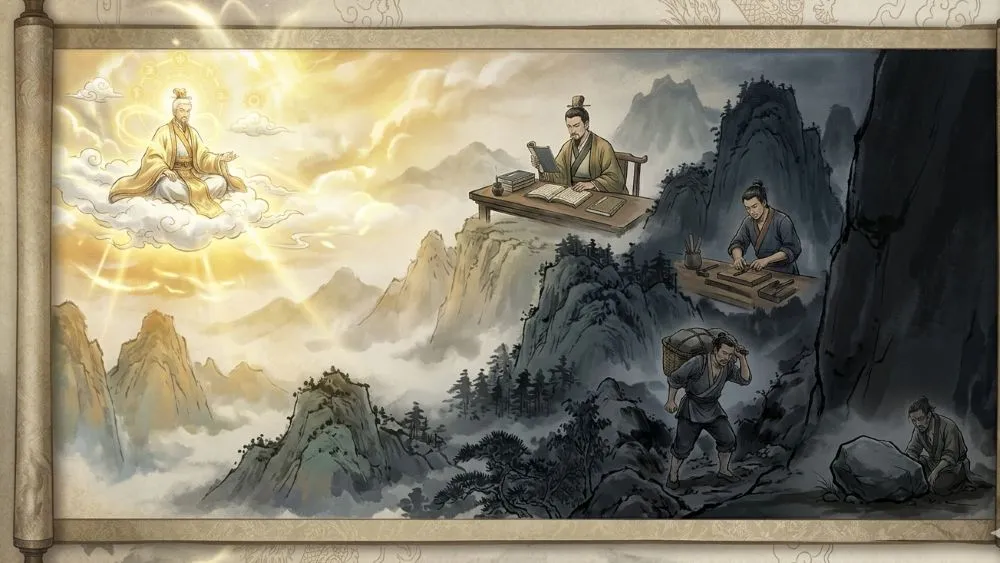
Most xianxia series that feature spiritual roots also attach a grading system. The names vary, some use colors, some use numbers, some invent their own terminology, but the underlying logic is consistent. The most common framework, drawn from the classical I Ching hierarchy, runs as follows.
| Grade | Rarity | Cultivation ceiling | Sect standing | Story role |
|---|---|---|---|---|
| Heaven | Extremely rare | Immortality likely | Actively recruited; treated as generational talent | Prodigy rivals the protagonist must eventually surpass |
| Earth | Rare | Nascent Soul and beyond realistic | Welcome as inner disciples; receive premium resources | Talented side characters, friendly rivals, most sect elders |
| Black | Uncommon | Progress stalls in mid to late stages | Accepted as outer disciples; limited investment | Background cultivators, early chapter antagonists |
| Yellow | Common | Hard ceiling in early to mid stages | Assigned grunt roles; rarely trained seriously | Minor antagonists, cautionary figures |
| Waste or None | Most common | Cannot cultivate conventionally | Invisible or exploited; no sect will take them | The protagonist’s starting point, almost always |
These grades carry weight far beyond raw cultivation speed. In most xianxia worlds, your grade determines which sect will accept you, which elders will bother investing resources in you, and how your peers treat you for the rest of your life. A cultivator with a Heaven-grade root is courted. One with a Yellow-grade root is tolerated. One with no root at all is invisible.
Types of spiritual roots
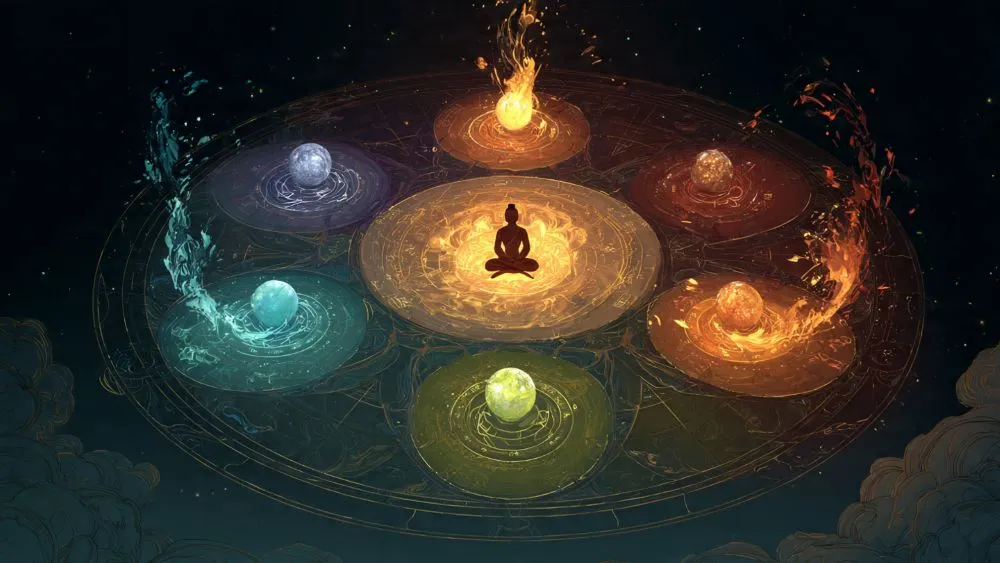
Beyond the grade, the elemental composition of a root matters enormously. Across xianxia and xuanhuan, these configurations appear most consistently.
| Root type | Elements | Purity | Key trait | Typical story role |
|---|---|---|---|---|
| Single-element | 1 | Maximum | 100% absorption into one channel; fastest cultivation speed | The gold standard rivals are measured against; often the protagonist’s secret true form |
| Dual-element | 2 | Very high | Certain pairings (fire and wind, water and ice) unlock exclusive technique combinations | Elite side characters; occasionally the protagonist’s actual starting root |
| Three-element | 3 | Moderate | Solid but unremarkable; absorption divided three ways | Respectable background cultivators who plateau early |
| Five-element | 5 | Low | Absorption split five ways; considered trash in most systems unless balance is the point | The mediocre but persistent protagonist archetype; occasionally flipped into a hidden advantage |
| Mutant root | Varies, non-standard | Undetectable by standard tests | Falls outside Metal, Wood, Water, Fire, Earth — lightning, space, time, chaos, darkness | The hidden genius reveal; almost always the real root of a waste protagonist |
| Heavenly or divine root | Transcendent | Beyond classification | Breaks the grading scale entirely; testing stones crack or fail | The dramatic world-shaking reveal; a once-in-a-generation event |
| No root, mortal constitution | 0 | None | Cannot cultivate by any conventional means | Permanent limitation in older xianxia; unconventional path invitation in modern progression fantasy |
Why the “trash talent” origin story keeps working
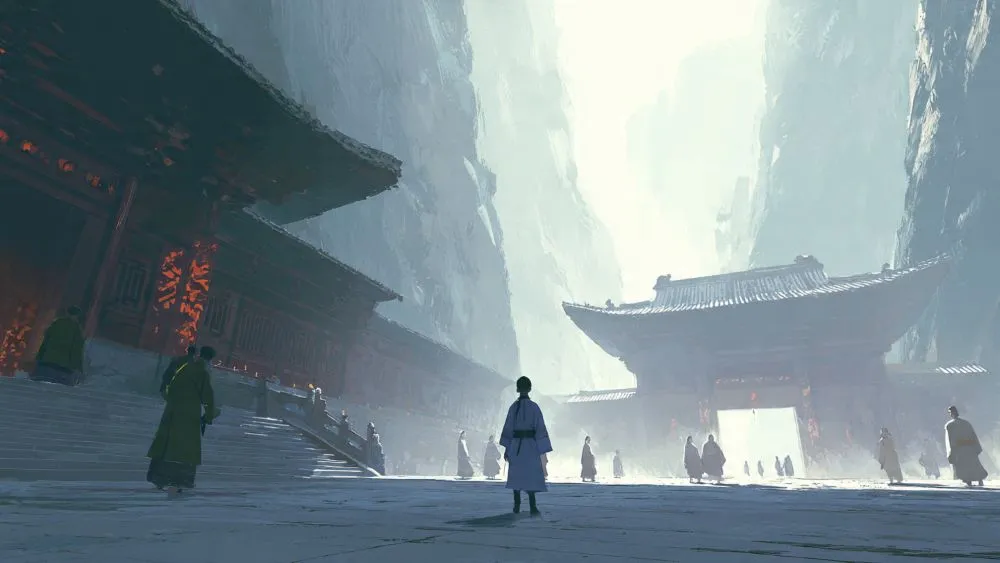
If you have read more than three xianxia novels, you have noticed the pattern. Protagonist tests as waste, gets humiliated publicly, discovers a cheat, spends hundreds of chapters proving everyone wrong. It is one of the most repeated structures in the genre, and somehow it almost never gets old. after going through the source material, I think I understand why.
The spiritual root system is not just a power-scaling mechanic. It is a social stratification device, a way to make the stakes of the cultivation world feel real and personal before a single fight scene happens.
When a protagonist gets declared waste in front of their entire clan, they lose status, resources, relationships, and a future all at once, publicly, and what they believe to be permanently.
That is a devastating setup. The reader does not need to be told the world is unfair; they just watched it happen. Every subsequent breakthrough does not just raise a power level. It reclaims something that was taken.
There is also a cultural dimension that gets overlooked in Western readings of the genre. Many of these novels speak directly to readers navigating competitive academic and social systems where inherited advantages feel insurmountable. The spiritual root is a transparent metaphor for those structures.
The protagonist overcoming a bad root is the fantasy of effort and wit defeating birthright, and that fantasy resonates powerfully across cultures, which is part of why xianxia has found such a large global audience since the early 2010s.
How major series use this system
A Record of a Mortal’s Journey to Immortality
Han Li tests as solidly mediocre, not tragically bad, just unremarkably average. The novel then asks a genuinely interesting question: what happens when a person with no exceptional talent plays an exceptionally long and cautious game? His five-element root eventually becomes an unexpected advantage, giving him access to techniques that purer-root cultivators cannot use.
It is one of the most realistic treatments of the system in the genre, and the reason the novel holds up decades after it was written.
Battle Through the Heavens
Xiao Yan is unique because he does not start with a bad root. He starts with a good one and loses it. The seal placed on his talent strips him of his prodigy status publicly, in front of his clan.
Battle Through the Heavens is one of the most emotionally direct uses of the talent system in the genre: the loss is personal, the humiliation is constant, and the recovery feels specifically tied to what was taken rather than a generic power-up.
Tales of Demons and Gods
Nie Li reincarnates into a body with the lowest possible soul realm grade, 1 out of 5. What makes this version interesting is the inversion: he compensates entirely through knowledge of the future. The novel quietly argues that the talent system measures potential, not outcome, and that information asymmetry can substitute for raw aptitude. It is a cleverer critique of the meritocracy myth than most readers give it credit for.
Frequently asked questions
What is the difference between a spiritual root and a dantian?
Spiritual roots are the channels that determine what qi you can absorb and how fast. The dantian is the reservoir where that qi is stored and refined into usable energy. They work together but are distinct. Both can be damaged, and either damage has serious consequences for cultivation. Think of the root as the pipe and the dantian as the tank.
Can a cultivator improve or change their spiritual roots?
In most systems, spiritual roots are fixed at birth, but exceptions drive major plot points. Rare heavenly treasures, divine medicines, or special awakening events can purify or transform roots.
Why does the protagonist almost always start with the worst talent?
It is a deliberate story structure choice, not laziness. Starting with no talent creates immediate stakes, establishes the world’s values, and gives readers someone worth cheering for. A victory earned against a system designed to keep you down hits differently than a victory handed to someone who was always special.
What is a mutant spiritual root and why is it significant?
A mutant root falls outside the standard five-element classification. lightning, space, time, darkness, and chaos are the most common variants. Standard testing stones often fail to detect them, recording the cultivator as having no talent.
Do spiritual roots appear in wuxia as well, or only xianxia?
Primarily xianxia. Wuxia is grounded in human martial arts and mortal lifespans. It does not typically involve elemental qi cultivation or innate spiritual affinities. If a series features characters pursuing immortality through elemental cultivation, you are in xianxia territory. If characters pursue martial supremacy within a normal human lifetime, that is closer to wuxia.
Which novel has the most well-developed spiritual root system?
My answer is A Record of a Mortal’s Journey to Immortality. Most series use the spiritual root as a starting point and then move past it once the protagonist finds their cheat. ARMJTOI actually lives with its implications.
Are spiritual roots the same concept as talent grades in manhwa?
Functionally yes, though the terminology differs. Korean cultivation manhwa and murim stories often use awakening grades, talent ranks, or affinity tiers that serve the same story purpose as Chinese xianxia spiritual roots.
Final thoughts
Spiritual roots are one of those foundational ideas that seem mechanical on the surface and turn out to be load-bearing walls once you start examining the structure around them. The talent test is not just an exposition device. It is the moment a cultivation world reveals what it values and who it is willing to discard.
The best xianxia authors understand this. They do not just use the system to launch an underdog story and then forget it. They build worlds where the spiritual root framework shapes politics, family dynamics, sect economics, and the psychological interior of characters who were told from childhood that they were not enough.
When those characters push back, not just through raw power, but through stubbornness, cleverness, and choices the system never anticipated, that is when the genre does something genuinely interesting.
If this is your entry point into cultivation novels, start with A Record of a Mortal’s Journey to Immortality (fully translated on Wuxiaworld) or I Shall Seal the Heavens by Er Gen. Both give you the full experience of watching a cultivator work within and then against the talent system the world handed them. The first wall they break through is always the most satisfying one.