 By
By Quick takeaways:
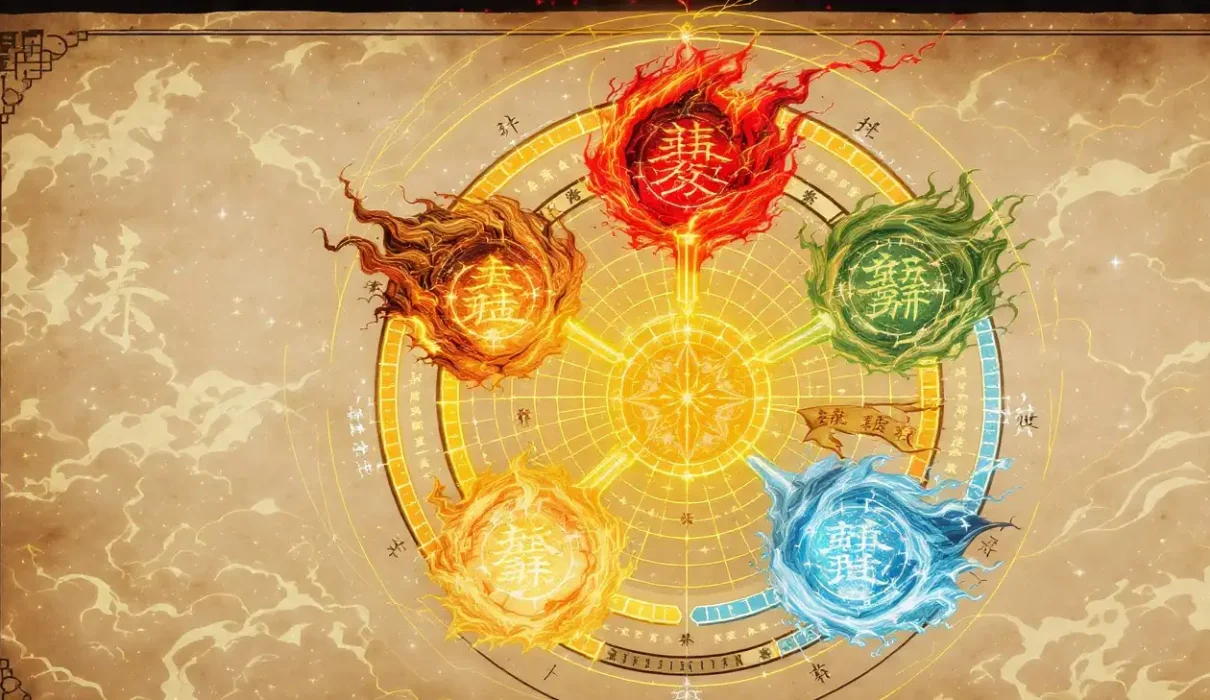
- The five elements, or Wu Xing, are Wood, Fire, Earth, Metal, and Water, a Chinese cosmological framework describing how all phenomena in the universe relate, interact, and transform
- Unlike Western classical elements, Wu Xing is a dynamic system of relationships rather than a list of building blocks. The interactions between elements matter as much as the elements themselves
- Two great cycles govern Wu Xing: the generating cycle, where each element feeds the next, and the controlling cycle, where each element suppresses another
- Xianxia cultivation novels directly adapted the Wu Xing into their spiritual root and elemental qi systems. A cultivator’s elemental affinity is rooted in this philosophy
- Most cultivation novels use the five elements as a foundation and then creatively deviate from or expand it, adding mutant elements that the classical system never included
The first time I encountered a five-element spiritual root explanation in a Xianxia novel, before that, I only knew four elements from Avatar: The Last Airbender. I treated it as genre flavoring, an interesting background detail that gave the cultivation system texture without demanding much thought. Wood beats Earth, Water beats Fire, the classic elemental rock-paper-scissors logic. but now, having spent real time with the actual philosophical source, I understand how much I was underselling it.
Wu Xing is not a simple elemental classification system. It is a comprehensive cosmological framework that ancient Chinese thinkers applied to medicine, astrology, music, governance, military strategy, and personal cultivation simultaneously.
The fact that xianxia novels built their power systems on top of it is not arbitrary flavoring. It is the genre connecting itself to one of the most sophisticated pre-modern attempts to describe how reality works. Understanding that source makes the novels considerably richer.
What are the Five Elements (Wu Xing)
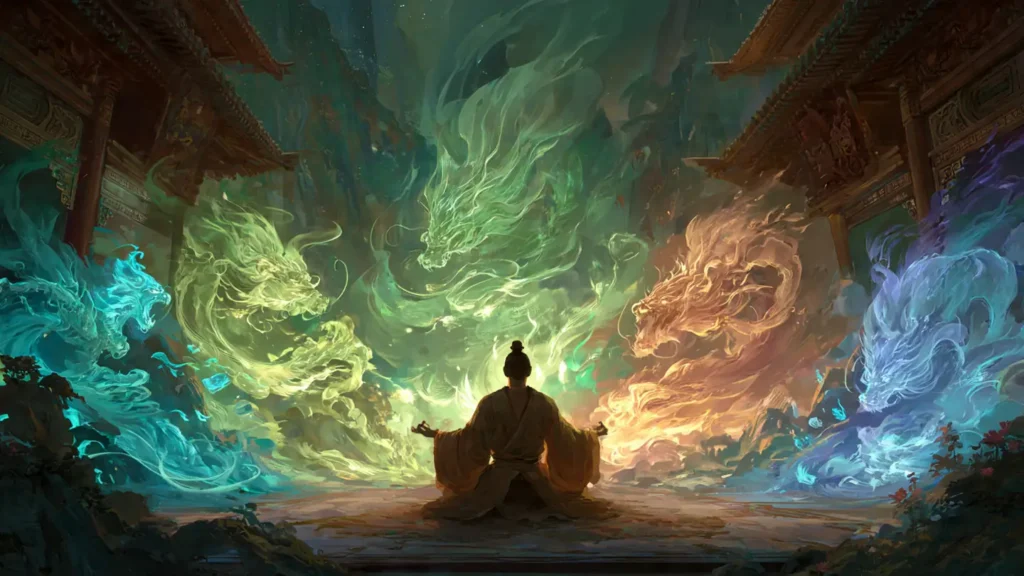
Wu Xing (五行) translates literally as five phases or five movements, and that translation is more accurate than the common English rendering of five elements. The word xing carries a sense of ongoing movement and process rather than static substance. This distinction matters.
Western classical elements, earth, water, air, and fire are primarily understood as building blocks. Everything is made of combinations of these substances. The Greek tradition, most fully developed by Empedocles and later Aristotle, treats elements as foundational matter.
Wu Xing does not work this way. Wood, Fire, Earth, Metal, and Water in the Chinese framework are not the stuff the universe is made of. They are categories of process, patterns of transformation, and ways that energy and phenomena move through cycles of change. Metal is not iron or gold as a substance. Metal is the quality of contraction, sharpness, and the movement from expansion toward gathering. Wood is not trees, as matter Wood is the quality of growth, expansion, and upward vital movement.
This is the insight that genuinely changed how I read cultivation novels when I first encountered it properly. A cultivator with a Wood spiritual root is not just someone who can control plants. They are someone whose qi nature embodies growth, upward momentum, and vital expansion. Their affinity gives them particular resonance with those qualities wherever they manifest in living things, in the rising phases of cultivation cycles, in techniques that build and accumulate rather than destroy and contract.
The philosophical lineage runs through texts including the Huainanzi, the Lüshi Chunqiu, and the writings associated with Zou Yan, the Warring States thinker credited with systematizing five-phase thought. Traditional Chinese medicine, acupuncture, feng shui, and Chinese astrology all draw on the same framework that cultivation fiction borrowed for its elemental qi systems.
The 5 Elements in Detail
Wood (木, Mù)
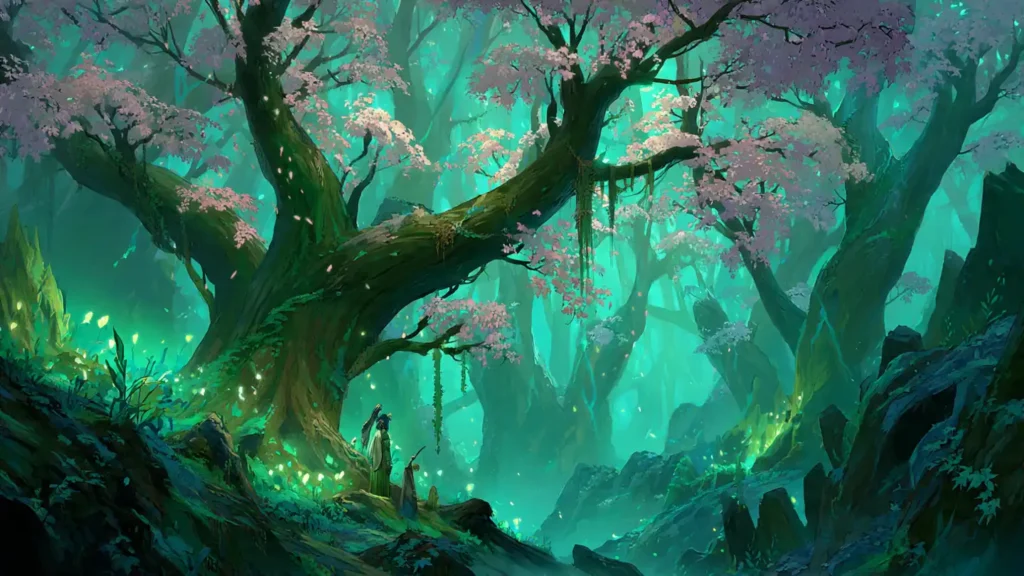
Wood represents growth, expansion, flexibility, and upward vital force. Its season is spring. Its direction is East. In the body it corresponds to the liver and gallbladder. Its quality is the energy of new beginnings, of shoots pushing through frozen ground, of life asserting itself against inertia.
In cultivation novels, Wood-affinity cultivators most commonly develop abilities related to plant manipulation and life energy, healing techniques, growth acceleration, vine and root combat styles.
The deeper philosophical reading gives them an additional quality: Wood represents the will to grow despite obstacles, which maps onto the xianxia protagonist’s core drive rather elegantly. Many authors write Wood-affinity characters with particularly strong persistence and adaptability, consciously or otherwise drawing on the element’s philosophical character.
Azure Dragon, among the Four Symbol Beasts, controls the wood element.
Fire (火, Huǒ)
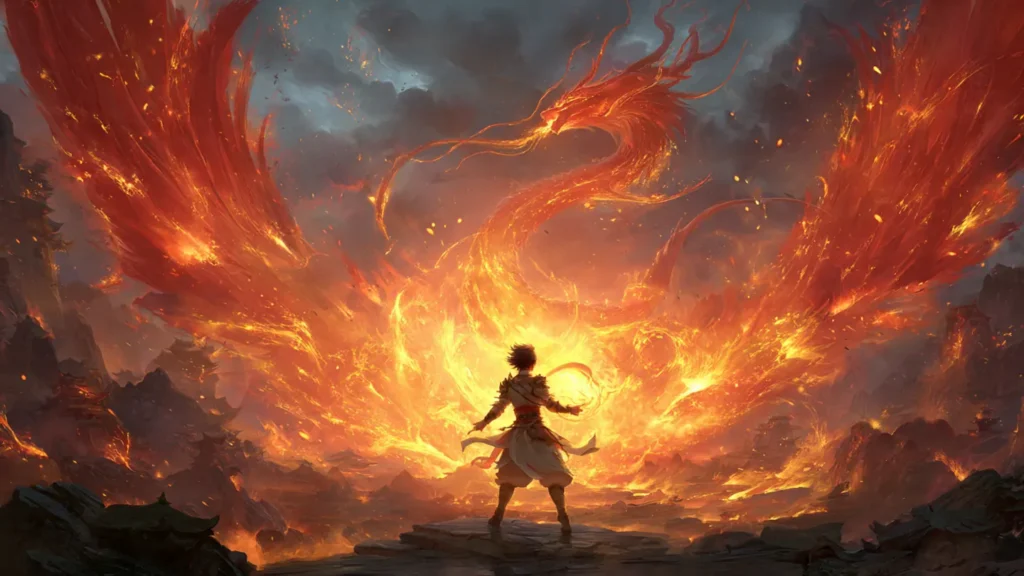
Fire represents heat, transformation, upward movement, and the conversion of matter into energy. Its season is summer. Its direction is South. In the body it corresponds to the heart and small intestine. Fire is the element of peak expression, of maximum outward manifestation, of the moment when potential becomes kinetic.
Cultivation novels use Fire more heavily than any other element for combat applications, and there is philosophical justification for this. Fire is the element most associated with rapid, visible transformation, turning one thing into another thing completely. It is the element of dramatic expression. Fire-affinity cultivators in Xianxia are almost always associated with offensive combat, explosive techniques, and overwhelming force. The occasional Fire-affinity healer or strategist is a deliberate subversion that authors use specifically because the expectation runs so strongly in the other direction.
Earth (土, Tǔ)
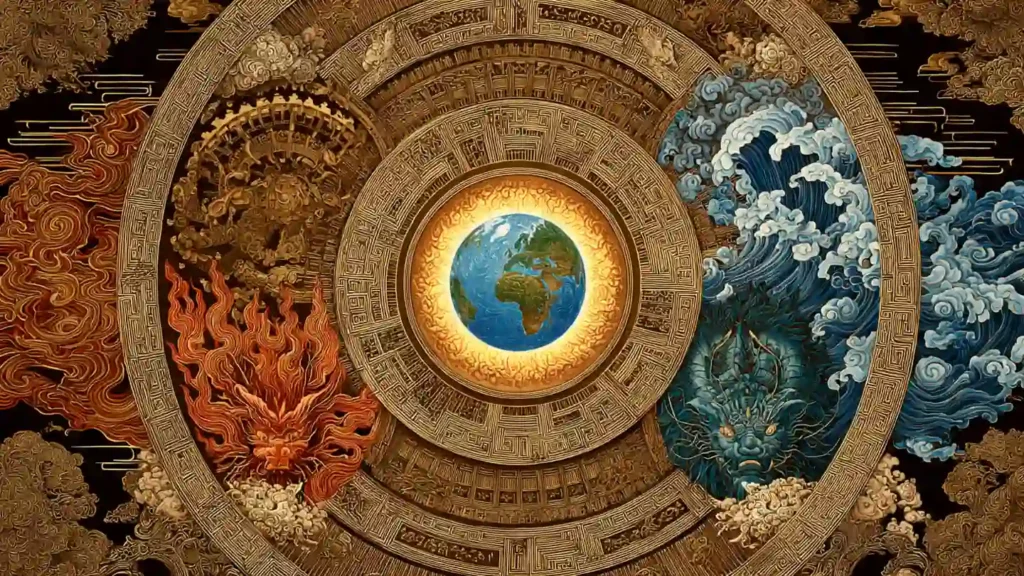
Earth represents stability, nourishment, centrality, and the capacity to receive and transform. It occupies a unique position in Wu Xing as the central element. Some classical frameworks place Earth at the center of the other four rather than in sequence with them, reflecting its role as the ground on which the other elements manifest. Its season is the transitions between seasons, the liminal periods of change. Its direction is the center. In the body, it corresponds to the spleen and stomach.
Cultivation novels frequently give Earth-affinity cultivators defensive specializations, gravitational or seismic abilities, and techniques that emphasize endurance and absorption over attack. The philosophical depth of Earth as the central, receiving, transforming element gives well-written Earth cultivators a quality that pure defensive framing misses. They are not passive but generative, the ground that makes everything else possible.
I Shall Seal the Heavens has some genuinely interesting engagement with Earth-nature cultivation that rewards this deeper reading.
Metal (金, Jīn)
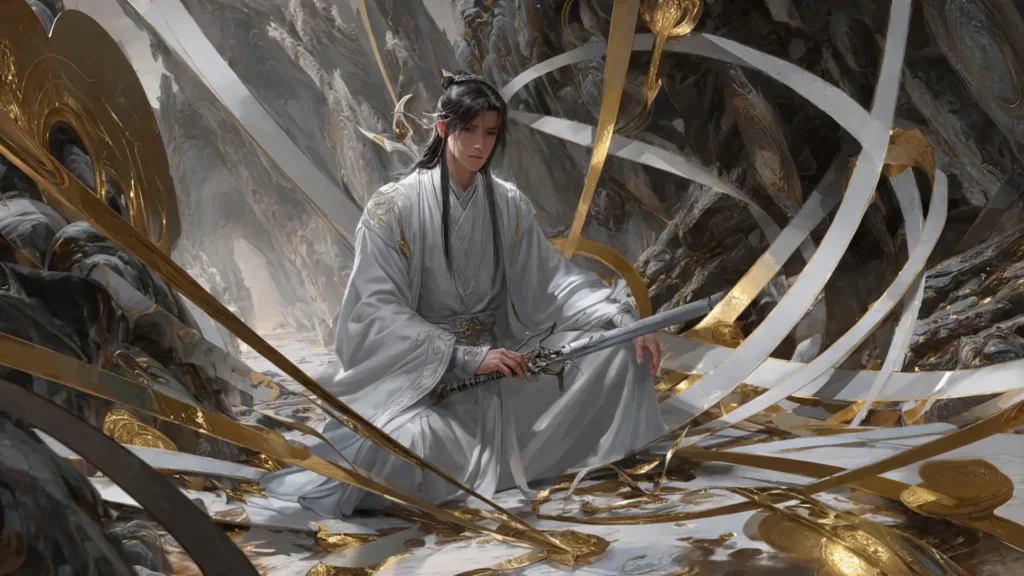
Metal represents contraction, sharpness, precision, and the refinement of raw material into something pure and functional. Its season is autumn. Its direction is West. In the body it corresponds to the lungs and large intestine. Metal is the element of harvest, of taking what summer produced and reducing it to its essential, preservable form.
In cultivation novels, Metal affinity produces the genre’s most straightforwardly offensive elemental cultivators after Fire. Sword cultivation traditions in Xianxia are almost universally Metal-aligned, which is philosophically consistent.
The sword is the ultimate expression of Metal’s quality of refinement into a sharp, precise, lethal point. When cultivation novels feature a sword dao as their primary combat philosophy, they are drawing directly on Metal’s classical character even when they do not make the connection explicit.
White Tiger among the Four Sacred Beasts controls the metal element.
Water (水, Shuǐ)
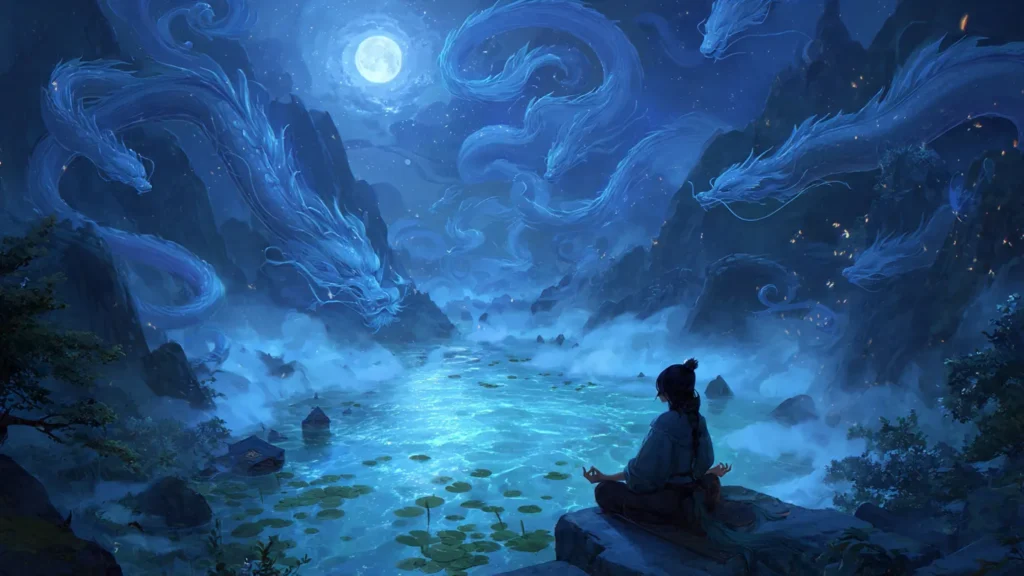
Water represents flow, adaptability, downward movement, and the capacity to find and fill every available space. Its season is winter. Its direction is North. In the body it corresponds to the kidneys and bladder. Water is the element of conservation, of potential held in stillness, of force that works through yielding rather than resistance.
Water-affinity cultivators in xianxia are the most thematically varied in terms of how authors use them. The surface reading produces ice and fluid manipulation techniques. The deeper philosophical reading produces something more interesting: Water as the element that overcomes hard things through persistence and adaptability rather than force.
The Daoist classic Tao Te Ching uses water extensively as a model for virtuous action precisely because it yields and yet wears away stone. Cultivation authors who understand this give Water cultivators a particular tactical intelligence and adaptability that distinguishes them from purely defensive or offensive elemental types.
The Two Great Cycles
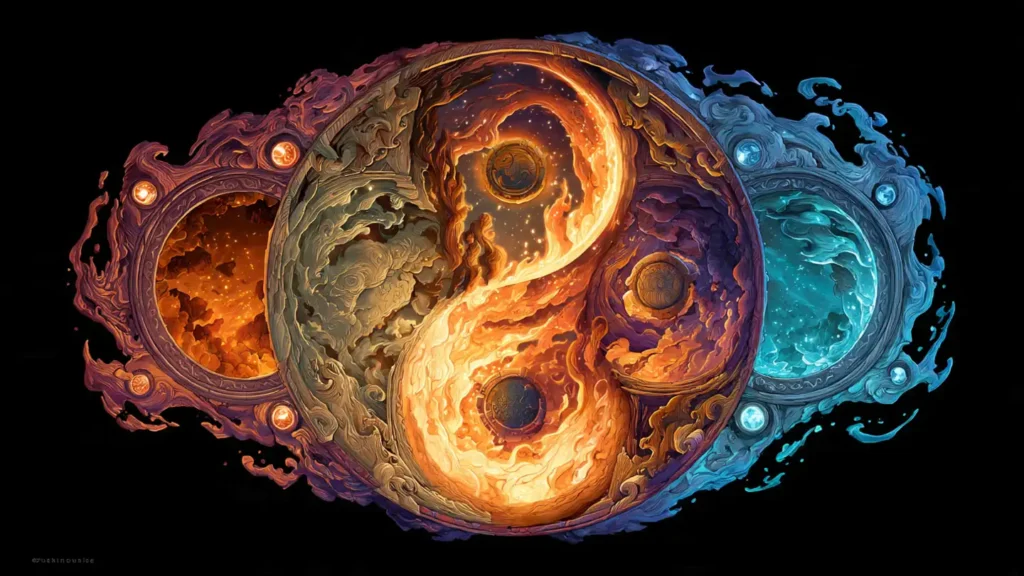
This is the part of Wu Xing that cultivation novels use most heavily in their combat mechanics and that readers most often encounter without understanding the source.
The Generating Cycle (相生, Xiāngshēng)
The generating cycle describes the sequence in which each element feeds and produces the next: Wood feeds Fire (fuel burns), Fire produces Earth (ash returns to soil), Earth bears Metal (ore within rock), Metal collects Water (condensation on cold metal surfaces), Water nourishes Wood (roots drink). The cycle is circular and continuous. Each element is both nourished by the one before it and nourishing to the one that follows.
In cultivation novels, the generating cycle appears most clearly in techniques that combine elements sequentially, in cultivation paths that move through elemental stages in order, and in the logic of why certain elemental combinations produce synergies. A cultivator who develops both Wood and Fire cultivation is working with adjacent elements in the generating cycle, which is philosophically coherent in a way that a Wood and Metal combination is not.
The Controlling Cycle (相克, Xiāngkè)
The controlling cycle describes the sequence in which each element suppresses or overcomes another: Wood parts Earth (roots break through soil), Earth absorbs Water (soil drinks rivers), Water extinguishes Fire, Fire melts Metal, Metal cuts Wood. This is the cycle most directly expressed in cultivation combat, the elemental advantage system that determines which spiritual root type has an inherent edge against another.
What cultivation novels consistently get right about the controlling cycle is that it represents suppression, not absolute defeat. Water does not destroy Fire in the Wu Xing philosophy. It suppresses it. A Fire cultivator facing a Water cultivator at the same realm is at a disadvantage, not automatically defeated. This is philosophically consistent with the original framework and gives cultivation combat its more interesting tactical dimensions: elemental advantage is a factor, not a verdict.
How Xianxia Adapted Wu Xing
Cultivation fiction’s borrowing of Wu Xing is creative and selective rather than literal. Several key adaptations appear consistently across the genre.
The most significant is the integration of Wu Xing with the spiritual root system. In classical Chinese philosophy, Wu Xing describes the nature of phenomena and processes in the world. It is not a system for classifying individual people’s innate affinities. The idea that a person is born with a primary elemental affinity that determines their cultivation path is an Xianxia invention that grafts Wu Xing’s elemental categories onto a talent and destiny framework that classical philosophy did not contain.
The second major adaptation is the addition of non-classical elements. Lightning, space, time, darkness, chaos, and void are common xianxia mutant spiritual root types that have no equivalent in Wu Xing. Classical Chinese cosmology does engage with concepts like yin-yang polarity and the concept of emptiness (Wu), but not as elements in the five-phase sense.
When cultivation novels feature a protagonist with a lightning or space affinity that the standard testing stone cannot detect, they are explicitly stepping outside the Wu Xing framework into original genre invention. This is one of the clearest markers of where cultivation fiction stops being a translation of classical philosophy and starts being something new.
The five-element balance concept, the idea that a cultivator who achieves harmony across all five elements accesses something greater than any single element can provide, appears in multiple major series and has genuine philosophical grounding. Classical Wu Xing does treat balance and harmonious cycling as the ideal state. The genre’s frequent subversion of the five-element root from weakness to hidden transcendent path draws on this idea while giving it a dramatic shape that the philosophy itself does not have.
The Five Elements in Major Cultivation Series
A Record of a Mortal’s Journey to Immortality is the most philosophically rigorous treatment of five-element cultivation in the genre. Han Li’s five-element spiritual root is treated as a genuine constraint for most of the novel’s early run, and the eventual revelation that five-element balance enables a cultivation path unavailable to purer-root cultivators is handled as a real discovery rather than a convenient plot device. Wang Yu clearly understood the philosophical framework he was working with.
I Shall Seal the Heavens uses the five elements as foundation for Meng Hao’s Dao Pillars system in the early cultivation stages, and Er Gen’s treatment of how elemental nature shapes technique and personality is more developed than most xianxia. The integration of elemental philosophy with individual character is where the series most clearly shows its author’s engagement with the source material rather than just the genre convention.
Battle Through the Heavens adapts the framework into its Dou Qi attribute system, where elemental affinities shape combat specialisation without strict adherence to Wu Xing’s classical relationships. It is the most loosely connected to the philosophical source while being one of the most accessible for new readers encountering the elemental system for the first time.
Beware of Chicken treats the five elements with a warmth consistent with Jin Rou’s broader philosophical orientation, the elements as aspects of a living, interconnected world rather than combat resources. Casualfarmer’s treatment is lighter on classical detail but captures something of Wu Xing’s original character as a framework for understanding relationship and transformation rather than pure power.
Frequently asked questions
What are the five elements of nature in Chinese mythology?
In Chinese mythology and philosophy, the Five Elements, Wood, Fire, Earth, Metal, and Water, are known as Wu Xing. They represent dynamic phases of movement and transformation rather than physical substances, forming a core framework in Chinese cosmology, medicine, astrology, governance, and self-cultivation.
How do the five elements relate to xianxia cultivation novels?
Xianxia cultivation novels adapted Wu Xing into the foundation of spiritual roots and elemental qi systems. A cultivator’s elemental affinity shapes the qi they absorb, the techniques they master, and their strengths and weaknesses in combat, with Wu Xing’s generating and controlling cycles defining elemental compatibility across the genre.
What is the difference between the generating cycle and the controlling cycle in Wu Xing?
The generating cycle shows how each element feeds the next: Wood feeds Fire, Fire creates Earth, Earth bears Metal, Metal gathers Water, and Water nourishes Wood. The controlling cycle governs suppression: Wood parts Earth, Earth absorbs Water, Water extinguishes Fire, Fire melts Metal, and Metal cuts Wood.
Why is Earth sometimes placed at the centre rather than in sequence with the other elements?
In some classical Wu Xing frameworks, Earth occupies the central position among the four directional elements rather than a sequential place in the cycle. This reflects Earth’s role as the stable foundation through which the other elements move, a concept some cultivation novels echo by portraying Earth cultivators as especially versatile.
Did ancient Chinese philosophy really use the five elements to understand the human body?
Traditional Chinese medicine is deeply rooted in Wu Xing principles, with each organ system linked to one of the Five Elements: liver to Wood, heart to Fire, spleen to Earth, lungs to Metal, and kidneys to Water. Health depends on their balance, and cultivation fiction draws heavily from this framework in its portrayal of qi circulation and dantian cultivation.
Is Wu Xing the same as the Western classical four elements?
No, and the differences are substantial despite surface similarities. Western classical elements describe the material substances of the world, whereas Wu Xing represents dynamic phases of transformation and process. As a result, elemental affinities in xianxia often carry philosophical implications about temperament and cultivation style beyond anything found in the Western elemental tradition.
Final Thoughts
The five elements are the philosophical bedrock that cultivation fiction is built on, and understanding them properly is one of those reading experiences that retroactively reframes years of genre immersion. I spent the first several years of reading xianxia treating elemental affinities as game mechanics, useful for predicting combat outcomes, interesting for character flavoring, ultimately just scaffolding for the power system.
The first time I read a serious treatment of Wu Xing’s generating and controlling cycles as a philosophical system, entire sections of novels I had already finished suddenly made a different kind of sense.
The genre’s creative departures from the classical system are as interesting as its fidelities. The mutant elemental root, the five-element balance path, and the idea that a cultivator can comprehend the Dao of an element at a level that transforms rather than just uses it. These are xianxia inventions that take the Wu Xing framework seriously enough to extend it in directions the original philosophy never went. That is not a corruption of the source. It is the genre doing what all good fantasy does: taking a real idea and asking what it would mean if you followed it all the way down.
For readers who want to understand the real philosophical roots more deeply, the Stanford Encyclopedia of Philosophy entry on Chinese Philosophy is a starting point. For readers who want to see the five elements applied with the most care in cultivation fiction, A Record of a Mortal’s Journey to Immortality and I Shall Seal the Heavens are the series that reward attention to their elemental foundations most consistently.
The five elements are not decoration. They are the map of a cosmology. Learning to read that map changes how you read everything built on top of it.
Related Articles
- The Five Elements Behind Every Holy Beast [Chinese Myth Map]
- Why the Four Holy Beasts Cannot Exist Without Yin Yang
- Yin Yang & the Five Elements: The Hidden Cosmological Link
- Yin Yang, Five Elements & Four Symbols: China’s Complete Cosmos
- The Four Holy Beasts: Baihu, Qinglong, Zhuque & Xuanwu
References
- Stanford Encyclopedia of Philosophy – Daoism
- Joseph Needham, Science and Civilisation in China
- Dao De Jing (Tao Te Ching)
- Zhuangzi
- Daoism and Chinese Culture – Livia Kohn
- Lüshi Chunqiu (The Annals of Lü Buwei)
- Huainanzi
- Yin-Yang and the Nature of Correlative Thinking – Angus Charles Graham
- Medicine in China: A History of Ideas – Paul U. Unschuld
- Lewis, Mark Edward. The Construction of Space in Early China.