
 By
By Quick Takeaways:
- Japanese dragon legends in mythology contain stories with genuine cinematic architecture: clear dramatic structures, emotionally resonant characters, spectacular visual possibilities, and thematic depth
- Most of these legends remain almost entirely unknown to Western audiences, making them genuinely original material rather than adaptations of already-familiar stories
- Several of these would work in multiple genres: the same legend could be an epic action film, a psychological thriller, or a quiet literary drama, depending on which elements the director chose to emphasize
- Every legend described here comes from documented classical texts or verified regional traditions, not from internet mythology
- Understanding the source material would make the eventual adaptations considerably better than most mythology films that rush to spectacle without earning it
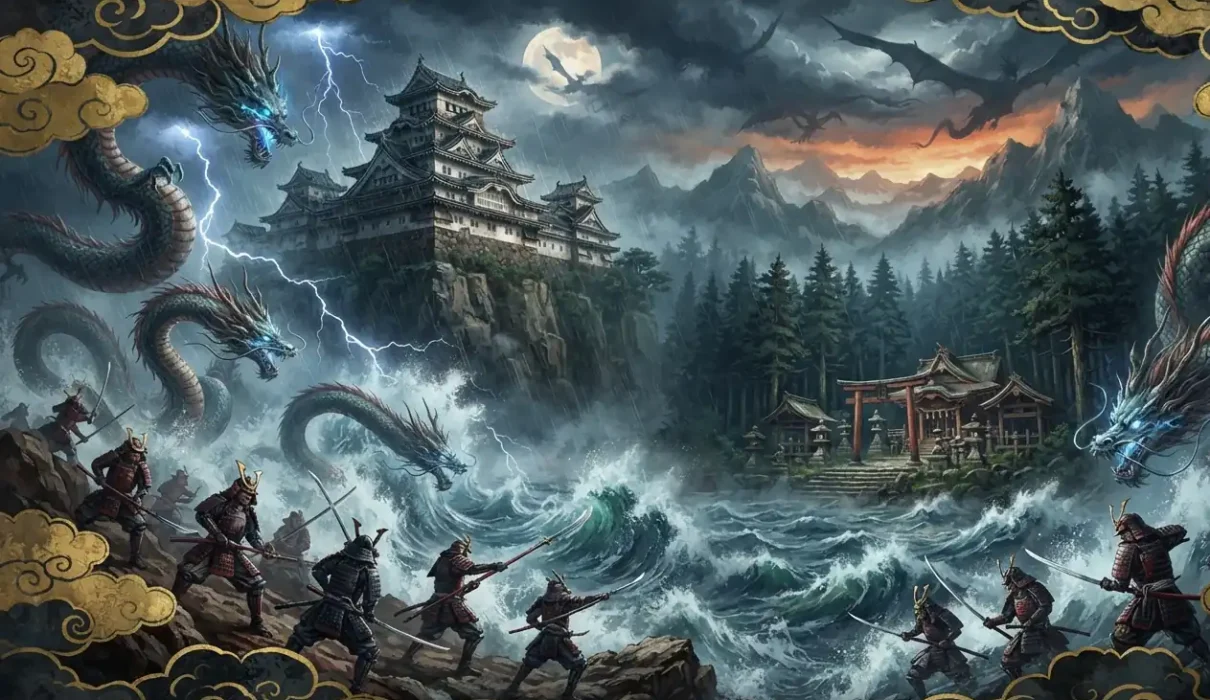
Hollywood has been raiding world mythology for decades and somehow keeps going back to the same Greek and Norse wells. Meanwhile, Japanese dragon mythology is sitting there with fifteen film-ready stories that have everything a producer could want: spectacular visual possibilities, emotionally complex characters, genuine dramatic stakes, and source material that Western audiences don’t already know.
These stories deserve film treatment. Let me make the case for each one.
1. Yamata no Orochi: The Eight-Headed Serpent
The Legend
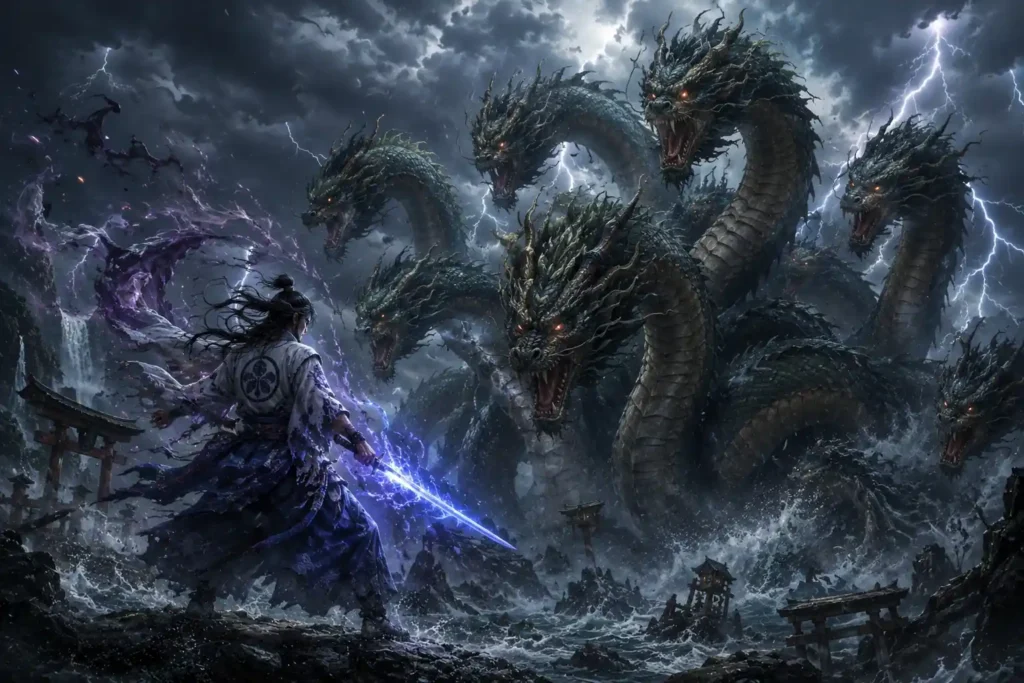
Susanoo, banished from heaven by his sister the sun goddess, encounters a family about to lose their last daughter to an eight-headed serpent that has killed seven daughters already. He outsmarts the serpent with sake, kills it in its sleep, and discovers within one tail the divine sword Kusanagi, one of Japan’s three imperial treasures.
The Film
This is a heist film masquerading as a monster story, and that combination is what would make it spectacular.
The heist is psychological: Susanoo doesn’t beat the serpent in a fight. He tricks it into drinking itself unconscious, then kills something that can’t defend itself. The moral complexity of that choice, the hero who wins through deception rather than valor, is exactly the kind of character study that the best contemporary fantasy films explore.
The visual potential is obvious. An eight-headed serpent large enough to span eight valleys, with eyes described as red as winter cherries, is a design brief that any effects team would be excited by. But the human story around the visual spectacle is what would make this something beyond an effects showcase.
Genre: Epic fantasy with heist elements, moral complexity, classical tragedy structure.
Comparable tone: Think a Japanese mythology version of Troy with the moral ambiguity of The Last Kingdom.
2. Toyotama-hime: The Dragon Princess Who Couldn’t Stay
The Legend
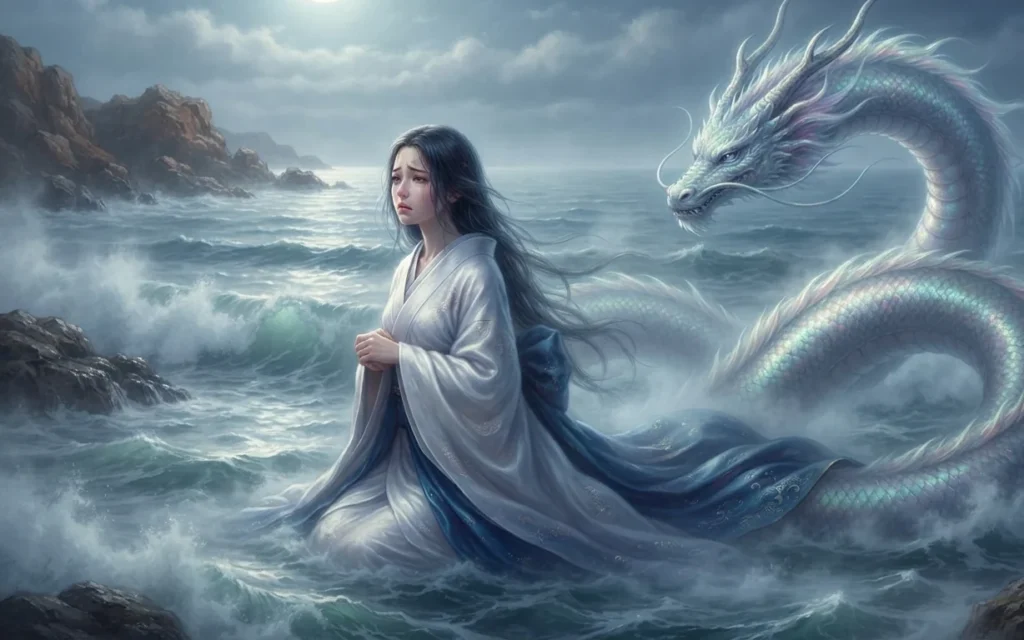
Ryujin’s daughter Toyotama-hime marries the mortal hero Hoori, who has been living in her father’s underwater palace. She follows him to the surface world when she becomes pregnant, makes one request: don’t watch her give birth. He watches. She was in her true form. She completes the birth, ensures the child is cared for, and returns to the sea forever. Their child becomes an ancestor of the Japanese imperial line.
The Film
This is a love story about the impossibility of being seen completely by someone you love, and it’s the most emotionally devastating film on this list before a single special effect is designed.
The dramatic pivot is extraordinarily cinematic. Everything before the birth is a love story. The moment he looks is the film’s center. Everything after is grief, and the specific quality of the grief, she still ensures the child is cared for before she leaves, tells you everything about who she is.
The dragon transformation during birth would be the film’s most visually complex moment and its most thematically loaded one. She wasn’t hiding something shameful. She was in her truest form at her most vulnerable moment. And he couldn’t let that be private.
Genre: Romantic drama with fantasy elements, tragedy structure.
Comparable tone: Arrival crossed with Japanese period drama.
3. Kiyohime: Love That Becomes a Dragon
The Legend
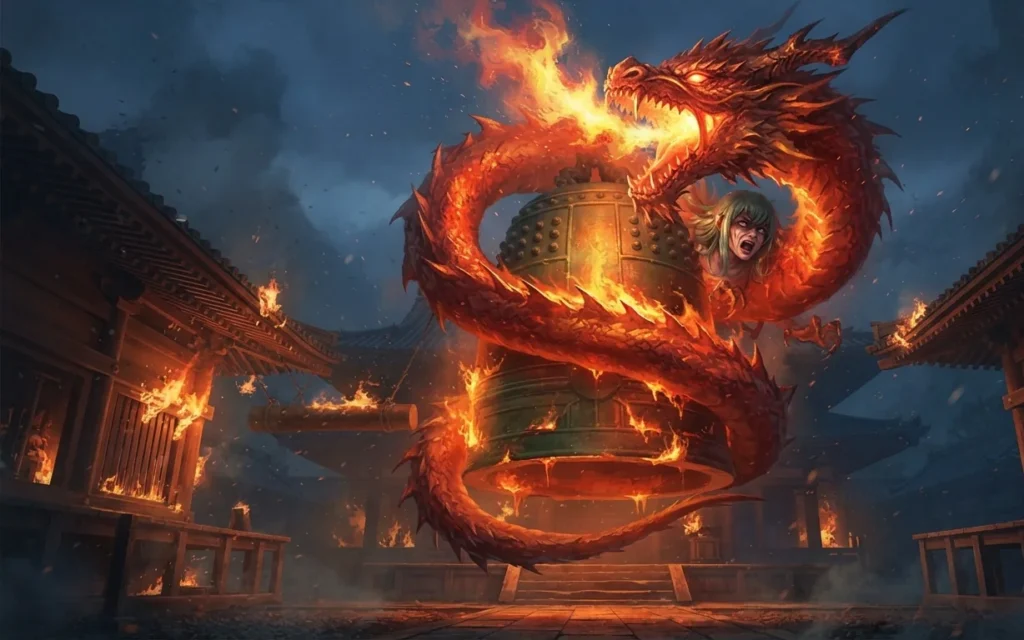
A woman falls in love with a traveling Buddhist monk. He tries to escape her. She chases him across the Hidaka River, transforming into a dragon during the crossing. He hides under a bronze bell at Dojoji Temple. She coils around the bell and breathes fire so intense that it melts the bell with him inside.
The Film
Kiyohime’s story is already adapted in Noh and Kabuki theater, and those adaptations consistently emphasize the wrong thing: the horror of the dragon. The film that this story actually wants to be is a psychological study of what happens when love that expects reciprocation encounters love that won’t reciprocate.
The transformation is the film’s formal turning point. She doesn’t transform because something was done to her from outside. She transforms because of what she feels from inside. The dragon is what love looks like when it exceeds human form, and that’s a genuinely original monster movie premise.
The bell scene is among the most perfectly structured sequences in world mythology. The monk hiding, the dragon coiling, the fire, the melting. Every visual is doing emotional work simultaneously.
Genre: Psychological horror with tragedy structure and supernatural elements.
Comparable tone: Black Swan meets classical Japanese tragedy.
4. Urashima Taro: The Fisherman Who Lost Three Hundred Years
The Legend
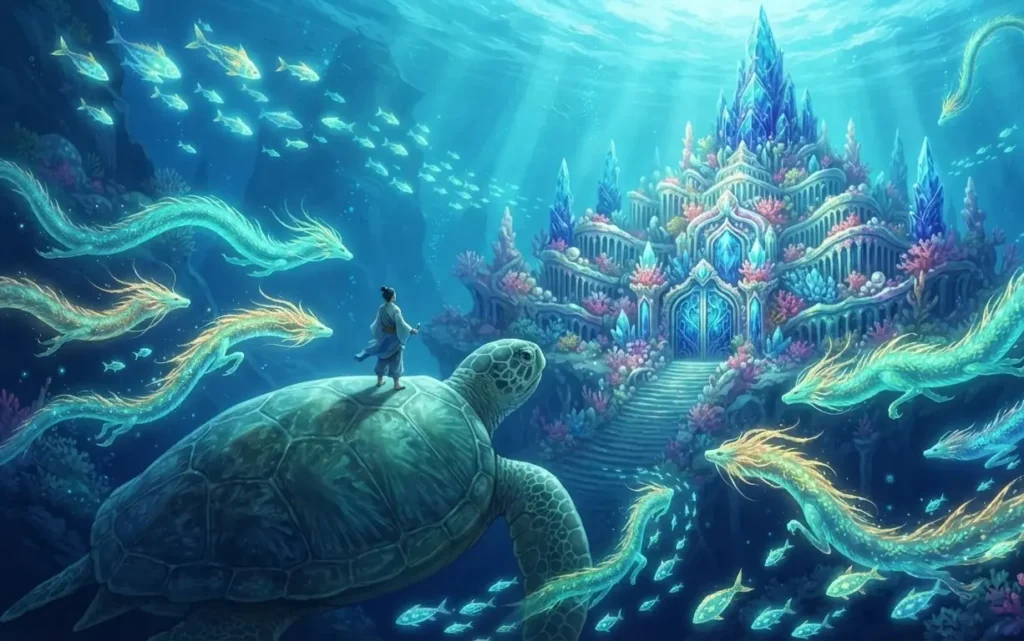
A fisherman rescues a sea turtle, which takes him to Ryujin’s underwater palace as a reward. He spends what feels like a few days there, feasting and marveling. He eventually asks to return home. The Dragon King gives him a box and tells him not to open it. He returns to find three hundred years have passed. He opens the box. He ages instantly and dies.
The Film
The time-dilation premise is extraordinarily cinematic, and the box ending gives it a structure that no time travel film has quite used: the character knows time has passed, knows he’s in the wrong era, and opens the box anyway.
The palace sequences would be spectacular. But the film’s real story is the return: a man trying to find anything that connects to the life he left, discovering that everyone and everything he knew is gone, and choosing to open the box despite knowing what it contains.
That last choice is the film’s philosophical core. He’s not tricked into opening it. He knows. He opens it anyway. The mythology doesn’t explain why, and the film shouldn’t either, because the unexplained choice is more honest than any explanation.
Genre: Fantasy drama with time displacement, quiet tragedy.
Comparable tone: Lost in Translation meets Interstellar with the visual palette of Pan’s Labyrinth.
5. The Battle for the Tide Jewels
The Legend
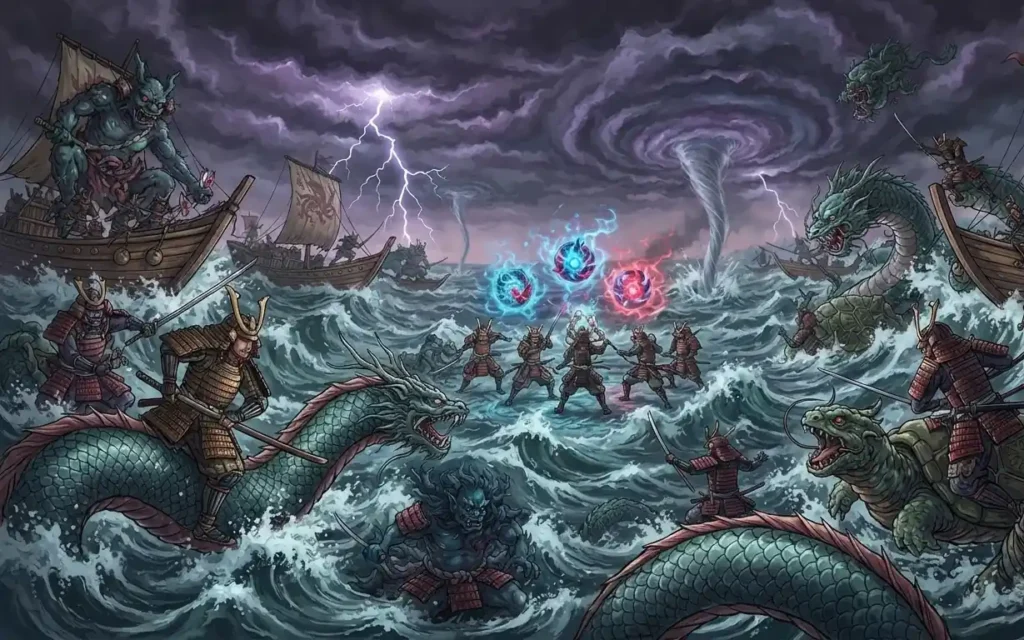
Ryujin possesses the tide jewels (kanju and manju), which control the ocean’s ebbing and flowing. Their possession determines naval warfare outcomes. The legends surrounding these jewels involve their theft, their return, and their use in conflicts that shaped the mythological foundation of Japanese imperial power.
The Film
This is Dune with ocean instead of desert: the material that controls an element controls the power, and everyone wants it.
The tide jewels as a strategic military resource in a naval empire creates a film that’s simultaneously a heist, a war story, and a political thriller. The visual possibilities of using the tide jewels in actual naval conflict, literally pulling the tide away from enemy ships, are spectacular.
The film’s moral complexity lies in who should possess this much power over a natural force. Every faction has a legitimate argument. The jewels themselves are neutral. What they do depends entirely on who holds them and why.
Genre: Epic naval fantasy with political thriller elements.
Comparable tone: Think Waterworld done properly, with the stakes and world-building of Dune.
6. Susanoo’s Exile: The One Who Fell
The Legend
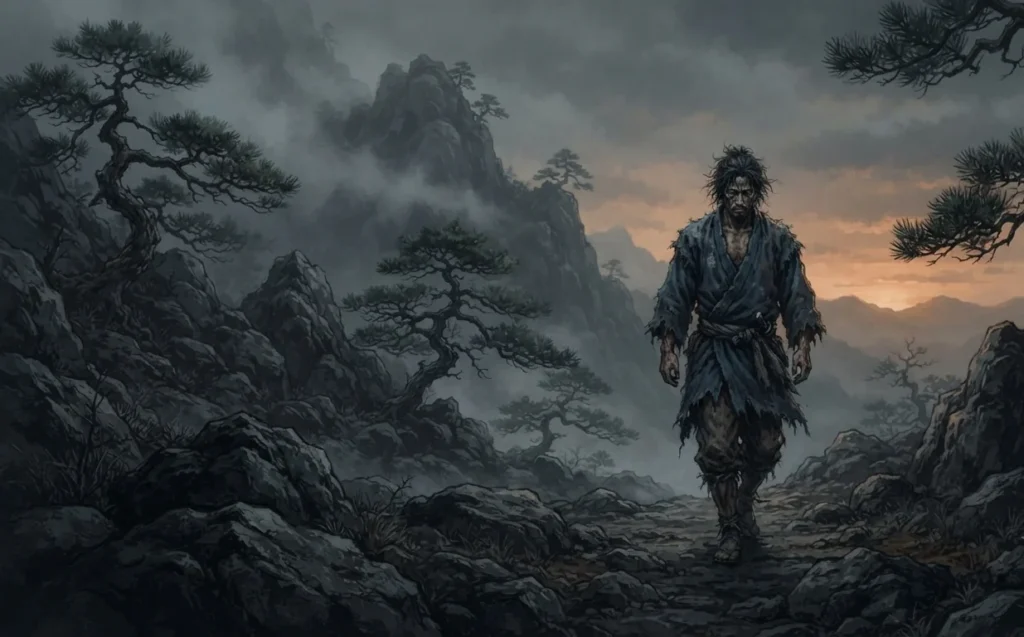
Before the Yamata no Orochi encounter, Susanoo was banished from the heavenly realm for causing chaos while grieving his mother. He wept until mountains shook and seas boiled. He was cast out of heaven and landed in the mortal world, where he eventually became the hero who defeated the eight-headed serpent.
The Film
This is a superhero origin story told as Greek tragedy, and it’s more emotionally complex than any Western mythological superhero narrative I know of.
Susanoo isn’t banished for pride or ambition. He’s banished for grief. He loved his mother so much that the expression of that love became cosmically destructive. The film’s first act is a god learning to be human by losing everything that made him divine.
The emotional architecture is exceptional: the banishment, the encounter with the grieving family, the choice to help them, the victory achieved through cleverness rather than divine power, the discovery of Kusanagi. Each element is a step in a god becoming something better than what he was.
Genre: Epic fantasy with character study, emotional drama.
Comparable tone: Thor done with the emotional seriousness of The Wrestler.
7. The Serpent of Miwa: The Husband Who Was Never Human
The Legend
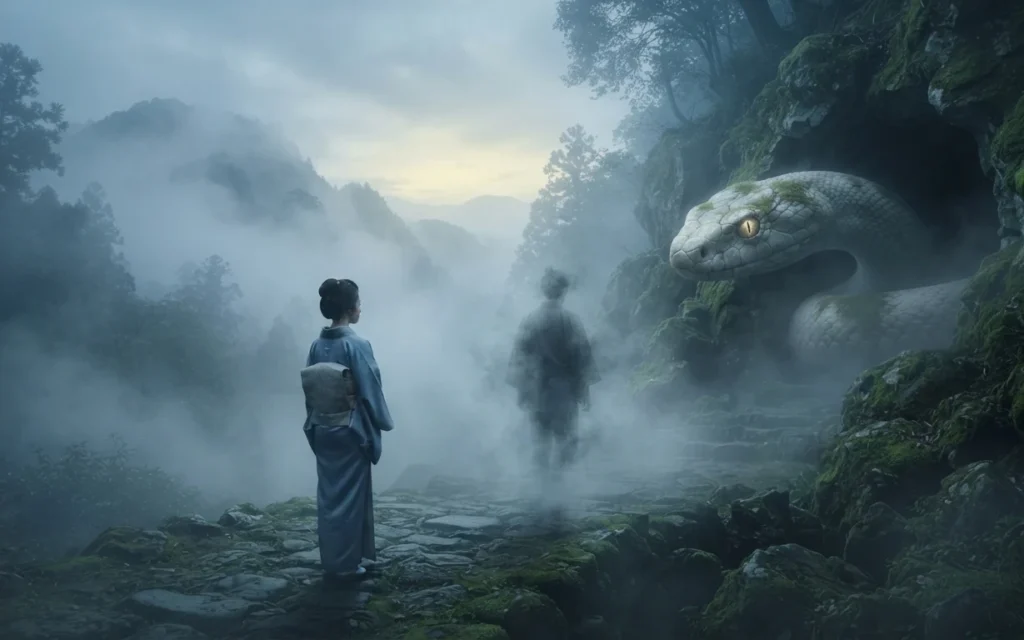
A mortal woman discovers that the man she’s been living with is a serpent deity. In the Kojiki version, she discovers this by following a thread attached to his clothing to its source in a mountain. In some variants, she dies from the shock of the revelation. In others, she flees. The divine-mortal union cannot survive the truth.
The Film
The premise is a horror film structured as a domestic drama: a woman realizes the person she married is something fundamentally other, and the discovery is made not through violence but through following a thread.
The thread-following sequence is one of mythology’s most quietly disturbing images. She suspects. She follows. She arrives at the mountain’s heart and understands. The horror isn’t a monster. It’s the revelation that everything she thought she knew was correctly perceived but fundamentally misunderstood.
The film should never show the serpent fully. The husband’s otherness should be present in accumulating small details: the way he moves when he thinks she’s not watching, his response to cold, the moments when something behind his eyes doesn’t quite match what he’s saying. The thread is the film’s final act confirmation, not its first revelation.
Genre: Psychological horror with domestic drama structure.
Comparable tone: The Witch crossed with Under the Skin.
8. Zennyo Ryuo and Kukai: The Prayer That Made It Rain
The Legend
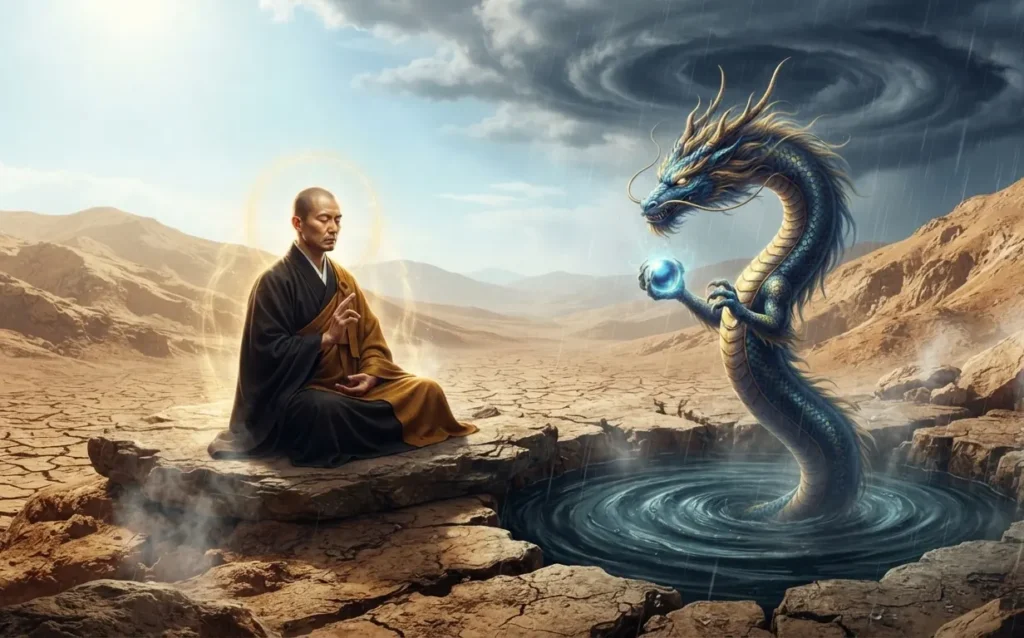
The Buddhist monk Kukai, founder of Shingon Buddhism and one of Japan’s most significant religious figures, performed a specific ritual during a drought that summoned the dragon Zennyo Ryuo. Rain fell. The pond at Jingoji Temple where the summoning occurred has been a sacred site ever since.
The Film
This is a film about faith as a practical technology: a man who believes something so completely that the thing he believes in shows up.
The dramatic structure is built around the drought’s human cost, which the film earns the right to explore in detail before the supernatural resolution. A drought in pre-modern Japan isn’t an inconvenience. It’s mass death by increments: livestock first, then crops, then children.
Kukai’s certainty as the drought worsens, the community’s growing desperation and growing doubt, the specific ritual he performs, and then the rain: this is a structure that works as religious drama, as historical epic, and as fantasy simultaneously.
Genre: Historical religious drama with fantasy elements.
Comparable tone: Silence by Scorsese meets The Mission.
9. The Dragon Kingdom’s Court Intrigue
The Legend
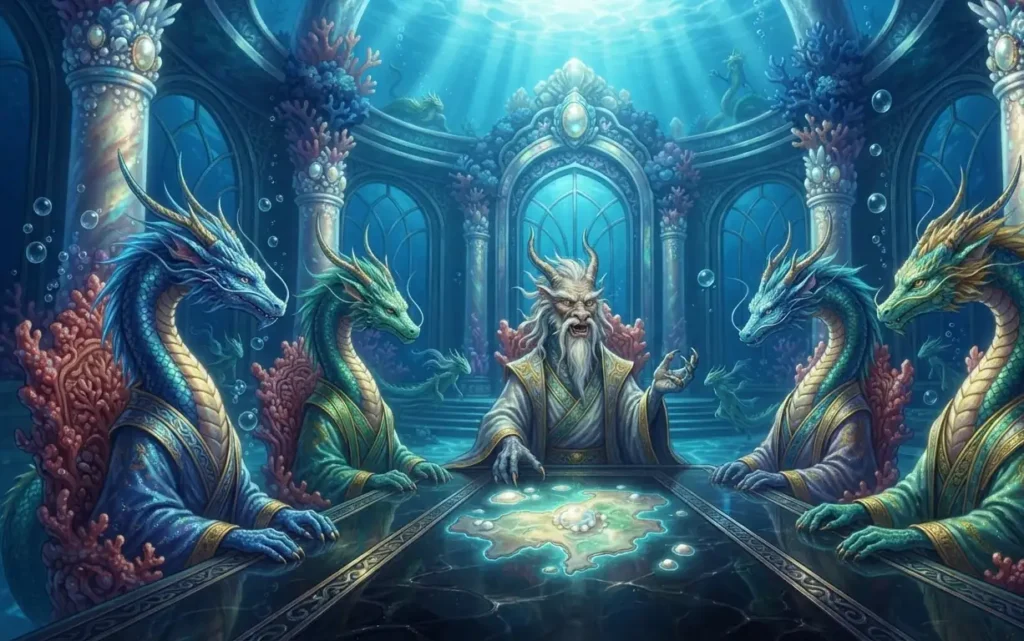
Ryujin’s underwater palace has a complete court with officials, guards, and a Dragon King who makes decisions affecting the surface world. The mortals who visit this court, including Urashima Taro and Hoori, navigate a divine political space whose rules they don’t fully understand and whose customs can destroy them.
The Film
This is The Favourite set underwater: court intrigue in a location that’s visually spectacular and politically treacherous simultaneously.
The premise is a mortal who arrives in the Dragon King’s court through unusual circumstances and must navigate divine politics without any of the knowledge that would make that navigation possible. Every gift is potentially a trap. Every courtesy is potentially a test. The hospitality is genuine and the danger is equally genuine, and the mortal can’t always tell which one is operating at any given moment.
The film’s visual language would be entirely original: an undersea palace that isn’t coral and fish but something stranger, divine light that doesn’t come from the sun, time that moves differently than the mortal remembers.
Genre: Court intrigue drama with fantasy elements, psychological tension.
Comparable tone: The Favourite meets Pan’s Labyrinth.
10. The Dragon That Swallowed the Moon
The Legend
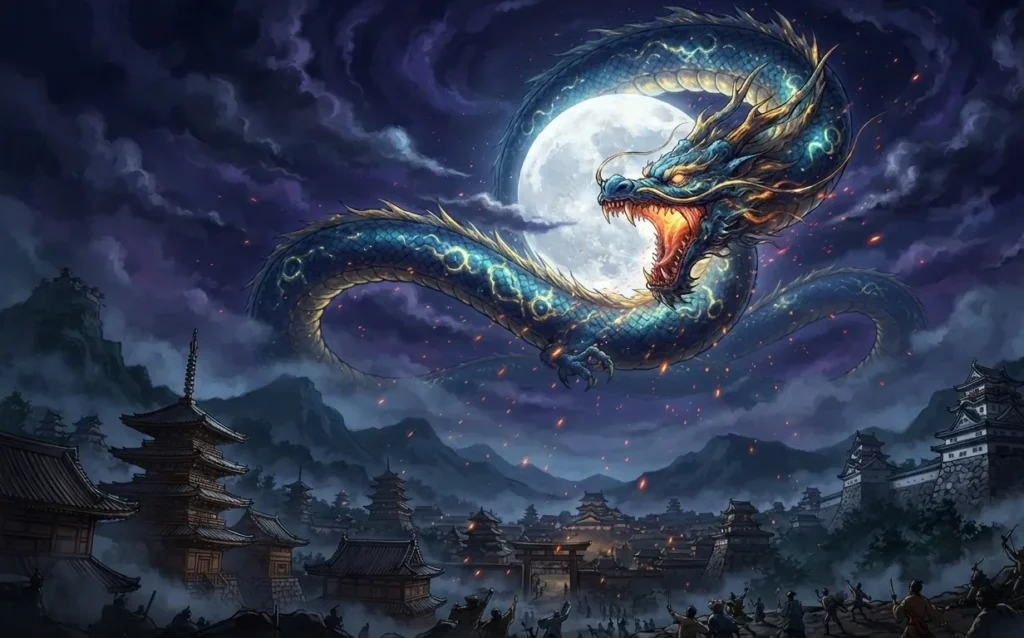
A dragon large enough to swallow the moon attempts to do exactly that. A monk or emperor, depending on the variant, performs a ritual that prevents the completion of the act. The dragon descends into a body of water and remains there. Without the intervention, the tides would have stopped and coastal communities would have starved.
The Film
This is an environmental disaster film set in classical Japan, and it’s more interesting than most environmental disaster films because the catastrophe isn’t pollution or climate. It’s appetite: a being so large that what it naturally wants would destroy everything that depends on the system it disrupts.
The dragon doesn’t want to harm anyone. It’s just hungry and vast. The monk’s ritual has to succeed without violence because the dragon hasn’t done anything except exist at a scale that’s incompatible with human survival. That moral complexity, the intervention against something that isn’t malicious, gives the film a philosophical dimension that simple monster movies don’t access.
Genre: Epic fantasy with disaster film structure, philosophical moral complexity.
Comparable tone: Princess Mononoke with ecological horror elements.
11. The Wani Crossing: The Sea Creatures Who Carry Gods
The Legend
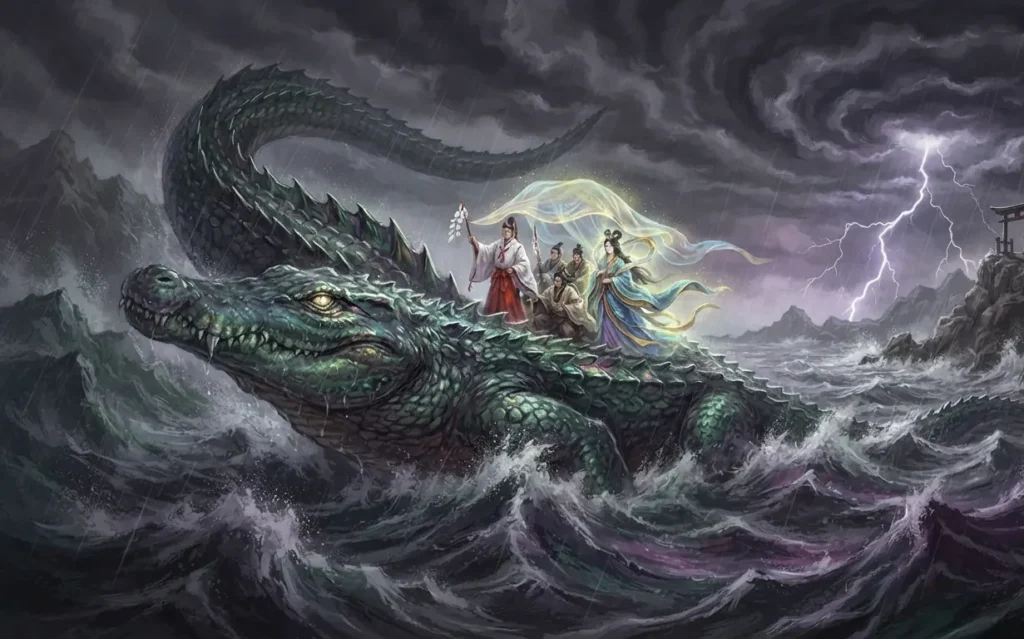
The Wani of the Kojiki serve as carriers and intermediaries between the divine undersea world and the surface. They transported divine figures across the ocean in ways that ordinary vessels couldn’t. Their nature is ambiguous: part dragon, part crocodilian, part sea deity.
The Film
The Wani are the most interesting transportation in world mythology and nobody’s made a film about them yet.
The concept of beings that specifically exist to carry the divine between worlds is visually and conceptually rich in ways that standard sea voyage films aren’t. The Wani know both worlds. They belong to neither fully. A film from the Wani’s perspective, watching the divine and mortal realms interact from the position of the beings who connect them, would be genuinely original.
The mortal who earns passage on a Wani, the specific conditions that make passage possible, the journey itself through water that exists between worlds: this is premise enough for a film that hasn’t been made.
Genre: Fantasy adventure with mythological atmosphere.
Comparable tone: Life of Pi meets What Dreams May Come with a Japanese mythology aesthetic.
12. The Dragon Child of the Mountain Lake
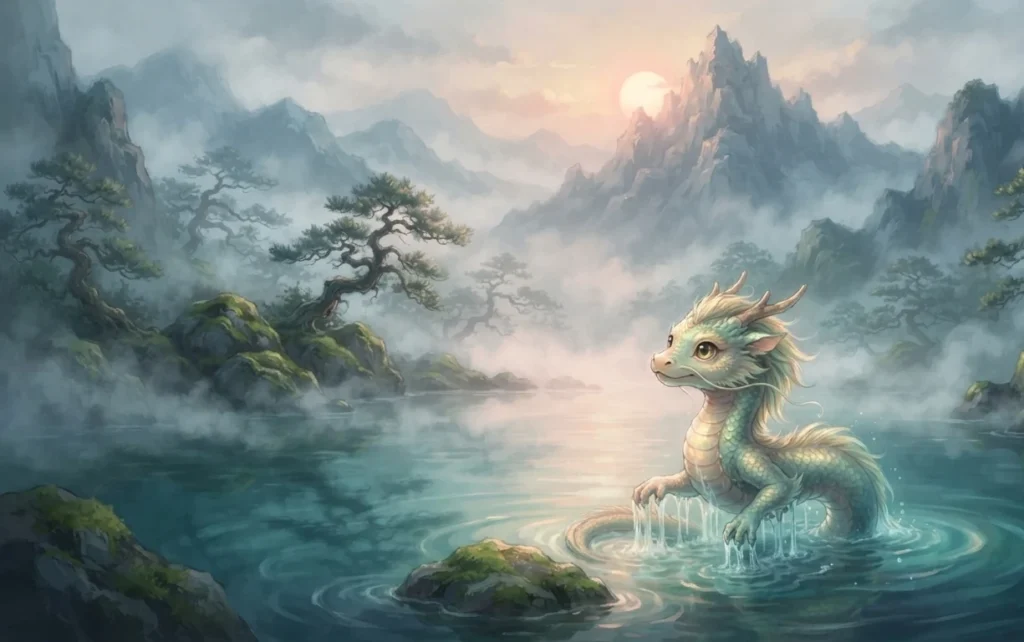
The Legend
A woman who drowns in a mountain lake doesn’t become a ghost but transforms into a dragon. Her dragon form retains her maternal instincts and specifically protects women and children. But her protection is violent: men who approach the lake after dark don’t come back.
The Film
This is a horror film that refuses to let the monster be entirely wrong.
The woman who drowned was someone’s mother, someone’s daughter. The dragon she became is still that person’s maternal love, expressed through a form that makes it terrifying. The film’s most disturbing element wouldn’t be the deaths but the realization that the dragon is mourning while it kills.
The film needs a protagonist who comes to the lake for reasons that are entirely sympathetic, gradually understands what the dragon is, and has to decide what to do with that understanding. There’s no comfortable resolution available. The woman deserved better than what happened to her. The dragon’s victims deserved better than what happened to them. The film should hold both of those truths simultaneously.
Genre: Horror drama with tragic supernatural elements.
Comparable tone: A Tale of Two Sisters meets Onibaba.
13. The Serpent Husband’s Seven-Generation Curse
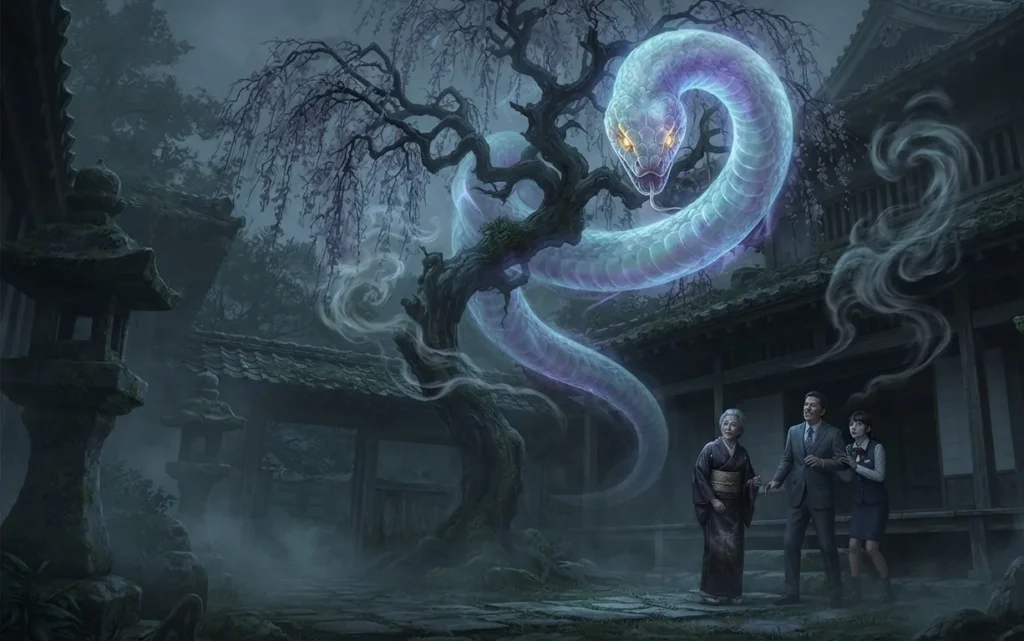
The Legend
A woman discovers her husband is a serpent deity and flees with a priest’s help. Unable to pursue her past the priest’s ward, the serpent curses her descendants for seven generations: each generation will carry visible physical signs of the supernatural union, making them impossible to integrate into ordinary human society.
The Film
This is a multigenerational family drama about inheritance: the specific, concrete inheritance of someone else’s transgression, someone else’s supernatural encounter, visited on people who had no choice in the matter.
The film spans seven generations, each segment showing a descendant discovering what they carry and choosing how to live with it. Some will try to hide it. Some will embrace it. Some will spend their generation trying to end the curse. The film’s question, which it should not answer definitively, is whether the curse is punishment or a form of supernatural ancestry that some of its carriers might eventually value.
Genre: Epic multigenerational family drama with supernatural elements.
Comparable tone: Beloved meets Like Father Like Son with supernatural inheritance elements.
14. The Dragon of the Execution Ground
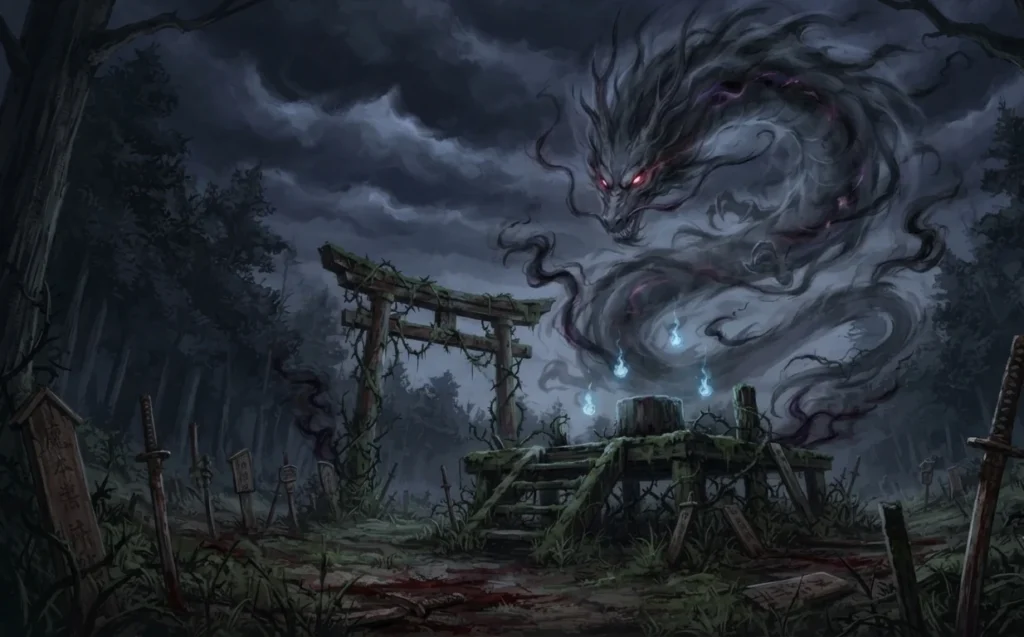
The Legend
A dragon comes into existence at a historical execution site, fed into being by accumulated human death across many years. The community near the site understands this dragon as a form of justice: the deaths that created it demand recognition, and the dragon must be appeased through specific offerings that acknowledge the deaths.
The Film
This is Annihilation meets medieval Japanese legal philosophy: a supernatural being that exists because of what humans did, demanding acknowledgment of what created it.
The film’s central character would be a new official arriving at the site who has to decide what to do about the dragon. Previous officials appeased it because ignoring it had consequences. This official wants to know whether appeasement is right, whether it honors the dead or simply pays protection money to their accumulated grief.
The film should never make the dragon clearly good or clearly evil. It is what it is because of what created it. Whether it deserves reverence or exorcism is the question the film lives inside rather than resolves.
Genre: Supernatural drama with philosophical moral complexity.
Comparable tone: True Detective season one meets Japanese period horror.
15. The Well Dragon: Grief That Wouldn’t Leave
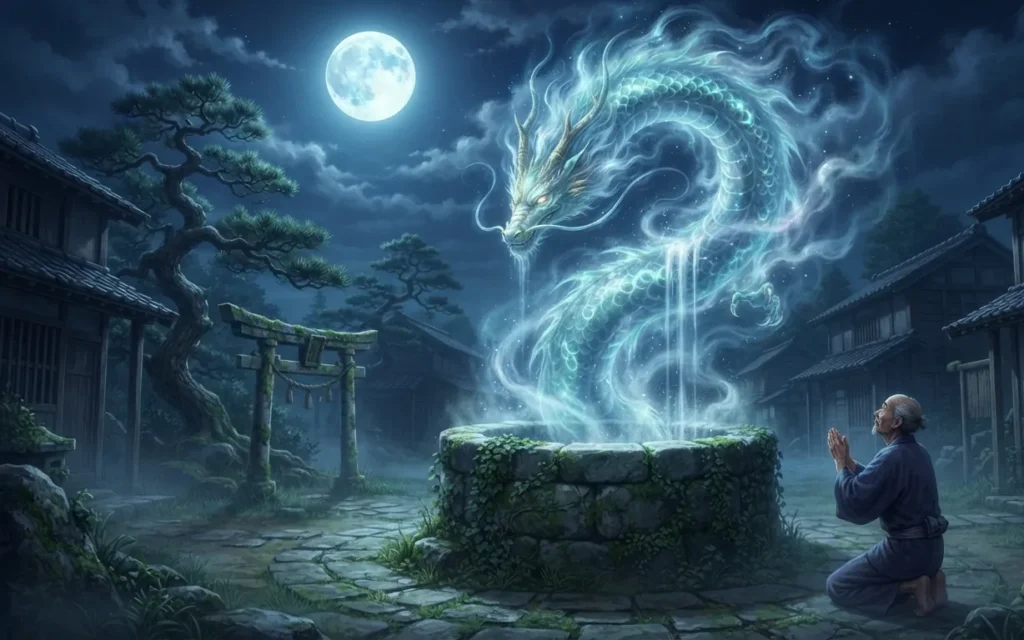
The Legend
A woman who falls or is pushed into a well transforms into a dragon rather than dying. She remains in the well. The water she inhabits becomes contaminated with her grief, not poisonous but wrong: livestock won’t drink it, plants watered with it grow poorly, people near it feel a persistent sorrow that lifts when they leave.
The Film
This is the quietest film on the list and potentially the most affecting.
There’s no villain to defeat. There’s no curse to break. There’s a woman who died badly and couldn’t leave, and her inability to leave is infecting everything around her not with malice but with her emotional state.
The film would follow a specific community living with this contamination across years, gradually piecing together what happened to the woman in the well, and discovering that understanding what happened doesn’t change what she is or what she does to the water. The resolution, if there is one, isn’t exorcism but acknowledgment: the community finding a way to live with her grief alongside their own, and whatever that does to both.
Genre: Quiet supernatural drama, grief study.
Comparable tone: Beasts of the Southern Wild meets Ronia the Robber’s Daughter with a Japanese folklore aesthetic.
Frequently Asked Questions
Has Hollywood made any films based on Japanese dragon mythology specifically?
Very few that engage seriously with the classical mythology. Some films draw on Japanese monster traditions broadly, and some use aesthetic elements of Japanese dragon iconography without mythological depth. The specific classical legends described in this article remain almost entirely unadapted for Western audiences, which is precisely what makes them attractive as source material.
Which of these legends would make the most commercially successful film?
Yamata no Orochi and the Urashima Taro legend have the most immediate commercial appeal: spectacular visuals, clear dramatic structures, and enough emotional resonance to reach wide audiences. Toyotama-hime could be extraordinary with the right director but requires more audience trust than studio systems typically extend to mythology-based films.
Are any of these legends connected to each other?
Yes. Toyotama-hime is Ryujin’s daughter, so legends 2 and 9 and 11 exist within the same mythological universe. Susanoo’s exile (6) precedes the Yamata no Orochi encounter (1). A film series could develop a connected mythology universe without inventing connections that don’t exist in the source material.
Would Japanese studios or directors be better positioned to adapt these than Hollywood?
For most of these, yes. Japanese filmmakers have cultural fluency with these materials that Hollywood directors would need years to develop. The ideal scenario would be Japanese creative leadership with international production resources. The comparable success of Korean and Japanese horror films internationally demonstrates that Western audiences will engage with non-Western mythology when it’s rendered accessibly.
What’s the biggest mistake Hollywood makes when adapting mythology?
Rushing to spectacle before earning emotional investment. The legends on this list work as mythological narratives because the emotional situations are developed before the supernatural elements pay them off. A film of Kiyohime’s story that opens with the dragon destroying the temple misses everything that makes the legend work: the love, the rejection, the transformation that only makes sense if you understand what preceded it.
Final Thoughts
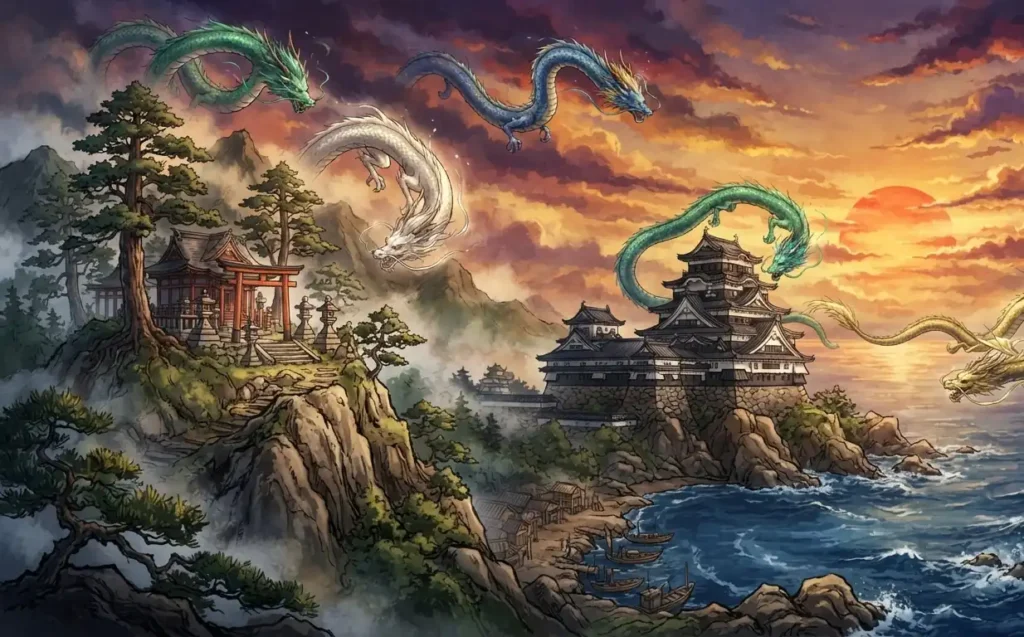
Fifteen stories. All of them genuine mythology, all of them documented, all of them sitting unused in the world’s mythology library while studios greenlight the fourteenth version of stories everyone already knows.
The tide jewels that control the ocean. The dragon princess who couldn’t be seen in her truest moment. The love that became a serpent because human form couldn’t contain it. The fisherman who lost three hundred years and opened the box anyway. The monk who believed hard enough that the rain came.
These stories are ready. The only thing they’re waiting for is someone to decide that mythology from Japan deserves the same treatment as mythology from Greece.
It does. Arguably more.
Related Articles
- Dragon Mythology: How Dragons Are Depicted Across Cultures
- Chinese, Japanese & Korean Dragons: How They Actually Differ
- 7 Best Dragon Rings For Men That Look Premium
- 12 Best Dragon Books Ever Written [Updated 2026]
- The 9 Darkest Japanese Dragons Legends You Have Never Heard
- 13 Overlooked Dragon Books Worth Reading in 2026
- 15 Most Iconic Fantasy Creatures: East & West Mythology
- 11 Strongest Anime Dragons Ranked by Power Level