
 By
By Quick Takeaways:
- Japanese dragon mythology contains genuinely dark material that popular accounts focusing on benevolent sea gods almost entirely omit
- Several legends on this list involve Japanese dragons as the consequence of human tragedy rather than as independent supernatural beings
- The pattern of women transforming into serpent or dragon beings after betrayal, obsession, or grief is one of Japanese mythology’s most persistent and most disturbing themes
- Some of these legends come from classical texts; others come from regional folk traditions documented by Japanese ethnographers. Source quality is noted for each entry.
- Understanding the dark material makes Japanese dragon mythology considerably more complete and considerably more interesting
Popular accounts of Japanese dragon mythology emphasize the benevolent sea god Ryujin, the magnificent Toyotama-hime, the Buddhist rain dragon Zennyo Ryuo. The tradition’s bright face is well represented in English language mythology writing.
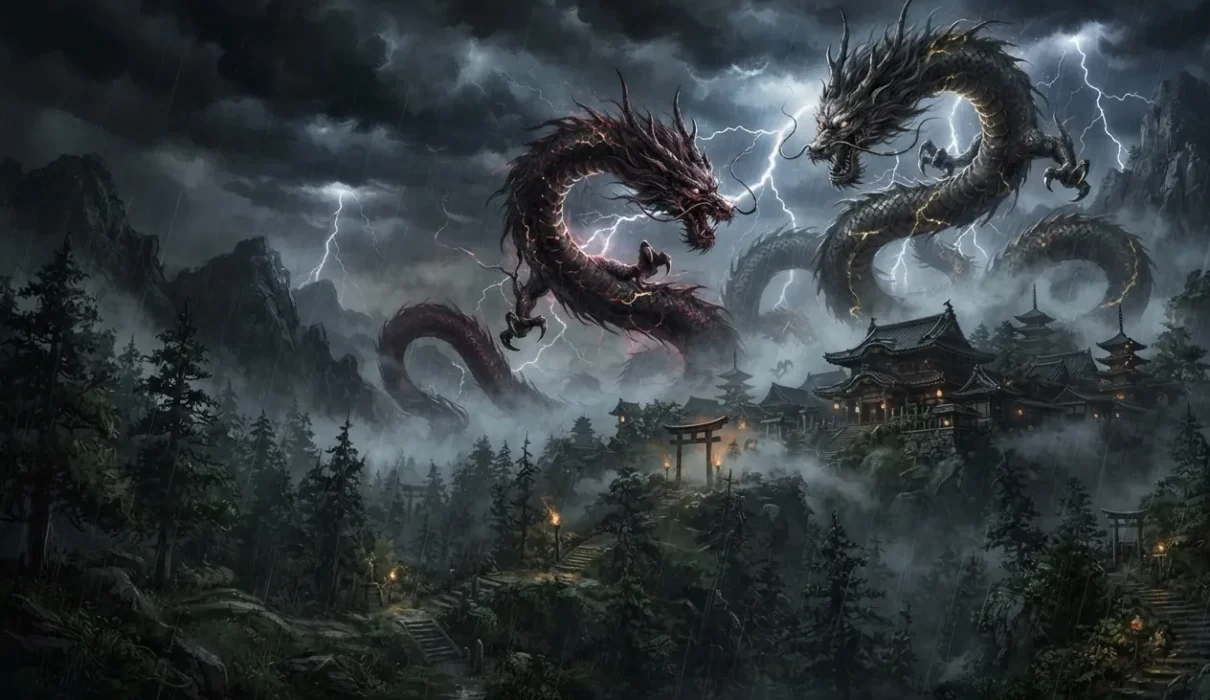
The darker material is almost entirely absent from popular accounts, which is a significant omission. Japanese mythology contains dragons that destroy communities, dragons born from human despair, dragons that kill the people who love them, and dragons that represent not cosmic protection but cosmic grief.
Twenty years of following mythology has taught me to pay particular attention to what a tradition chooses not to emphasize. The dark material is often where the deepest cultural thinking is buried.
Here are nine legends that most readers genuinely won’t have encountered.
1. The Serpent of Miwa and the Children Who Were Never Born
The Legend
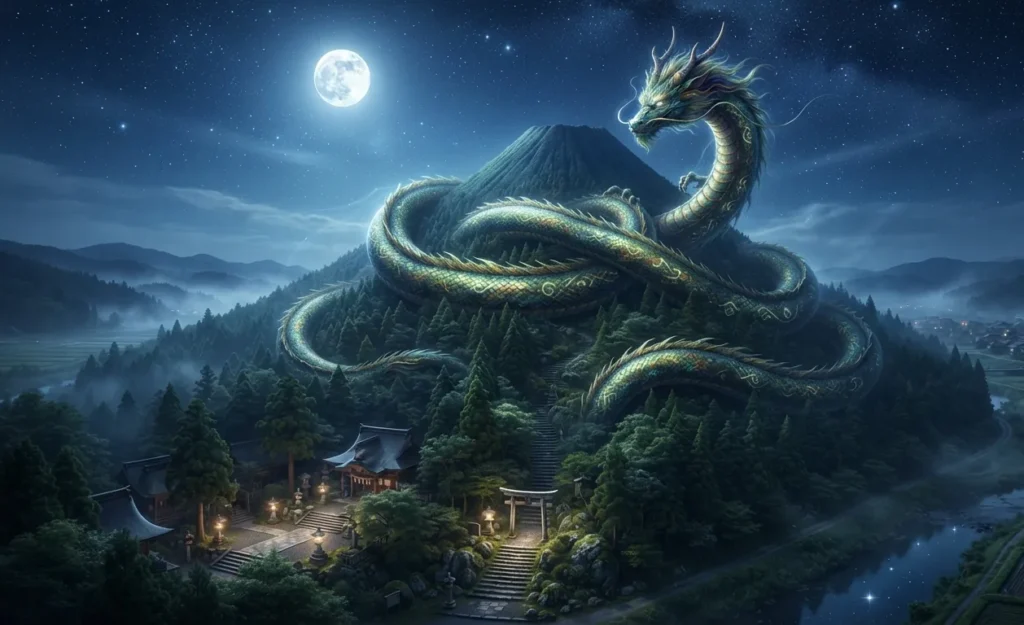
The Miwa serpent tradition is one of Japan’s oldest and most ambiguous supernatural narratives. The deity Okuninushi and later traditions connected to Omiwa Shrine in Nara prefecture involve a god who takes serpent form and whose relationship with human women produces tragedy rather than blessing.
The darkest variant of the Miwa serpent tradition involves a woman who discovers her husband is a serpent deity, loses her mind from the revelation, and subsequently dies. The children of such unions in darker variants of the tradition are described as stillborn, or as creatures that couldn’t survive the crossing between human and serpent nature.
The foundational version appears in the Kojiki, where a mortal woman discovers her husband’s serpent nature and dies of fright. The children of the union occupy an ambiguous status in the tradition: divine enough to be significant, human enough to be lost.
Why This Is Dark
The Miwa serpent tradition presents the divine-human relationship as fundamentally incompatible in a way that Ryujin’s mythology doesn’t. Toyotama-hime’s union with a mortal produced a viable child. The Miwa serpent’s unions produced grief and death.
The tradition’s persistence at one of Japan’s oldest Shinto shrines means this dark material is embedded in living religious geography. The shrine is still there. The tradition is still honored. The darkness is part of what’s being maintained.
2. The Dragon Child of Komochi Mountain
The Legend
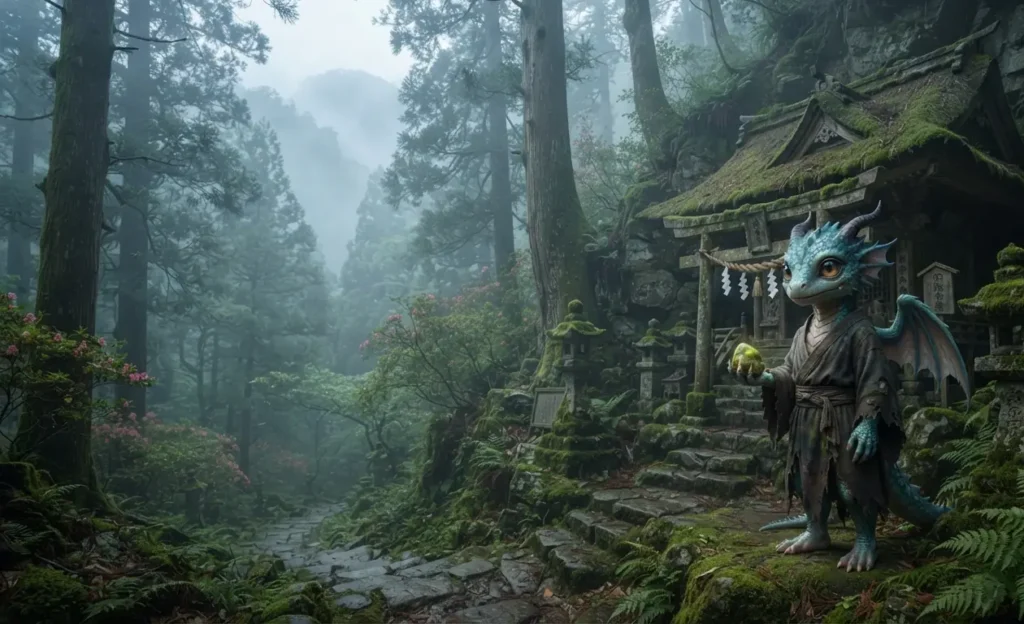
This regional legend from mountain communities in central Japan describes a woman who enters a mountain lake and doesn’t return. When her body is eventually recovered, or in some versions when she is never recovered, the lake subsequently produces a dragon that acts with specific characteristics associated with her personality.
The tradition describes the dragon as protective of women and children specifically, in a way that’s understood as the drowned woman’s maternal instincts continuing in her new form. But the protection is not peaceful. The dragon drowns men who approach the lake after dark, and the drowning is described as deliberate rather than territorial.
This is documented in Japanese regional folk tradition collections, particularly in ethnographic work on mountain lake supernatural beliefs in Nagano and Yamanashi prefectures. It’s regional folk legend rather than classical text, and I want to be clear about that distinction.
Why This Is Dark
The legend is dark in a specific way that I find more affecting than the straightforwardly violent legends.
The dragon is a mother who drowned. Her maternal protectiveness continues after death in a form that makes that protectiveness dangerous. She protects children by destroying adults. The love survived the death and the transformation, but the transformation changed what the love looks like in practice.
That specific dissonance, the maternal feeling persisting through forms that make it monstrous, is genuinely disturbing in ways that a simple monster legend isn’t.
3. The Three Monks and the Dragon’s Hunger
The Legend
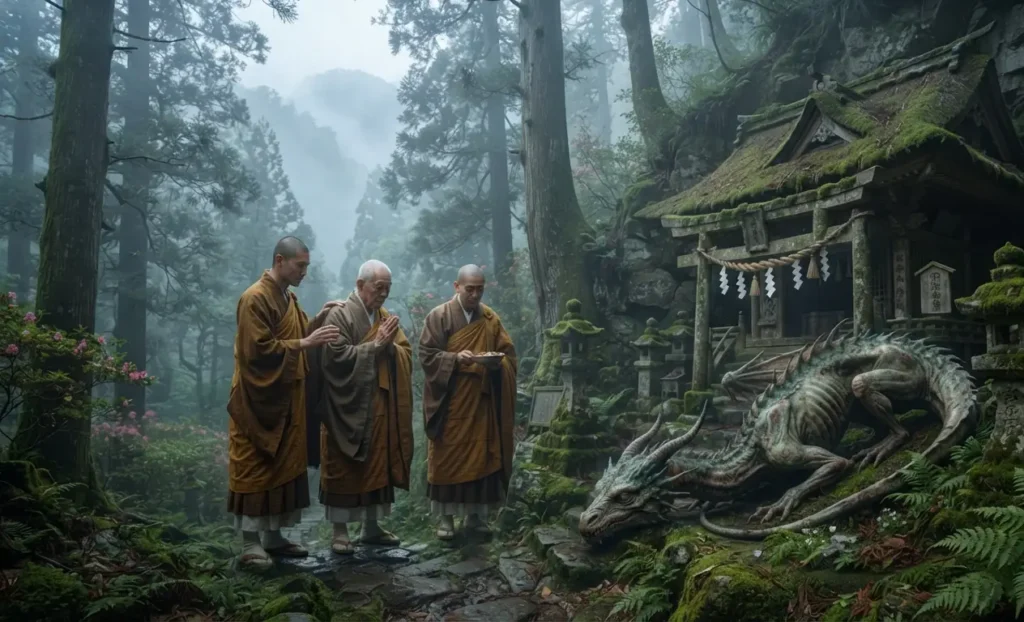
This legend, documented in Buddhist temple founding traditions in eastern Japan, describes a dragon that had been dormant beneath a specific mountain for an extended period. Three monks who established a hermitage near the mountain were warned in dreams that the dragon beneath would eventually wake and need to be fed.
The feeding that the tradition describes is not of fish or animals. The dream warned that the dragon’s hunger would be satisfied only by a specific human sacrifice: the eldest of the three monks, who had the greatest accumulated merit. The tradition describes the eldest monk’s voluntary descent into the mountain after completing his prayers.
The hermitage subsequently became a significant site, and the monk’s sacrifice is described in the founding legend as the reason for the site’s spiritual power. His merit, transferred to the dragon through the act of consumption, transformed the dragon from a threat into a guardian.
Why This Is Dark
The willing sacrifice at the center of this legend is dark in a theological rather than a visceral sense.
The tradition doesn’t present the sacrifice as wasteful or tragic. The monk chose it. The outcome was positive. But the mechanism, a dragon that requires human merit through literal consumption to be transformed from predator to protector, is disturbing in ways that aren’t resolved by the positive outcome.
The dragon didn’t become benevolent through conversion or persuasion. It became benevolent by eating someone. The transformation required consumption. That’s a theological statement about how the divine and the human interact that doesn’t have many equivalents in Western religious narrative.
4. Toyotama-hime’s Curse on the Sea
The Darker Aspect of a Famous Legend
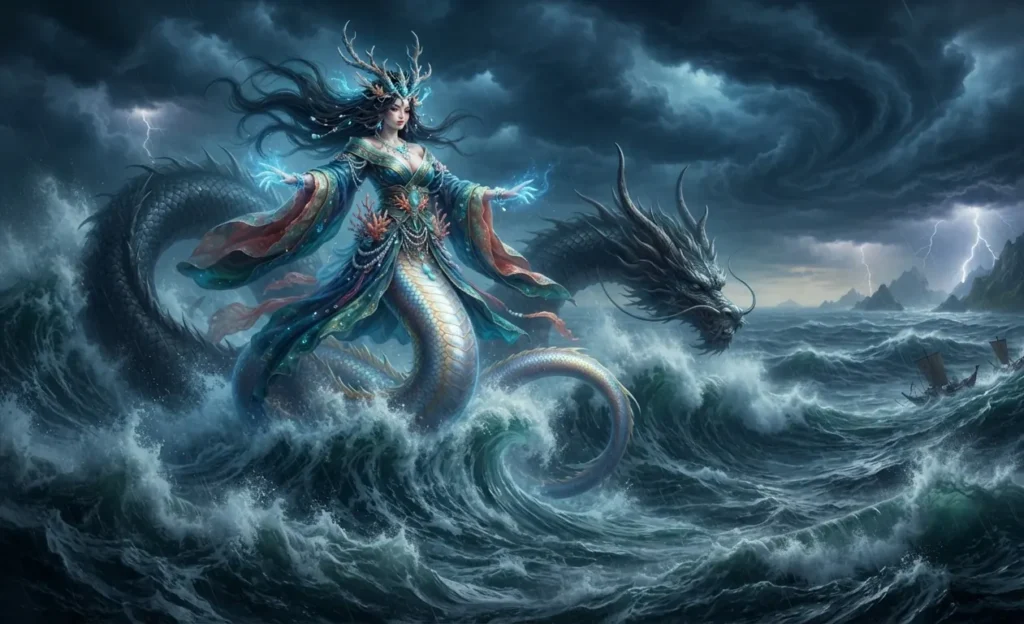
Most accounts of Toyotama-hime focus on the poignancy of her departure. She made one request. Her husband looked. She left forever. It’s a sad story but not typically presented as a dark one.
What those accounts omit is the aftermath documented in some classical textual variants.
Before leaving, Toyotama-hime placed her child in a grass hut and sealed it. She sang a specific song before departing, the content of which is recorded in the Kojiki. The song is described as a lament, but in older interpretive traditions, the departure is not simply sad. The sealed hut, the specific song, and the permanent severance of contact were understood in certain traditions as a form of curse: the sea would no longer be as generous to her husband’s line as it had been.
The dragon princess who was seen in her true form didn’t only leave. In the darker reading of the tradition, she withdrew the sea’s cooperation from the people who had broken her trust.
Why This Is Dark
This reading transforms one of Japanese mythology’s most affecting stories into something considerably more unsettling. The visible grief and the curse are the same act.
Toyotama-hime’s departure being simultaneously a personal tragedy and a divine punishment is theologically precise in ways the simpler “sad departure” reading isn’t. It also explains why, in the mythological account, the sea’s relationship with her son’s descendants is complicated rather than simply generous.
5. The Dragon That Would Not Die
The Legend
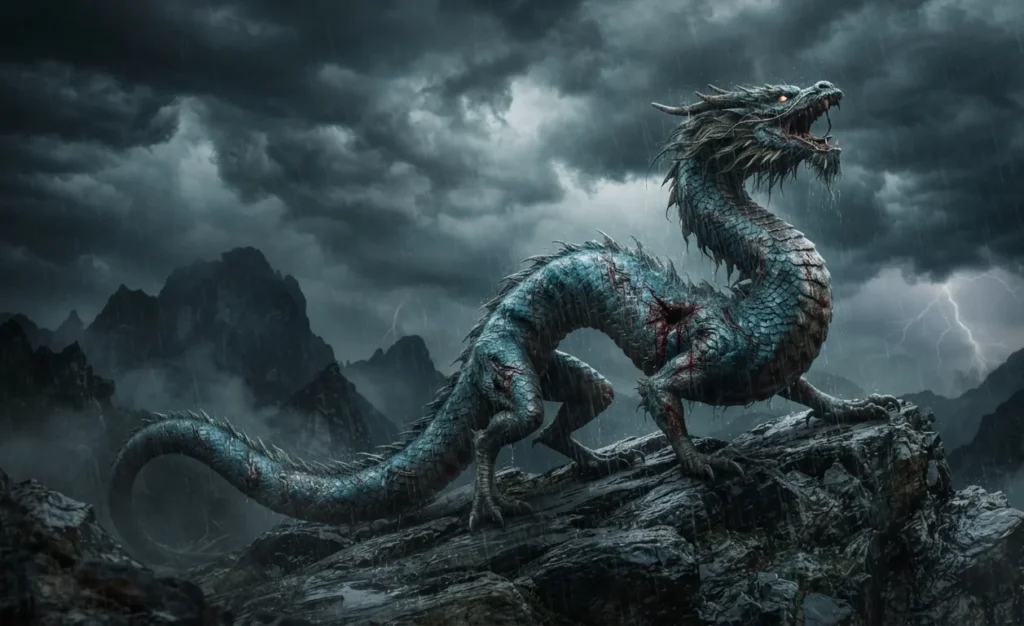
This folk legend, preserved in coastal traditions from the Sanriku coast of northeastern Japan, describes a dragon that was injured during a fishing community’s ritual attempt to drive it away from a harbor it was fouling with its presence.
The dragon didn’t die from the injury. It also didn’t leave. It remained in the harbor in its wounded state for seven years, according to the tradition, and during those seven years the harbor was cursed. No fish came. Ships that entered the harbor sank or were driven back. People who attempted to complete the original exorcism ritual were found drowned.
The community eventually appealed to a wandering Buddhist monk who performed a specific rite of compassionate release rather than exorcism, which the tradition describes as successful.
Why This Is Dark
The dragon in this legend is darkest not because of what it does deliberately but because of what it is: a suffering being whose suffering contaminates everything around it.
The harbor deaths and failures aren’t punishments in the conventional sense. They’re the consequences of a dragon in agony being unable to die. The community injured it without killing it, which created a situation where its presence remained but its capacity for normal dragon function was destroyed.
The dark content here is the contamination of suffering. Wounded things that can’t die are among mythology’s most disturbing figures, and this regional Japanese tradition uses that specific horror with considerable effectiveness.
6. The Serpent Husband’s Revenge
The Legend
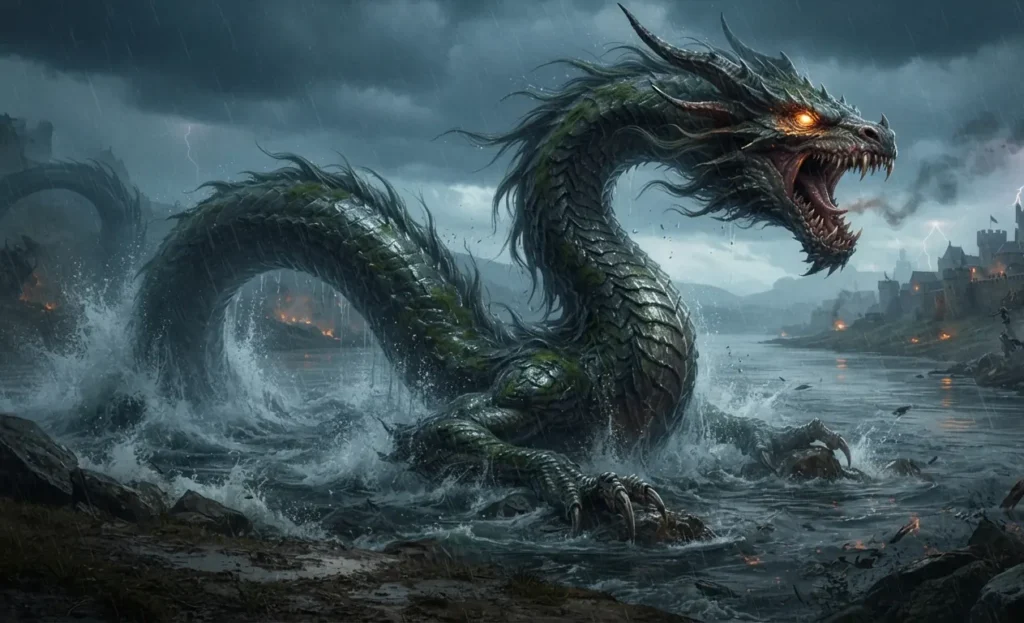
A folk tradition documented across multiple prefectures in the Tohoku region describes a woman who married a serpent deity in disguised human form, discovered his true nature, and fled with help from a Shinto priest.
The serpent, unable to follow her past the priest’s ward, transformed its anger into a sustained curse rather than immediate pursuit. The curse was specific: the woman’s descendants, for seven generations, would be born with serpent characteristics that made them impossible to marry.
The tradition describes these descendants as having scales on portions of their bodies, eyes with vertical pupils, or an inability to tolerate sunlight in ways that serpents cannot tolerate cold. The seven generations were described not as a fixed punishment but as the natural echo of the original union’s supernatural component gradually fading from the bloodline.
Why This Is Dark
The multigenerational curse is the dark element that distinguishes this from a straightforward “escaped the monster” legend.
The woman escaped. Her descendants didn’t escape anything. They were born into consequences they hadn’t generated. The serpent’s anger was displaced from someone who had genuine power to resist it onto people who had none.
That specific injustice, the punishment falling on people who had no part in the transgression, is a darkness that cuts differently from simple monster horror. It’s the darkness of inheritance: being born into someone else’s consequence.
7. The Dragon That Swallowed the Moon
The Legend
This legend is documented in Japanese regional astronomical folklore and exists in multiple variants across different prefectures, suggesting it has older roots than any single regional origin would imply.
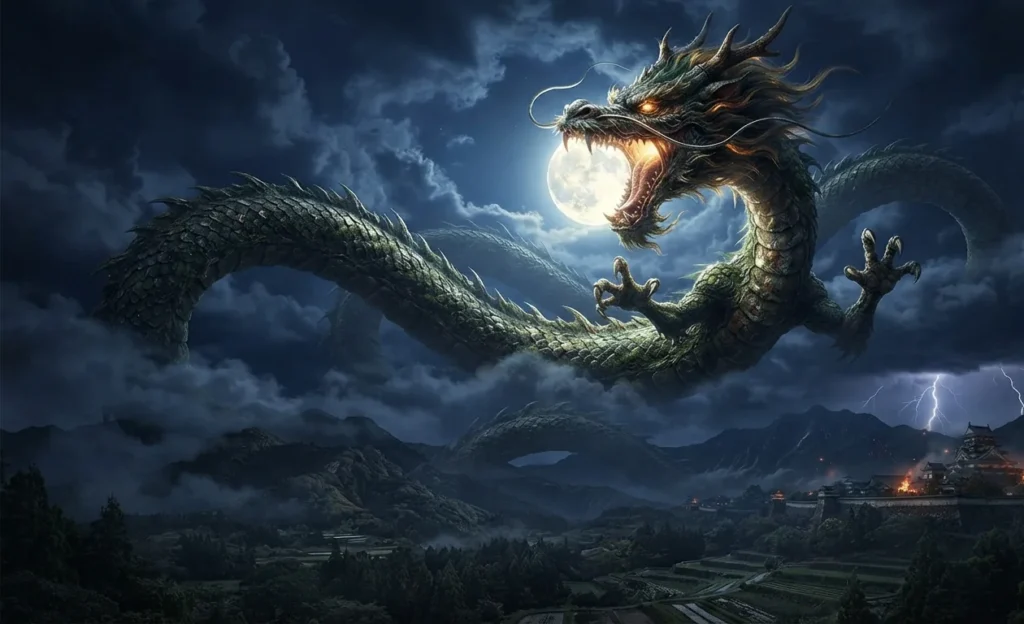
The tradition describes a dragon so large that it attempted to swallow the moon. The attempt was observed by a specific monk or emperor, depending on the variant, who performed a ritual that prevented the dragon from completing the act. The dragon, having failed, descended into a specific body of water and remained there.
The dark element isn’t the attempted moon-swallowing itself. It’s what the tradition says would have happened if the attempt had succeeded: without the moon, the tides would stop. Without tides, coastal communities would lose the rhythmic sea movement that their fishing depended on. Without fishing, the communities would starve.
The dragon that swallowed the moon would have killed everyone along the coast not through violence but through the invisible consequences of disrupting the natural cycle.
Why This Is Dark
Environmental catastrophe through cosmic disruption is genuinely disturbing in ways that direct violence isn’t.
The moon-swallowing dragon doesn’t want to harm humans. Harm to humans is simply the downstream consequence of the dragon pursuing its own scale of appetite. The community nearly starved not because a dragon hated them but because a dragon was hungry and large enough that its hunger would have disrupted the cycle they depended on.
That specific scale of indifference, destruction as a byproduct rather than a purpose, is among mythology’s most modern-feeling horrors, and this Japanese tradition was expressing it centuries before ecological horror became a recognized concept.
8. The Dragon of the Execution Ground
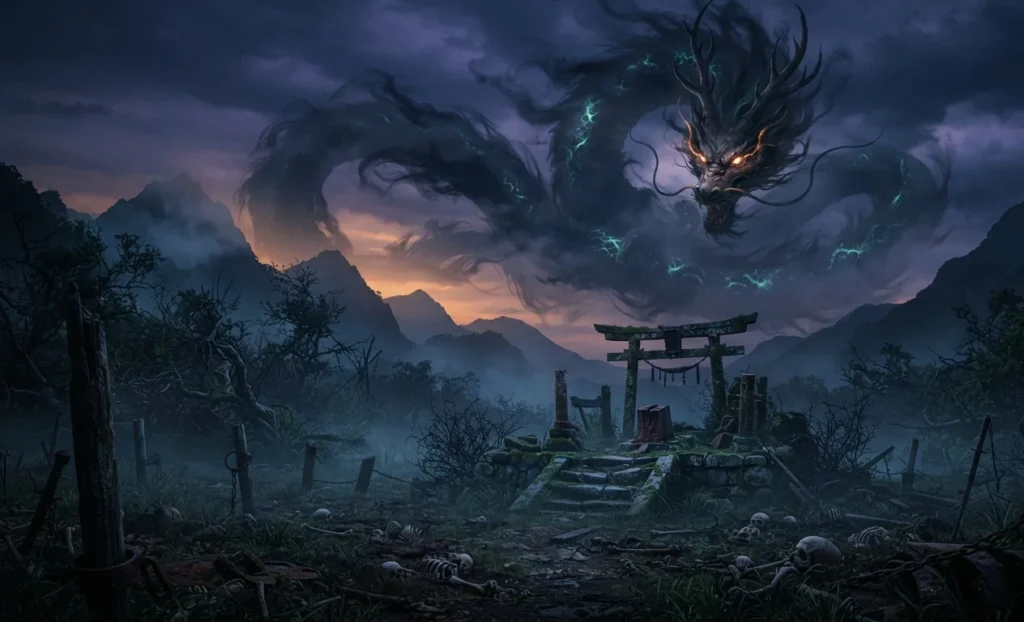
The Legend
This is among the most specifically disturbing legends on this list, and I want to be clear that it comes from Japanese regional folk tradition associated with historical execution sites rather than from classical texts.
Several historical execution grounds in Japan accumulated supernatural legends, and dragon-associated beliefs appear in some of these traditions. The specific variant I’m describing involves a legend that a dragon inhabited the pool of blood that formed at a particular execution site, fed by executions across many years.
The tradition held that this dragon was neither benevolent nor simply malevolent. It was described as a being that had been summoned into existence by accumulated human death, that didn’t exist before the executions began and would cease to exist if the executions stopped.
The community associated with the site described the dragon as needing to be appeased through specific offerings, not because it threatened them but because its existence was understood as a form of justice: the deaths that created it demanded recognition, and ignoring the dragon was ignoring the deaths.
Why This Is Dark
The dragon as a collective consequence of human death rather than as an independent being is the darkest conceptual move on this list.
The tradition is saying that enough human death, accumulated in one place over enough time, generates a dragon. The dragon is what happens to spilled blood when it accumulates beyond a certain threshold. The beings who died unjustly or justifiably didn’t dissipate into nothing. They accumulated into something.
That’s a disturbing thing for a tradition to believe, and a disturbing thing to have to appease.
9. The Dragon Woman of the Well
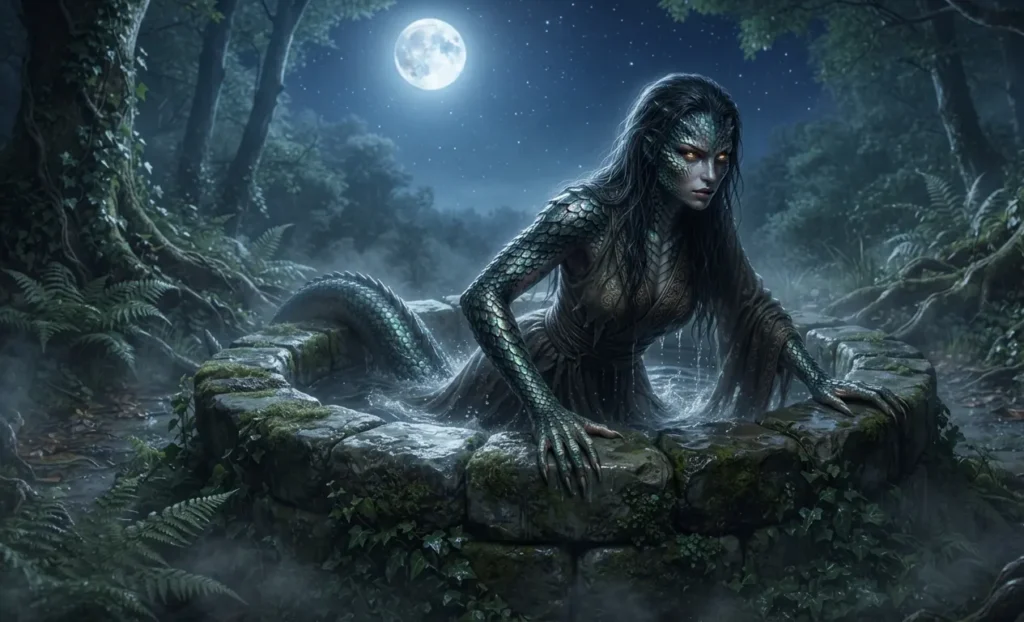
The Legend
This folk tradition, documented in multiple regional variants across western Japan, describes a woman who falls or is pushed into a well and transforms into a dragon through the extremity of her dying experience.
The dark detail that distinguishes this from similar transformation legends is what the transformed dragon does next. It doesn’t emerge from the well. It stays in it.
The dragon’s continued habitation of the well contaminated the water, which was understood as the dragon’s grief making the water unable to sustain life. The water didn’t become poisonous. It became wrong in a way that people recognized without being able to articulate precisely: livestock wouldn’t drink it, plants watered with it grew poorly, people who drank it experienced a persistent sorrow that lifted when they left the vicinity of the well.
Why This Is Dark
The well dragon is the loneliest figure on this list.
She transformed but didn’t leave. She haunts the specific location of her death not because she wants to but because she apparently can’t conceive of being anywhere else. The sorrow she generates in water is not a curse she’s intentionally casting. It’s her emotional state infecting everything she touches.
After twenty years of mythology, I’ve encountered many transformation legends. This is the only one where the tragedy of the transformation is specifically about the transformed being’s inability to move on. The grief that killed her became a dragon that can’t leave the well where she died.
That’s not horror. That’s something more difficult to name.
Frequently Asked Questions
Are these legends from classical Japanese texts or from folk traditions?
Both, with source quality noted throughout. Legends 1 and 4 draw from the Kojiki and classical texts. Legends 2, 3, 5, 6, 7, 8, and 9 come from documented regional folk traditions and ethnographic records. Folk traditions are labeled as such because source quality matters for responsible mythology writing.
Why are so many of these dark legends about women transforming into dragons?
The pattern reflects a specific cultural tradition: women in states of extreme emotion, particularly grief, obsession, or betrayal, were understood in Japanese folk belief to have a particular capacity for transformation into serpent or dragon form. The psychological state became literal and physical in these traditions in ways that male characters rarely experience.
Is there a Japanese concept equivalent to the Western idea of a cursed dragon?
Not precisely equivalent, but several traditions describe dragons that contaminate or curse their environments not through deliberate action but through what they are: a suffering dragon in a harbor, a grief-stricken dragon in a well, a dragon born of accumulated death at an execution ground. The contamination is existential rather than intentional.
Are any of these dark legends still associated with accessible locations in Japan?
Omiwa Shrine, associated with the Miwa serpent tradition, is an active religious site in Nara prefecture open to visitors. Historical execution grounds associated with such legends are sometimes marked as historical sites. Specific lakes and wells mentioned in regional traditions are sometimes preserved as cultural heritage locations, though identifying the specific sites requires specialized local knowledge.
What is the scholarly status of Japanese regional dragon folklore?
Japanese regional folklore has been documented by ethnographers since the Meiji period, with significant scholarly contributions from researchers including Yanagita Kunio, whose work on Japanese folk belief is foundational. Regional dragon and serpent traditions are part of this documented folk belief system. Translation into English remains limited, which is why this material is largely unknown to Western readers.
Final Thoughts
Nine legends. None of them from the bright, benevolent face of Japanese dragon mythology that most popular accounts present.
What this material reveals is that the Japanese tradition understood dragons not only as cosmic sea sovereigns and divine companions but as the specific form that human tragedy takes when it exceeds human form. Women who drowned, women who were betrayed, women who loved something that couldn’t be safely loved: the tradition turned them into dragons rather than simply into ghosts.
That’s a specific cultural decision about what dragons mean. They’re not only the greatest and most powerful. They’re also the most extreme. The most extreme grief. The most extreme love. The most extreme consequence.
The tradition made dragons out of those extremes because dragons are the beings large enough to contain them.
Related Articles
- Dragon Mythology: How Dragons Are Depicted Across Cultures
- Western Dragon vs Eastern Dragon [Myth, Power & Origin]
- Chinese, Japanese & Korean Dragons: How They Actually Differ
- 7 Best Dragon Rings For Men That Look Premium
- 12 Best Dragon Books Ever Written [Updated 2026]
- 12 Famous Japanese Dragons and the Legends Behind Them
- 15 Japanese Dragon Legends Hollywood Has Been Ignoring
Written by Batin Khan | Mythology and philosophy reader across world cultures (20 years), Fantasy reader for the past 10 years | Specialist in Xianxia, Eastern and Western mythological traditions, fantasy, and Sci-Fi.