
 By
By Quick Takeaways:
- What are the Jade Emperor powers? The Jade Emperor’s most powerful abilities aren’t combat powers they’re structural powers that govern the cosmos at the deepest level
- This ranking is based on scope and irreplaceability. How much of reality depends on each power, and what would break without it
- Several of his most important powers are administrative rather than spectacular which is precisely what makes them formidable
- Understanding what the Jade Emperor can actually do changes how you read Chinese mythology, folk religion, and the Chinese divine court as a whole
- This list draws from classical Daoist texts, folk religion traditions, and the mythological record, not from pop culture interpretation
I want to be upfront about the ranking criteria before we start, because how you rank divine powers depends entirely on what you think “strength” means.
If you rank by combat power, who could win a fight the Jade Emperor isn’t going to top this list. As I’ve argued many times on my blog, that’s the wrong metric for his role. Combat power is a specialist function. The Jade Emperor isn’t a specialist. He’s the supreme administrator of existence itself.
So, I’m ranking by scope and irreplaceability: how much of reality depends on each power, and what would break if this power were removed? By that metric, the ranking looks very different from a combat tier list and considerably more interesting.
Here are the nine Jade Emperor powers, from impressive to foundational.
Jade Emperor Powers From 9 to 1
Power 9: Cosmic Cultivation Baseline
What it is
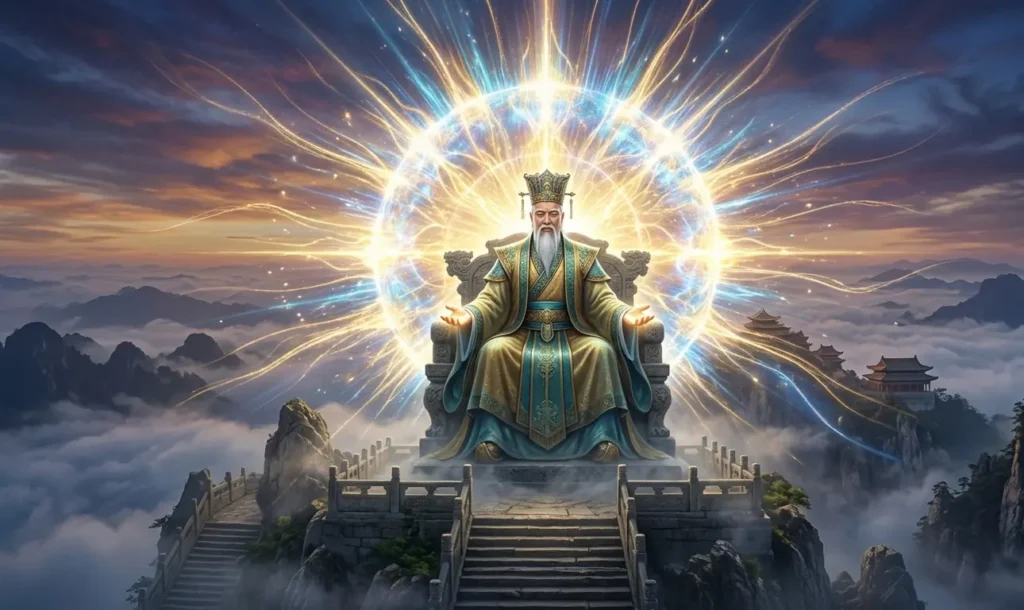
The Jade Emperor didn’t start as a god. He achieved his position through 1,750 aeons of moral cultivation, an inconceivably vast period of practice, development, and accumulated merit.
The cultivation baseline this produced is a form of power in its own right. His cosmic capability isn’t the borrowed authority of a figure who was placed in charge. It’s the earned capability of a being whose fundamental nature has been refined across a duration that makes human time-scales irrelevant.
Why it Ranks Ninth
The cultivation baseline is the foundation of everything else. Without it, none of the other powers would be legitimately his. But in terms of active function in the world, it’s the least directly impactful of the nine. It’s capability rather than deployed power.
It also ranks ninth because it’s the most comparable to what other cultivated divine beings possess. The Jade Emperor’s other powers are unique to his specific role. The cultivation baseline, however vast, is a category of power that other advanced beings also possess.
What the mythology says: The Gaoshang Yuhuang Benyuan Jing (Jade Emperor’s Origin Scripture) describes the specific character of this cultivation, sustained moral practice, service to suffering beings, and accumulated merit across countless lifetimes.
Power 8: Divine Punishment Enforcement
What it is
The Jade Emperor has direct authority to determine and enforce punishments for violations of the cosmic moral order against mortals, against divine officials, and against beings of any category who transgress the law governing their realm.
This includes:
- Ordering the Ministry of Thunder to deliver lightning strikes against those who commit severe moral violations
- Dispatching divine armies against beings who disrupt cosmic order
- Demoting divine officials who fail their responsibilities
- Issuing decrees that result in punishments enacted through the entire divine court machinery
Why it Ranks Eighth
Punishment enforcement is a real and significant power. But it’s delegated power in practice enacted through divine ministers and armies rather than directly by the Jade Emperor personally. The power is genuine; the execution is administrative.
It also has a reactive character. It responds to violations rather than proactively governing reality. Reactive power, however formidable, ranks below structural power in my assessment.
Jade Emperor vs Sun Wukong: Who Really Won the Rivalry?
Power 7: Immortality Dispensation
What it is
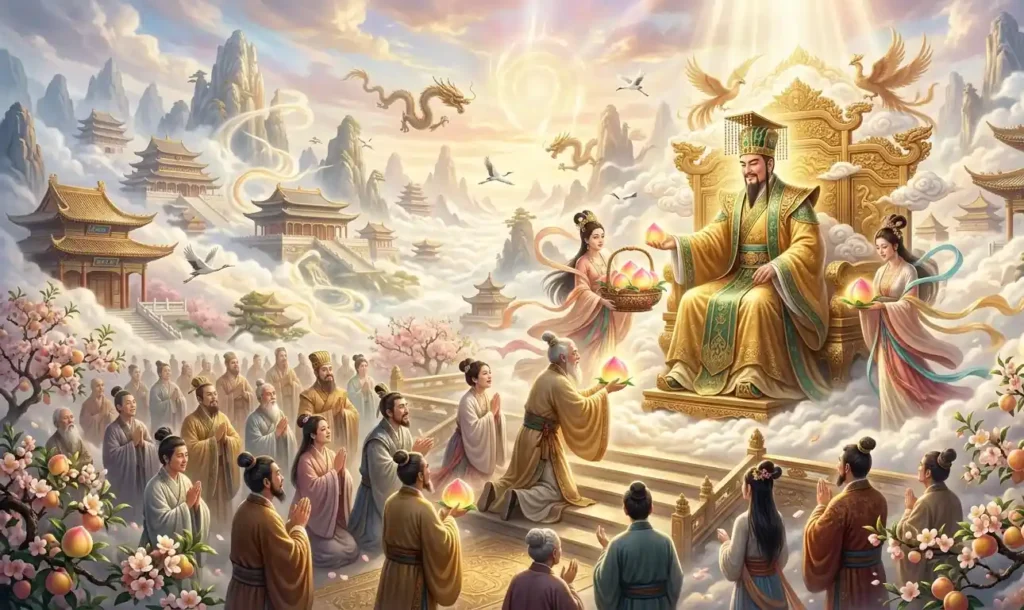
The Jade Emperor governs access to the substances and processes through which immortality can be achieved, including oversight of the divine peach gardens, the immortality elixirs, and the cultivation paths that lead to transcendence of ordinary human limitation.
While the Queen Mother of the West physically manages the peach gardens, the immortality tradition operates within the Jade Emperor’s cosmic jurisdiction. His court controls the divine peach banquet guest list. His approval governs which mortal cultivators receive divine assistance in their ascent.
Why it Ranks Seventh
Immortality dispensation is enormously significant for every being pursuing transcendence. But it’s also partially delegated. The Jade Emperor governs the framework rather than personally dispensing immortality at the individual level.
It ranks seventh because its scope, while vast, is limited to beings specifically pursuing the immortality path. His powers ranked above affect everyone regardless of their cultivation status.
Power 6: Weather and Natural Force Oversight
What it is
The Jade Emperor has ultimate authority over all natural forces, weather, seasons, natural disasters, and the elemental processes that govern the physical world. The various nature ministries (Thunder, Fire, Water, Wind) administer these forces day-to-day, but final authority rests with him.
This means:
- Final approval of major weather events
- Authority to override ministry decisions about natural force deployment
- Power to grant or withhold rain during drought through direct intervention or ministry direction
- Authority over the timing and intensity of natural catastrophes used as divine punishment
Why it Ranks Sixth
Weather authority is cosmologically significant and practically vital for the agricultural civilization that developed this mythology. But it operates primarily through the ministry structure rather than direct personal action, and it’s one layer removed from the most fundamental governance powers.
The powers ranked above this are ones where the Jade Emperor’s personal authority is more directly and irreplaceably engaged.
Power 5: The Annual Moral Audit System
What it is
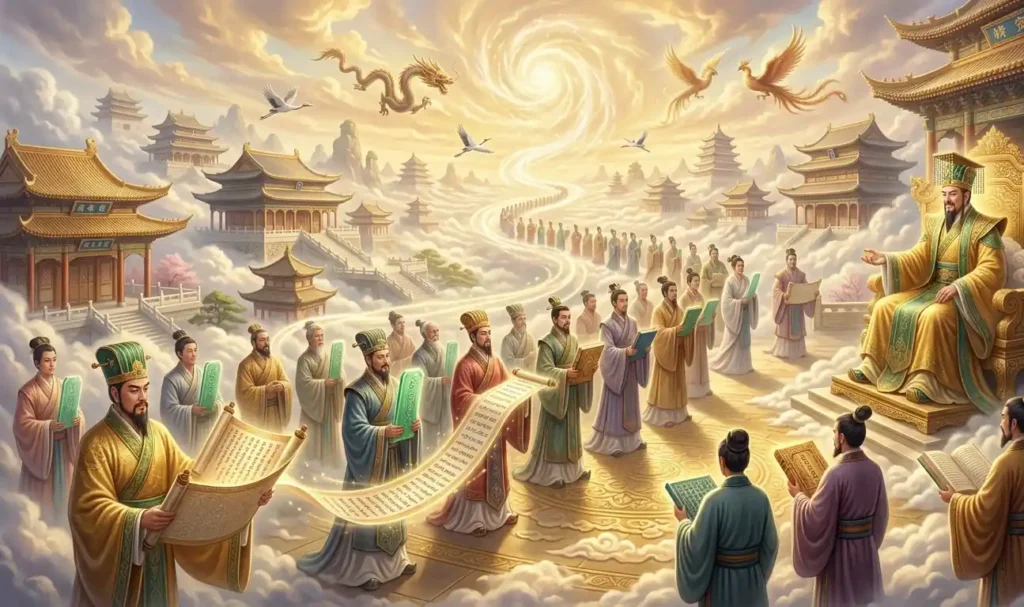
The Jade Emperor presides over a complete divine audit of every household’s moral conduct executed annually through the Kitchen God system and the broader reporting structure that connects local earth gods, city gods, and regional divine officials all the way to his heavenly court.
The Kitchen God reports to the Jade Emperor on the household’s behavior before the Lunar New Year. The Jade Emperor reviews these reports and determines each household’s fortune allocation for the coming year.
This extends to every level of human society, from individual households through communities through regions. The entire moral governance of human civilization flows upward through this reporting structure and is adjudicated by his court.
Why it Ranks Fifth
This power ranks fifth because of its comprehensive scope. It touches every human household on an annual basis, making the Jade Emperor practically relevant to every person who participates in this religious tradition.
What’s striking is that it operates through an elegant distributed system rather than requiring direct divine attention at every level. The genius of the architecture is that it makes comprehensive moral governance possible at civilizational scale.
Power 4: Cosmic Decree Authority
What it is
The Jade Emperor has the authority to issue cosmic decrees that have the force of universal law directives that the entire divine bureaucracy is obligated to implement, that govern natural processes, and that shape the conditions of existence for beings across all three realms.
A cosmic decree can:
- Establish new divine positions and functions
- Alter the conditions governing specific natural processes
- Grant or revoke divine privileges
- Set the framework within which all divine governance operates
Why it Ranks Fourth
Cosmic decree authority is the active expression of governance power, the capacity to shape the rules that everything else operates by. It’s not just administering existing law. It’s making law at the cosmic level.
This ranks fourth rather than higher because decrees, however authoritative, are implemented through the machinery of the divine court. The three powers ranked above this are ones where the Jade Emperor’s authority is more direct and more structurally fundamental.
Power 3: Fate Governance Through the Books of Life and Death

What it is
The Books of Life and Death, maintained in the underworld administration under the Jade Emperor’s ultimate authority, contain the complete record of every being’s predetermined lifespan and destiny. The Jade Emperor’s court governs the framework within which these records operate.
This means:
- Authority over the recorded lifespans that determine when beings die
- Oversight of the karmic accounting that shapes rebirth conditions
- Ultimate authority over the underworld administration’s operation
- The power whose violation Sun Wukong committed when he modified his own entry in the Book
Why it Ranks Third
Fate governance ranks third because of its absolute comprehensiveness. It touches every being’s most fundamental condition. Whether you live, how long, what karmic conditions shape your existence: all of this operates within the framework that the Jade Emperor’s court governs.
The journey from birth to death for every being in all three realms is encompassed within this power’s scope. That’s about as comprehensive as authority gets.
It ranks third rather than first or second because it’s partially delegated to the underworld administration for day-to-day operation. The framework is the Jade Emperor’s, but the active management is Yama’s.
Power 2: Divine Appointment Authority
What it is
The Jade Emperor has the power to appoint, promote, demote, and reassign every divine official in the entire Heavenly Court from the greatest celestial ministers down to the local earth gods responsible for individual villages.
This is structural power of the deepest kind. The entire divine bureaucracy, every figure who administers any aspect of natural or human affairs holds their position because the Jade Emperor has either granted or permitted it.
This means:
- Every nature ministry head serves at his appointment
- Every Dragon King operates within a framework he sanctions
- Every city god, earth god, and kitchen god holds a position that flows from his divine court’s authority
- The composition of the divine bureaucracy itself is his creation
Why it Ranks Second
Divine appointment authority ranks second because of its structural reach. Every power on this list that involves other divine figures depends, ultimately, on those figures holding the positions that allow them to exercise their power.
Remove divine appointment authority and the entire Heavenly Court’s structure dissolves. It’s the power that makes every other power possible within the divine system.
The only reason it doesn’t rank first is that it operates within the three-realm jurisdiction rather than being the jurisdiction itself.
Power 1: Three-Realm Jurisdiction
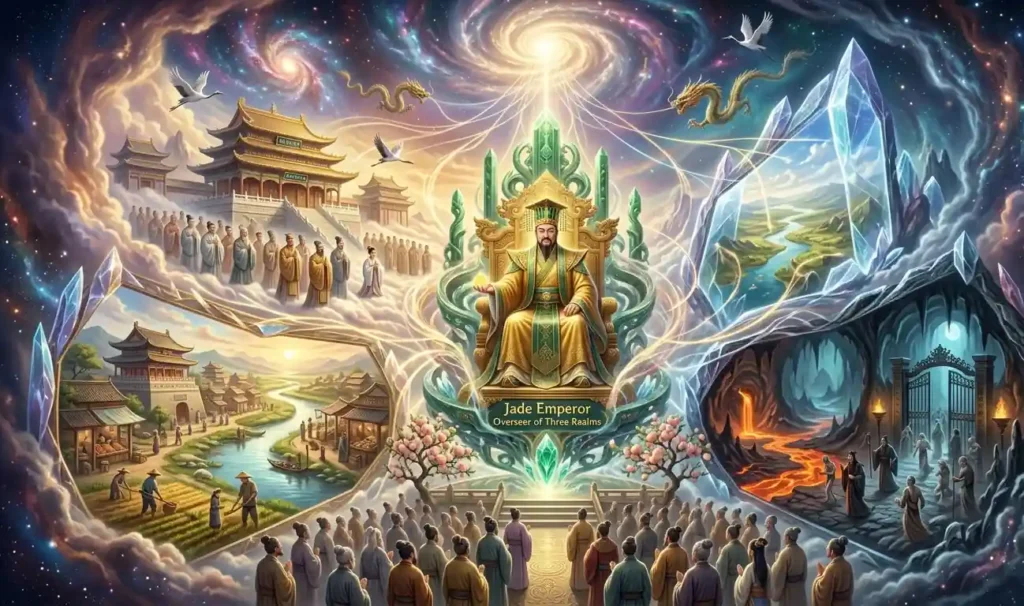
What it is
The Jade Emperor’s supreme power, the one that ranks above everything else, is his jurisdiction over all three realms simultaneously: heaven, earth, and the underworld.
This is governance power at its maximum possible scope. Everything that exists in any of the three realms operates within the framework his authority establishes. Divine beings in heaven. Living beings on earth. Dead beings in the underworld. All of it is under his jurisdiction.
Why it Ranks First
Three-realm jurisdiction ranks first because it’s the container within which every other power operates. His ability to appoint divine officials second on this list is meaningful because those officials govern the three realms that are under his jurisdiction. His fate governance third is meaningful because fates play out within the three realms he governs.
Remove three-realm jurisdiction and every other power loses its context.
This is why the Jade Emperor is the supreme deity of the operational divine court in a sense that’s genuinely comprehensive. It’s not that he’s the strongest fighter or the most powerful individual being. It’s that the scope of his authority encompasses everything that exists within the operating cosmos.
The Three Pure Ones sit above him in the theological hierarchy as transcendent metaphysical principles. But within conditioned existence within the universe as it currently operates, his jurisdiction is absolute and universal.
What makes this the strongest power: You can imagine a cosmos with someone else holding the other eight powers. You can’t imagine the same cosmos without three-realm jurisdiction existing and being held by someone. This power is the cosmos’s operational necessity.
The Complete Ranking
| Rank | Power | Scope |
|---|---|---|
| 1 | Three-realm jurisdiction | Everything in existence |
| 2 | Divine appointment authority | Every divine official |
| 3 | Fate governance | Every being’s lifespan and destiny |
| 4 | Cosmic decree authority | All cosmic law |
| 5 | Annual moral audit | Every household annually |
| 6 | Weather and natural force oversight | All natural processes |
| 7 | Immortality dispensation | All beings seeking transcendence |
| 8 | Divine punishment enforcement | All moral violations |
| 9 | Cosmic cultivation baseline | Personal capability foundation |
Frequently Asked Questions
Is combat power not one of the Jade Emperor’s divine powers?
The Jade Emperor certainly has personal power after 1,750 aeons of cultivation. But his mythology is defined by governance, not combat. Judging him by battle strength is like judging a head of state by athletic ability. His role is rule, and that is what this ranking measures.
Which of his powers is most relevant to ordinary people?
The annual moral audit system (Power 5) is arguably the Jade Emperor’s most relevant function in Chinese folk religion. Through the Kitchen God’s yearly report, his review of household conduct, and the allocation of fortune for the year ahead, he remains directly connected to families observing Lunar New Year traditions.
Does the Jade Emperor ever use these powers personally or always through delegation?
Both. Some powers, such as Three Realms jurisdiction and cosmic decree authority, are inherently personal and cannot be exercised by anyone else. Others, including weather oversight and punishment enforcement, are routinely delegated to the appropriate ministries. The genius of the celestial bureaucracy is that his authority reaches everywhere through this chain of delegation, without requiring his direct involvement in every matter.
Is the Jade Emperor the most powerful deity in Chinese mythology?
Not necessarily. While the Jade Emperor is the supreme ruler of Heaven in many traditions, some cosmological systems place transcendent figures such as the Three Pure Ones above him. His authority is often administrative and cosmic rather than purely martial.
What are the Three Realms under the Jade Emperor’s rule?
The Three Realms generally refer to Heaven, Earth, and the Underworld. As their supreme administrator, the Jade Emperor occupies the highest position within the celestial hierarchy of many Chinese religious traditions.
Final Thoughts
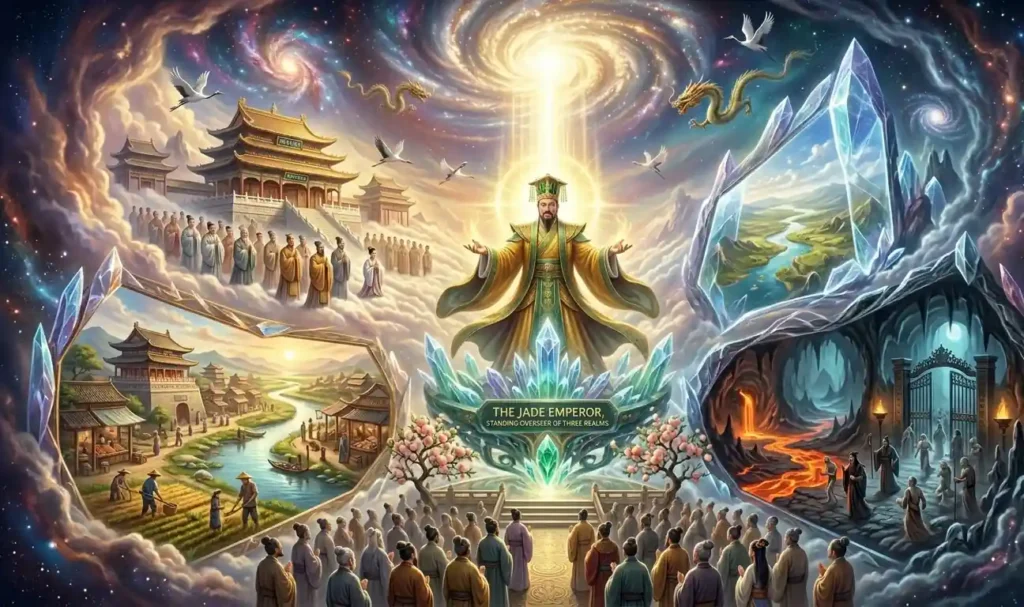
Nine powers. One supreme administrator of existence.
What I find most interesting about this ranking is the consistent pattern: the Jade Emperor’s most powerful abilities are structural rather than spectacular. Three-realm jurisdiction doesn’t produce lightning bolts or move mountains. It establishes the framework within which lightning bolts and mountains exist.
That’s genuine power. The kind that doesn’t need to announce itself, because everything that announces itself does so within the space it created.
Related Articles
- Jade Emperor: Origin, Powers & Sacred Meaning in Mythology
- What Is the Heavenly Court? Chinese Myth’s Divine Authority
- Jade Emperor Family: The Divine Family of Chinese Mythology
- Are the Jade Emperor & Queen Mother of the West Married?
- 11 Surprising Jade Emperor Facts Most Readers Miss
- Was the Jade Emperor Weak? The Answer Might Surprise You
- Xiwangmu vs Jade Emperor: Who is More Powerful in Chinese Myth?
References
- Birrell, Anne. Chinese Mythology: An Introduction.
- Major, John. Heaven and Earth in Early Han Thought.
- Kohn, Livia. Daoism and Chinese Culture.
- Allan, Sarah. The Shape of the Turtle.Hanshu (Book of Han).
- Shiji (Records of the Grand Historian).
- Tao Te Ching – Translated by J. Legge
- Daozang – Daoist Canon
- Zhuangzi – Chinese Text Project
- Taipingjing – Chinese Text Project
- Investiture Of The Gods
- Journey To The West
- The Book of Rites
- Jade Emperor Origin Scripture
- The Taoist Body – Kristofer Schipper