
 By
By Quick Takeaways:
- The Jade Emperor (Yuhuang Dadì) is the supreme ruler of the Chinese Heavenly Court and the administrative head of all cosmic governance, but he sits beneath the Three Pure Ones in the theological hierarchy
- His authority isn’t based on birth or divine nature. Most traditions describe him as a being who achieved his position through 1,750 aeons of moral cultivation and accumulated merit
- His powers span every domain of natural and human affairs, weather, fate, divine appointments, cosmic law enforcement, and the governance of heaven, earth, and the underworld simultaneously
- The Jade Emperor’s portrayal varies dramatically across different sources, from the majestic cosmic sovereign of religious practice to the somewhat limited authority figure in Journey to the West
- He remains one of the most actively worshipped deities in Chinese religious practice today, with his birthday celebrated on the ninth day of the first lunar month
Here’s something that genuinely surprised me when I started studying the Jade Emperor seriously.
I’d encountered him dozens of times across Chinese mythology before I sat down and worked out his actual theological position. I assumed reasonably, based on how he’s usually described, that he was simply the guy who stood at the peak in the Chinese Heavenly Court. The divine emperor. Number one.
He’s not, quite. And the reason he’s not is philosophically interesting rather than just hierarchically pedantic. The Jade Emperor is supreme in the administrative and governing sense. Above him sit the Three Pure Ones, the transcendent metaphysical principles that underlie the cosmos itself. The Jade Emperor runs the government of heaven. The Three Pure Ones are the philosophical ground from which governance emerges.
That distinction matters for understanding not just who the Jade Emperor is but what the Chinese religious tradition is doing with its divine hierarchy.
Who The Jade Emperor Actually is
His Full Title
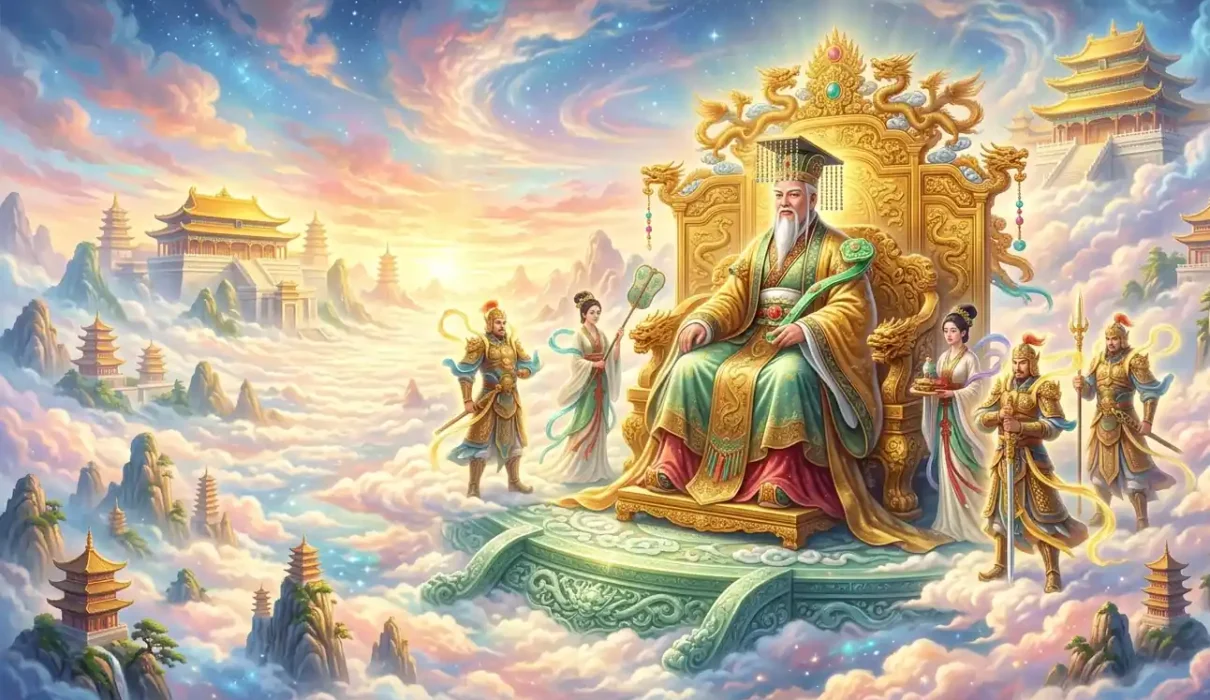
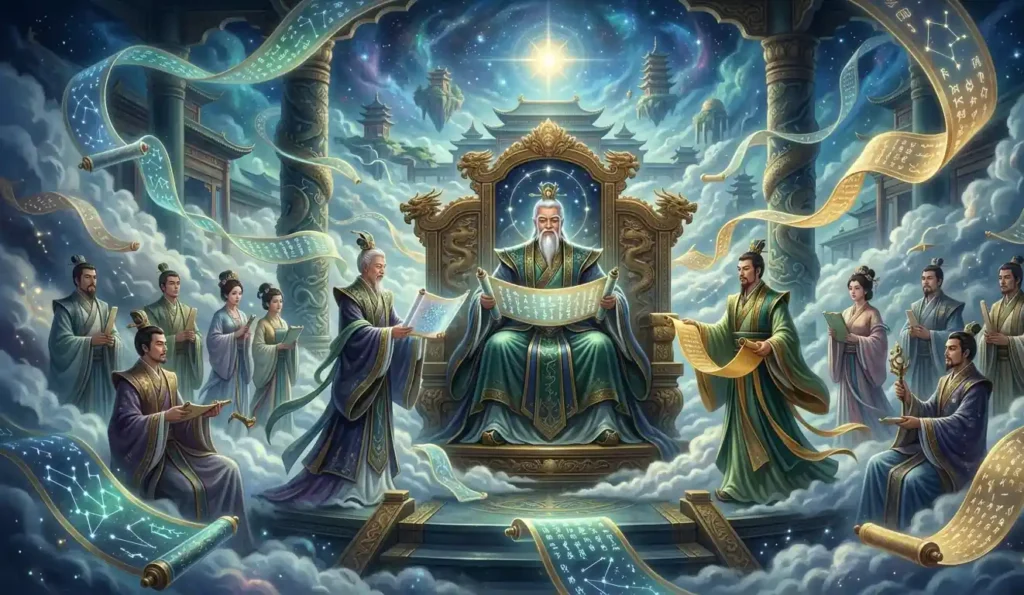
The Jade Emperor’s full formal title in Chinese religious tradition is impressively elaborate: Xuanling High Perfected Jade Emperor of the Mysterious and Numinous, the Awe-inspiring One of the August Heaven, the Father-King of the Golden Watchtower (If you can remember it in 3 reps, you are a genius).
This is condensed in practice to Yuhuang Dadì – Jade Emperor Great Deity, or simply Yudì – Jade Emperor.
The jade in his name isn’t incidental. In classical Chinese culture, jade (yu) represented virtue, moral excellence, and celestial purity. The Jade Emperor is literally the Emperor of Jade Virtue, the ruler whose authority is founded on moral perfection rather than material power.
His Position in the Hierarchy
The Jade Emperor occupies a specific and carefully defined position within the Chinese divine order:
- Above him: The Three Pure Ones – Yuanshi Tianzun, Lingbao Tianzun, and Daode Tianzun (the deified Laozi)
- His level: Supreme ruler of the operational divine court, governing heaven, earth, and the underworld
- Below him: All divine officials, ministries, generals, and local deities of the Heavenly Court
The Three Pure Ones are transcendent principles. They exist at the level of pure cosmological reality rather than governance. The Jade Emperor is where cosmic principle meets practical administration. He’s the CEO of the universe, if you’ll allow the analogy, while the Three Pure Ones are the philosophical founders who established the values the organization runs on.
The Origin Story: How He Became Jade Emperor
The Cultivation Origin
This is the aspect of the Jade Emperor’s mythology that I find most interesting and that most popular accounts miss entirely.
The dominant tradition, preserved in Song Dynasty religious texts and continuing in contemporary Chinese folk religion, doesn’t describe the Jade Emperor as always having been what he is. He became what he is.
The account from the Gaoshang Yuhuang Benyuan Jing (The Jade Emperor’s Origin Scripture) describes his path:
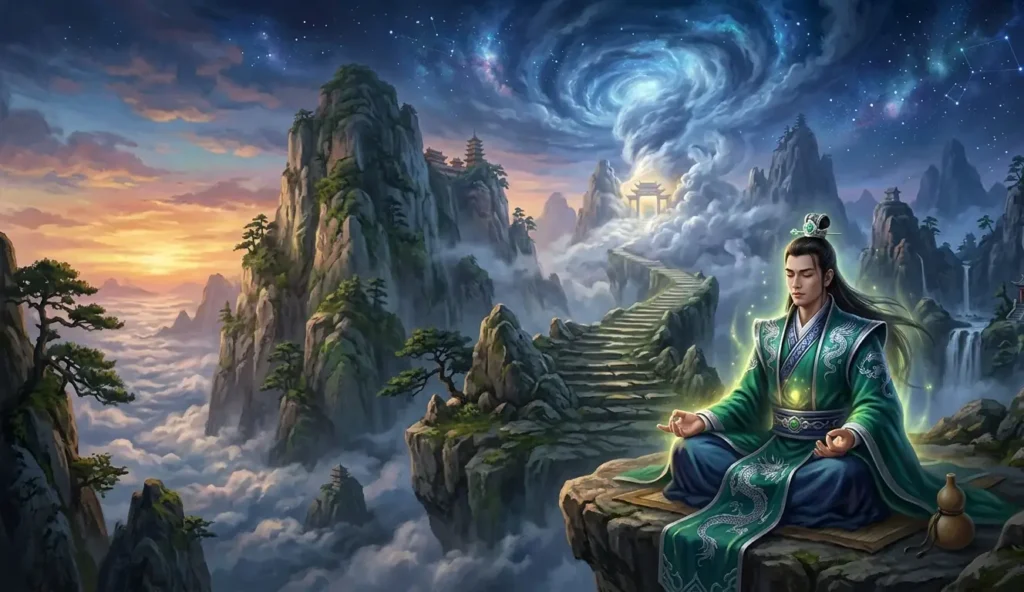
- He was born as the son of a great king in the Pure Felicity and Majestic Jade Kingdom
- From birth, he had the aspiration to relieve the suffering of all beings
- He abdicated his royal throne to study the Dao in the mountains
- He underwent 1,750 aeons of cultivation, a number so vast it functions as a mythological expression of inconceivable duration
- Through sustained moral practice, compassion, and the accumulation of merit across this astronomical timeframe, he achieved his current position
This earned-authority narrative is theologically significant. The Jade Emperor rules not because he was born divine, not because he won a divine conflict, but because he cultivated virtue across a duration that makes every human concept of time feel trivial.
What This Means Philosophically
This origin story reflects Chinese culture’s most fundamental assumption about legitimate authority: that it derives from cultivated virtue, not from inherent nature or conquered power.
The same logic governs the human emperor’s mandate from heaven. The emperor rules because heaven endorses his virtue, and when virtue fails, the mandate can be withdrawn. The divine emperor’s authority follows the same structure, just extended to a cosmologically incomprehensible scale.
The supreme deity of the Chinese religious system is supreme because he earned it. That’s not a small philosophical claim.
The Jade Emperor’s Powers
Governance Powers
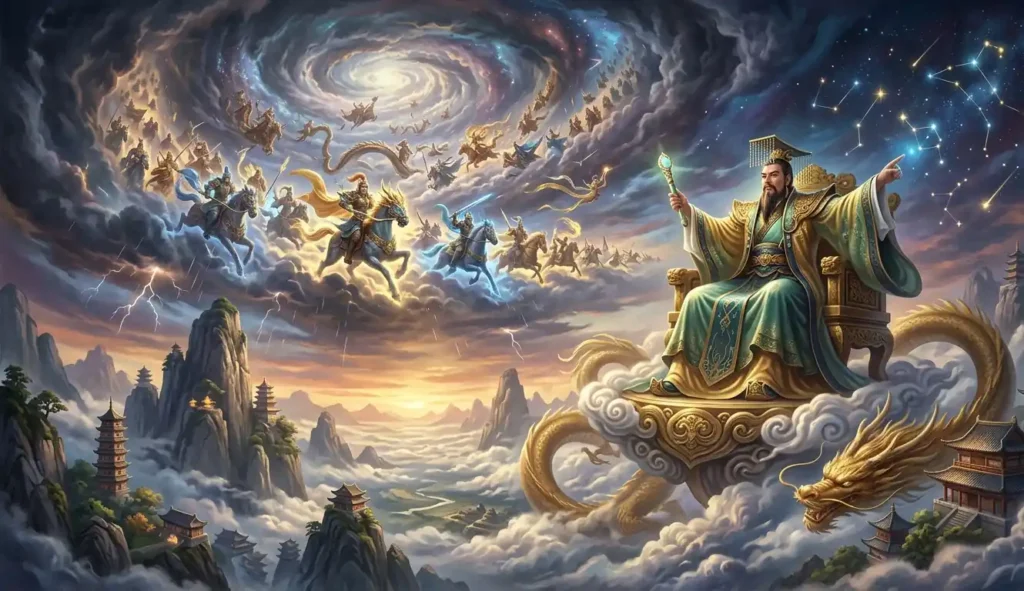
The Jade Emperor’s primary powers are governmental rather than elemental. He governs through authority, decree, and the administration of cosmic law rather than through direct elemental manipulation.
His governance powers include:
- Divine appointments: The authority to assign, promote, and demote divine officials across the entire Heavenly Court. When a new deity is needed for a specific function, the Jade Emperor makes the appointment.
- Cosmic decree: His edicts have the force of universal law. When he decrees something, the entire divine bureaucracy mobilizes to implement it.
- Judgment and punishment: The authority to determine appropriate punishment for transgressions against the cosmic moral order, from individual mortals to divine officials.
- Intercession management: He receives petitions from both divine officials and mortals and determines which ones warrant divine response.
Control Over Natural Forces
While the Jade Emperor doesn’t personally manage every natural phenomenon, that’s what the ministries are for. He has ultimate authority over all natural forces:
- Weather governance: Final authority over the deployment of rain, wind, thunder, and other meteorological phenomena that the various nature ministries administer
- Fate and destiny: The Book of Life and Death that governs mortal lifespans operates under his authority
- Cosmic cycles: The turning of seasons, the movements of celestial bodies, and the operation of the five-element system all operate under his ultimate oversight
Authority Over the Three Realms
One of the Jade Emperor’s most important powers is his jurisdiction over all three realms simultaneously:
- Heaven: Direct governance of the divine court and all celestial beings
- Earth: Authority over all living beings and the divine officials (earth gods, city gods, mountain gods) who manage earthly affairs
- Underworld: Ultimate authority over the underworld administration, including Yama and the Ten Kings of Hell who govern posthumous judgment
This three-realm authority makes the Jade Emperor genuinely universal rather than merely celestially local. His governance extends across the complete range of existence.
The Jade Emperor in Journey to the West
The Most Famous Portrayal
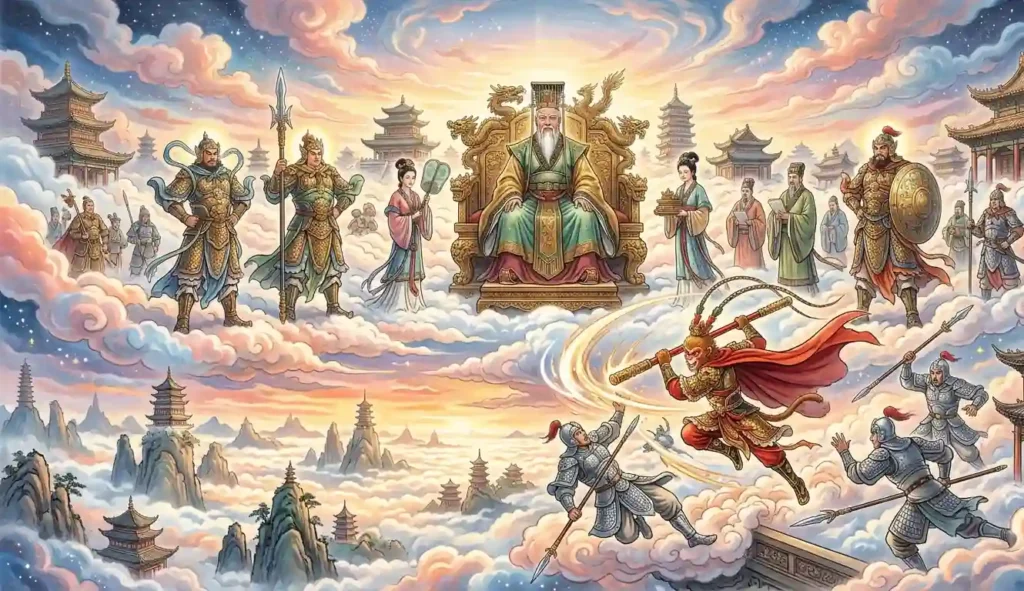
Most people in the contemporary world first encounter the Jade Emperor through Journey to the West, the 16th-century novel by Wu Cheng’en that remains the most widely consumed expression of Chinese mythology globally.
And here’s the thing: the Jade Emperor in Journey to the West is not a flattering portrait.
When Sun Wukong causes chaos in heaven by eating the divine peaches, drinking the immortality wine, and fighting off every army the Jade Emperor sends against him, the Jade Emperor’s response is to call on the Buddha for help. He can’t handle it himself. The supreme ruler of heaven needs outside assistance to deal with a single troublemaking monkey.
Why the Portrayal Makes Sense
Satirical divine portrayals often carry cultural commentary.
Journey to the West was written during the Ming Dynasty, a period of bureaucratic governance so elaborate and sometimes so paralysed that satire of official incompetence was a recognisable genre. The Jade Emperor’s Heavenly Court, with its protocols, its departments, its chain of command that makes decisive action difficult, mirrors the Ming bureaucracy rather precisely.
The novel isn’t saying the Jade Emperor is weak. It’s saying that institutional authority, however legitimate, sometimes requires different kinds of power than it commands directly. The Jade Emperor’s position is secure. His ability to personally defeat every threat is not, and perhaps shouldn’t be. That’s what divine generals and Buddhas are for.
The Buddha’s Role
The specific resolution of Sun Wukong’s rebellion, the Buddha trapping him under a mountain rather than the Jade Emperor defeating him directly, is theologically precise.
The Buddha operates outside the Heavenly Court’s jurisdiction. He’s neither above nor below the Jade Emperor in the Chinese syncretic framework. He operates in a different dimension of authority altogether. Calling on the Buddha is the Jade Emperor acknowledging that some problems require a form of power that administrative authority doesn’t encompass.
I find this genuinely interesting as a piece of theological mapping. The Jade Emperor governs the operational universe. The Buddha addresses the liberation of beings from the cycle of rebirth. These are different projects, and the novel is careful about which one is required to resolve which kind of problem.
The Jade Emperor in Chinese Religious Practice
Active Worship
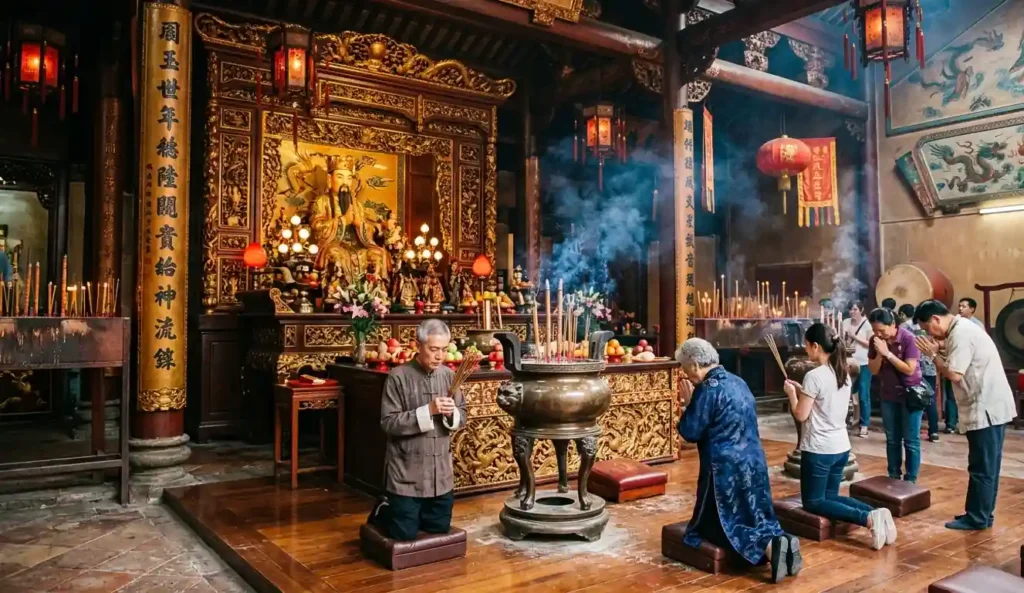
The Jade Emperor isn’t merely a mythological figure. He’s an actively worshipped deity in Chinese folk religion with a continuous ritual practice that spans centuries.
His birthday, celebrated on the ninth day of the first lunar month, is one of Chinese folk religion’s most significant observances. The ninth day is particularly important in Hokkien (Taiwanese and Southern Fujian) tradition, where the celebration is known as Pai Thi Kong, “worshipping the Heavenly Lord.” Elaborate offerings, including sugarcane stalks and special cakes, are presented to the Jade Emperor during this observance.
The ninth day’s significance has its own mythology: it commemorates a day when refugees hiding from an army were saved by sugarcane fields, attributed to the Jade Emperor’s protection, which is why sugarcane is the specific ritual offering.
Temple Presence
Jade Emperor temples exist throughout China, Taiwan, Southeast Asia, and wherever Chinese diaspora communities have settled. The Jade Emperor Temple (Yuhuang Miao) is a standard feature of traditional Chinese town and city religious geography.
His image typically shows him:
- Seated on a celestial throne
- Wearing imperial yellow robes and a distinctive twelve-tier flat-topped crown (mian guan), adorned with hanging jade beads that partially obscure his face
- Holding a jade tablet (gui), the ceremonial implement of divine authority
- Flanked by divine attendants
The New Year Connection
The Jade Emperor’s role in the Chinese New Year cycle is practically important to millions of people.
The annual divine audit system, in which the Kitchen God and other local deities ascend to present their reports to the Jade Emperor before the New Year, makes him directly relevant to every household’s annual ritual cycle. His divine review determines the coming year’s distribution of fortune and misfortune.
This isn’t abstract theology. It’s practical religious practice that shapes ritual behaviour in Chinese households worldwide during the New Year period.
The Jade Emperor Across Different Traditions
In Daoist Theology
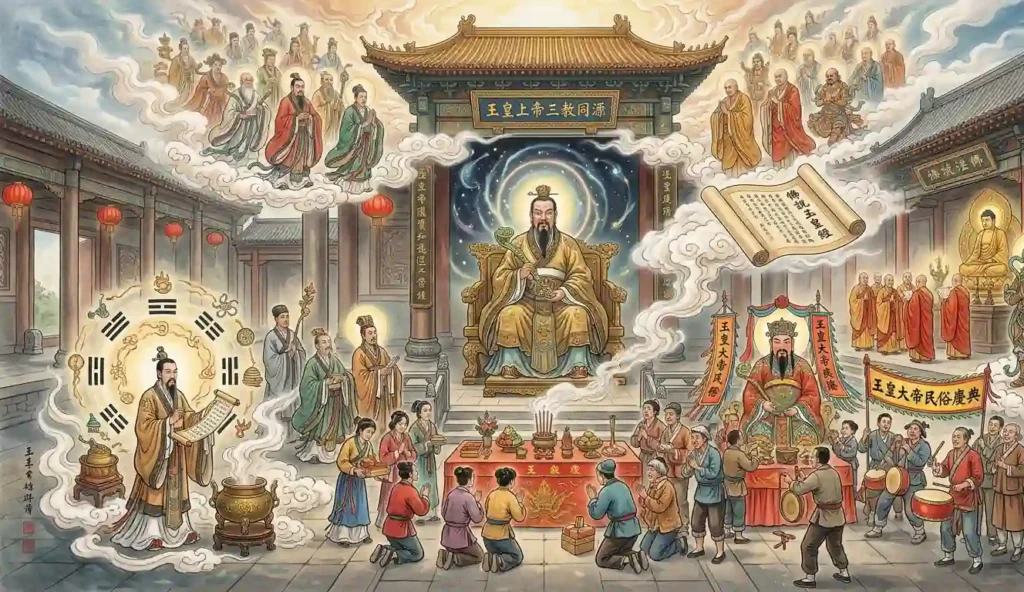
Pure Daoist theology places the Jade Emperor within a careful hierarchy. He’s below the Three Pure Ones but governs the Lingbao Heaven, one of the three pure celestial realms, as its ruler.
In some Daoist traditions, particularly the Celestial Masters (Tianshi) lineage, the Jade Emperor is the supreme deity of practical religious practice, the deity you address for all worldly and cosmic governance concerns, while the Three Pure Ones represent the more transcendent dimension of Daoist cultivation.
In Buddhist-Chinese Syncretism
Buddhism’s arrival in China created a complex negotiation between Buddhist and Daoist divine figures. The Jade Emperor was positioned, in the syncretic framework, as a figure of great power and virtue who nonetheless operates within the cycle of samsara rather than having transcended it, unlike the Buddha and the Bodhisattvas.
This theological positioning explains the Journey to the West dynamic I discussed above. The Jade Emperor governs the cosmos. The Buddha represents liberation from the cosmos. Both are needed; neither makes the other irrelevant.
In Chinese Folk Religion
Folk religion is less concerned with theological precision than with practical efficacy. In folk religious practice, the Jade Emperor is simply the highest deity to whom petitions can be addressed, the divine emperor who can, if appropriately approached, intervene in any domain of human concern.
His folk religious image is warmer and more personally accessible than his formal theological portrait, the cosmic sovereign who nonetheless accepts the offerings of ordinary people and can be moved by sincere petition.
Frequently Asked Questions
Is the Jade Emperor the most powerful deity in Chinese mythology?
Practically speaking, yes. He rules heaven, earth, and the underworld. Theologically, it is more nuanced. The Three Pure Ones stand above him as transcendent principles, while figures like the Buddha represent a different kind of authority rooted in liberation rather than governance.
What’s the Jade Emperor’s relationship with the Dragon Kings?
The Dragon Kings of the Four Seas serve within the Jade Emperor’s divine court as powerful, semi-autonomous officials rather than direct subordinates. They govern their own domains and usually follow his authority but retain enough independence to resist or negotiate with him. In Journey to the West, the East Sea Dragon King’s encounter with Sun Wukong reflects that balance.
Why is jade specifically associated with the emperor?
In classical Chinese culture, jade symbolized moral virtue, celestial purity, and civilizational excellence. Its hardness implied endurance, its smooth beauty refinement, and its rarity preciousness. The Son of Heaven used jade ceremonially to align himself with these cosmic ideals. The Jade Emperor’s name carries the same meaning: an emperor whose virtue possesses the quality of jade.
How does the Jade Emperor’s birthday celebration work?
The ninth day of the first lunar month is traditionally regarded as the Jade Emperor’s birthday. The most elaborate celebrations are found in Hokkien communities, especially in Taiwan and among the Southern Fujian diaspora worldwide. Offerings commonly include sugarcane stalks, rice cakes, and incense. Families often set up outdoor altars at midnight, presenting offerings directly to the sky through the early hours of the ninth day.
Is the Jade Emperor the same as the Yellow Emperor (Huangdi)?
No. These are distinct figures that are sometimes confused because they share the honorific “emperor.” The Yellow Emperor, Huangdi, is a legendary culture hero and ancestral ruler credited with introducing the foundations of civilization and later attaining immortality. The Jade Emperor, Yuhuang, is the supreme ruler of the divine court. They belong to separate mythological traditions.
Final Thoughts
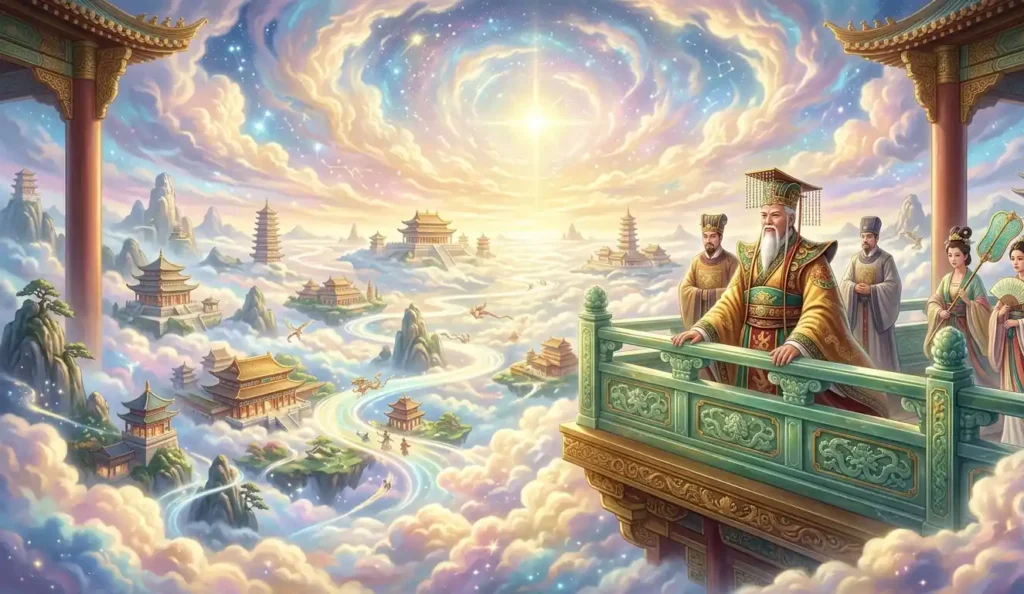
In most world mythologies, the supreme deity holds their position by nature, by right of conquest, or by simple seniority among the gods. Zeus inherited the cosmos from Cronus after winning a war. Odin hung on Yggdrasil for wisdom but didn’t earn his position through 1,750 aeons of moral cultivation.
The Jade Emperor’s authority comes from something different from cultivated virtue accumulated over a duration that makes the word “long” feel inadequate. He rules because he earned the right to rule through sustained moral excellence. The cosmic administration he heads is legitimate because its head achieved legitimacy through the most demanding standard imaginable.
That’s a philosophical claim about the nature of authority that I find genuinely interesting. It says that cosmic order isn’t a birthright or a conquest. It’s an achievement. And achievements, however vast, rest on the specific character of the person who made them.
Whether you approach the Jade Emperor as religious belief, as mythology, or as cultural philosophy, that claim is worth taking seriously.
Related Articles
- What Is the Heavenly Court? Chinese Myth’s Divine Authority
- What Was the Jade Emperor Origin Before He Became a Ruler?
- Are the Jade Emperor & Queen Mother of the West Married?
- 11 Surprising Jade Emperor Facts Most Readers Miss
- Was the Jade Emperor Weak? The Answer Might Surprise You
- Xiwangmu vs Jade Emperor: Who is More Powerful in Chinese Myth?
References
- Birrell, Anne. Chinese Mythology: An Introduction.
- Major, John. Heaven and Earth in Early Han Thought.
- Kohn, Livia. Daoism and Chinese Culture.
- Allan, Sarah. The Shape of the Turtle.Hanshu (Book of Han).
- Shiji (Records of the Grand Historian).
- Tao Te Ching – Translated by J. Legge
- Daozang – Daoist Canon
- Zhuangzi – Chinese Text Project
- Taipingjing – Chinese Text Project
- Investiture Of The Gods
- Journey To The West
- The Book of Rites
- Jade Emperor Origin Scripture
- The Taoist Body – Kristofer Schipper