
 By
By Quick Takeaways:
- Was the Jade Emperor Weak? The Jade Emperor’s apparent weakness in Journey to the West is deliberate literary satire. Wu Cheng’en was mocking Ming Dynasty bureaucracy, not making a theological claim about divine power
- The Jade Emperor’s actual power is governance, not combat. Judging him by combat metrics is like judging a surgeon by how fast they can run
- The novel makes a sophisticated argument that different problems require different kinds of power, and Sun Wukong’s rebellion represents a type of problem that institutional authority structurally cannot resolve
- The Jade Emperor calling in the Buddha isn’t a weakness. It’s knowing which instrument solves which problem
- Understanding this reframes both Journey to the West and the Jade Emperor mythology in ways that make both considerably more interesting
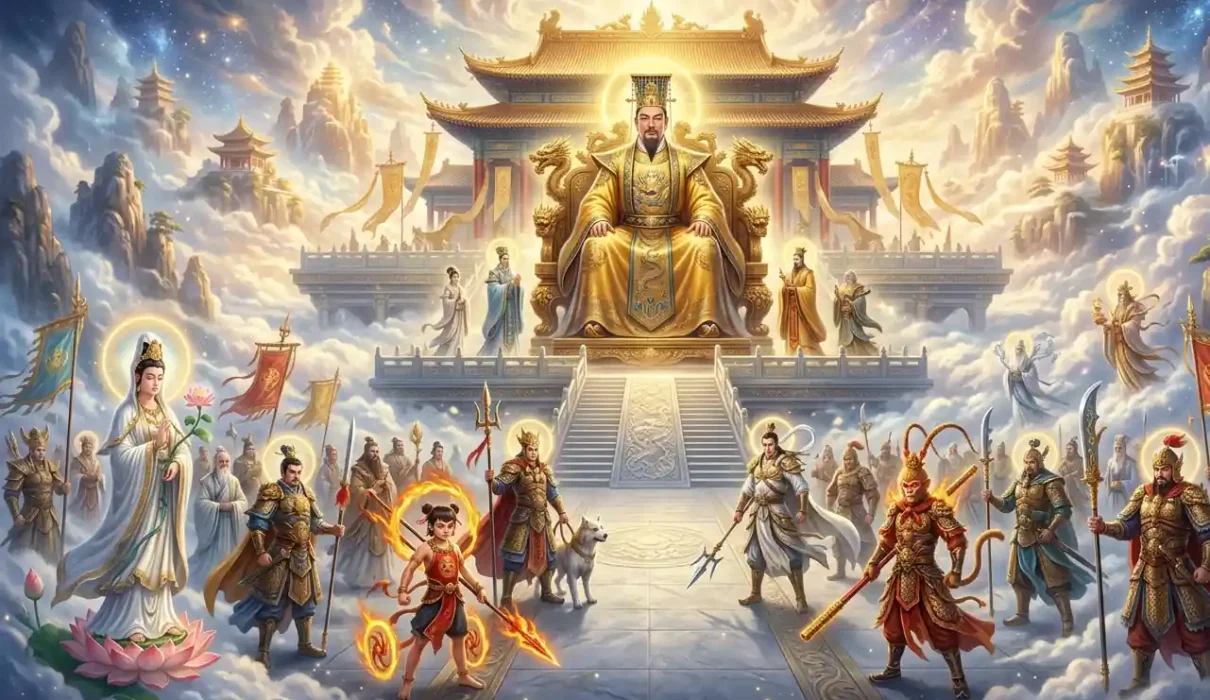
There are multiple occurrences when someone encounters Journey to the West and comes away with the same conclusion: the Jade Emperor is kind of useless. He can’t handle Sun Wukong. Every army he sends fails. He eventually has to call in the Buddha, a being from outside his jurisdiction entirely, to solve his own problem. The supreme ruler of heaven was defeated by a monkey.
I don’t blame them for thinking like that, but here is the thing. They might have misunderstood something fundamental about the Jade Emperor. As I spent more time with the novel and the tradition behind it, I realized they’d been making a category error.
The Jade Emperor isn’t weak. He’s the wrong instrument for the specific problem the novel gives him. And that distinction is the novel’s actual point.
The Satire Layer: What Wu Cheng’en Was Actually Doing
The Ming Dynasty Context
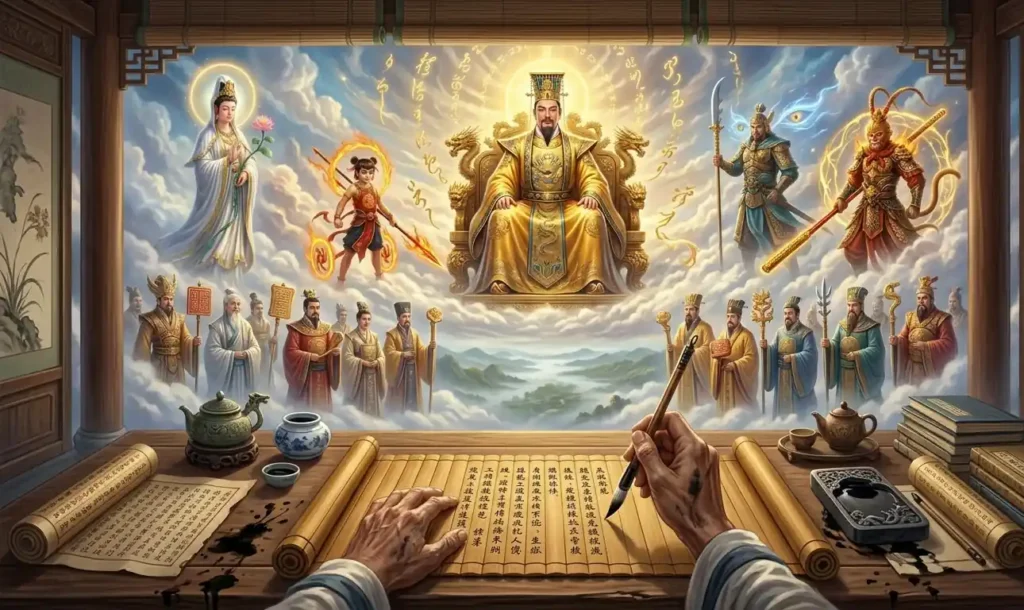
Journey to the West was written by Wu Cheng’en in the 16th century during the Ming Dynasty, a period of Chinese history whose bureaucratic dysfunction was a recognized social problem.
The Ming imperial government had an elaborate administrative structure with thousands of officials, complex protocols, multiple ministries, and chains of command that made decisive action genuinely difficult. Individual officials had defined jurisdictions. Decisions required approval from multiple levels. The system was sophisticated and in many respects impressive. It was also, as any sufficiently large bureaucracy tends to be, sometimes paralysed by its own procedures.
Wu Cheng’en was a scholar who failed the imperial examinations repeatedly. He spent his career as a minor official with front-row access to the bureaucracy’s limitations. He knew what he was depicting.
The Heavenly Court as Political Satire
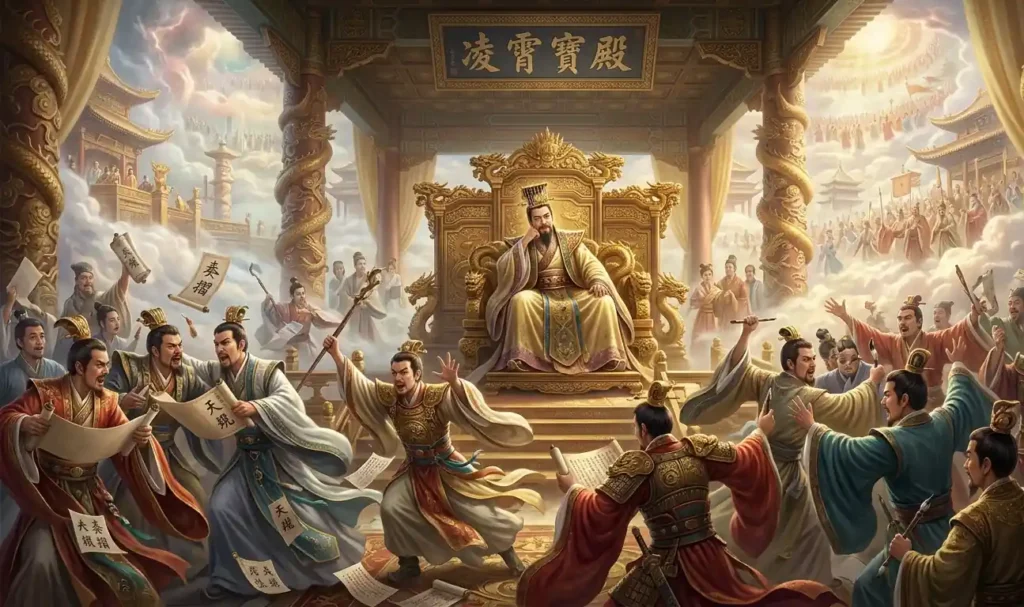
When Sun Wukong storms heaven, and the Jade Emperor’s generals fail one after another, when the divine court convenes emergency sessions to discuss protocol for handling an unprecedented situation, when the supreme ruler of everything has to send for outside help, this is satire.
Specifically, it’s a satire about what happens when a bureaucratic system encounters a problem that doesn’t respect the system’s logic. Sun Wukong doesn’t follow the procedure. He doesn’t recognize jurisdiction. He doesn’t respond to institutional authority. He’s fundamentally outside the system’s toolkit.
The divine generals failing isn’t about their strength. It’s about the limits of institutional force against something that operates entirely outside institutional frameworks.
After studying mythology, you become attentive to when authors are doing political commentary through divine portraiture. Wu Cheng’en was doing it deliberately and with considerable sophistication.
The Category Error: Judging Governance Power by Combat Metrics
What the Jade Emperor’s Power Actually is
Here’s the fundamental problem with reading the Jade Emperor as weak: we’re evaluating him by combat power metrics, and combat power isn’t what his role requires.
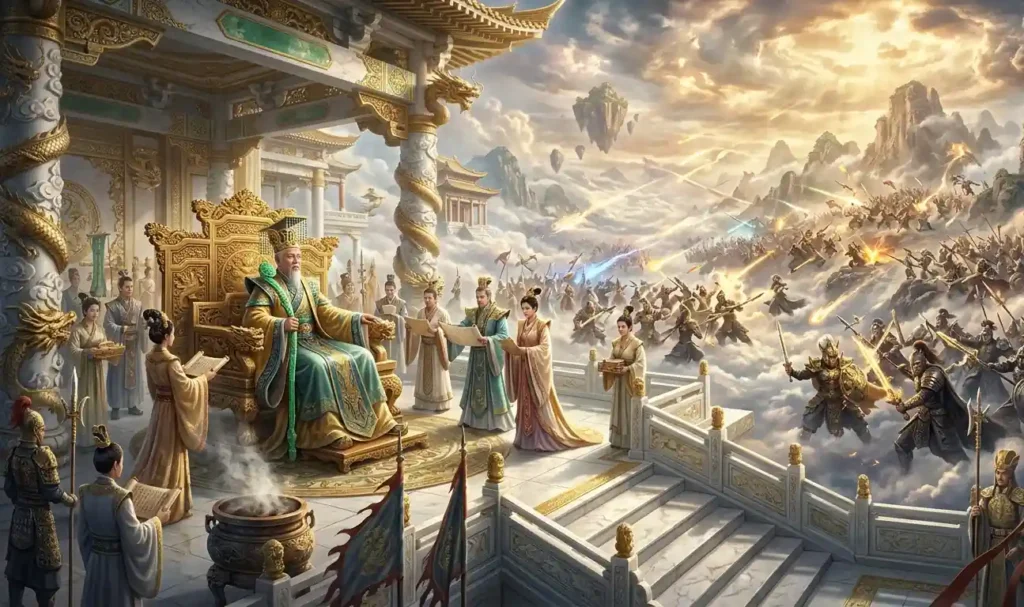
The Jade Emperor’s actual power is governance, the administrative oversight of the cosmos, the management of natural forces through the ministry system, the operation of the divine audit that tracks every being’s moral conduct, and the legitimate authority that keeps the three realms functioning in alignment with the Dao.
This is enormous power. It’s just not the power that helps when a supremely capable individual is committing what amounts to cosmic civil disobedience.
Consider an analogy. A chief justice has enormous institutional power the authority to interpret law and make binding decisions that affect millions of people. But if a professional boxer decides to physically attack the chief justice, that institutional power doesn’t help. The justice needs a different instrument for that problem. This doesn’t mean the justice’s power is fake or insufficient. It means they’re encountering a category of problem that their power wasn’t designed to address.
The Jade Emperor governs everything. He’s not, in the combat power hierarchy, a fighter.
The Role Was Never the Fighter Role
Looking at the Jade Emperor’s mythology before and after Journey to the West, this is consistent. He doesn’t personally fight. He delegates combat to divine generals, celestial armies, and figures like Erlang Shen and Nezha, whose roles specifically include martial function.
This is how institutional power actually works. The supreme administrator doesn’t personally execute every function within the institution. He directs the appropriate specialists to the appropriate problems.
Sun Wukong’s particular problem is that he’s more capable in combat than every specialist the Jade Emperor has available. That’s the novel’s specific scenario. It’s not evidence that the Jade Emperor is generally weak. It’s evidence that Sun Wukong is a specifically extreme case that exceeds the capacity of available instruments.
The Buddha Solution: Knowing Which Instrument Solves Which Problem
Why Calling the Buddha is the Right Move
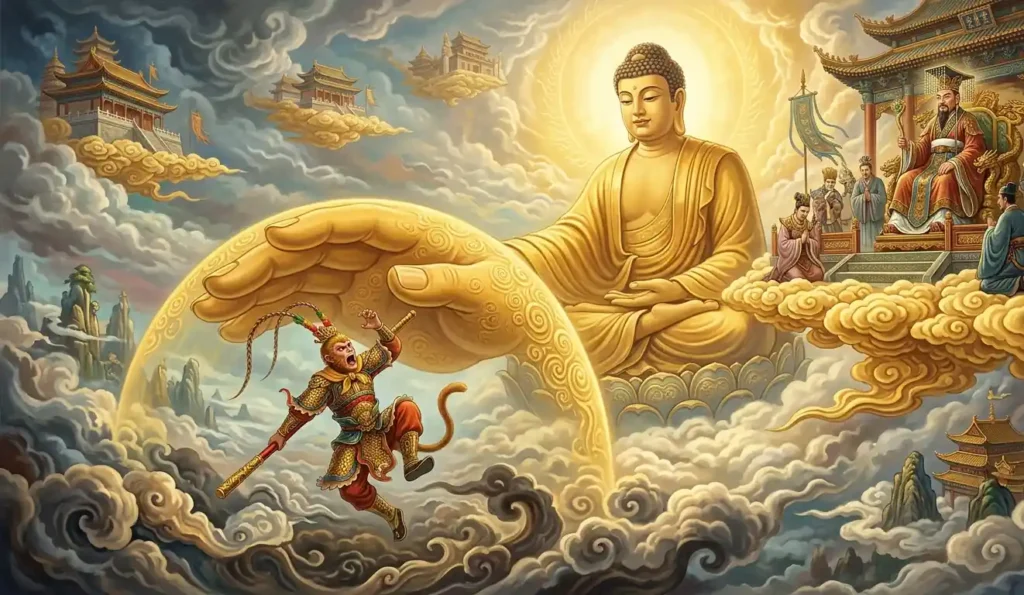
The Jade Emperor calls in the Buddha Tathagata. This is consistently read as the supreme failure of his authority. he couldn’t handle it himself. He needed external help.
I want to argue for a different reading.
Knowing which problem requires which solution is not weakness. It’s the specific wisdom that makes an administrator effective rather than merely active.
Sun Wukong’s rebellion isn’t ultimately a military problem. It’s a philosophical problem. He’s claiming that his power entitles him to replace the Jade Emperor that capability is the appropriate basis for cosmic authority. The military response can’t resolve this because it’s not a military question.
The Buddha’s response addresses the actual problem. He demonstrates through the palm scene that Sun Wukong’s understanding of the context he operates in is radically incomplete. The issue isn’t who can win a fight. The issue is what kind of authority is legitimate and why. The Buddha can address that. Military force cannot.
The Jade Emperor calling in the Buddha is the correct solution to the actual problem. The divine generals were the correct solution to a military problem, which turned out not to be the actual problem.
The Jurisdictional Point
There’s also something theologically precise about the Jade Emperor-Buddha interaction that usually gets missed.
The Buddha doesn’t operate within the Jade Emperor’s divine court system. He represents a different dimension of cosmic authority, the liberation tradition, the path out of the cycle of existence that sits alongside the Jade Emperor’s governance tradition rather than within it.
When the Jade Emperor asks the Buddha for help, he’s not admitting defeat within his own system. He’s recognizing that Sun Wukong’s problem has dimensions that extend beyond his system’s scope.
This is sophisticated theological mapping. The Jade Emperor governs conditioned existence in the universe as it currently operates. The Buddha represents the transcendence of conditioned existence. Sun Wukong’s claim to be “Equal to Heaven” is ultimately a claim about transcendence, about being beyond ordinary limits. The Buddha is exactly the right instrument for addressing that claim.
The Real Weakness: And It’s Not What Most People Think
The Legitimate Critique
Let me be honest: there is a genuine weakness visible in the Jade Emperor’s Journey to the West portrayal. But it’s not combat weakness. It’s something more specific.
The Jade Emperor is slow to correctly identify what kind of problem he’s facing.
He initially tries military solutions to a problem that turns out not to be military. This is a common institutional failure mode, defaulting to available instruments rather than accurately diagnosing the nature of the problem first.
A more effective response might have been to identify earlier that Sun Wukong’s rebellion wasn’t a military threat but a legitimacy challenge, and to engage the philosophical response sooner.
This is the satire’s sharpest point. Not that the Jade Emperor has no power. That institutional authority tends to reach for familiar instruments even when those instruments don’t match the problem.
The Authentic Theological Tradition
The Jade Emperor mythology outside Journey to the West doesn’t portray him as combat-weak at all. Jade Emperor’s origin story describes 1,750 aeons of cultivation that produced a being of genuine cosmic capability. His authority extends across all three realms.
The Journey to the West portrayal is a literary device for political commentary, not the theological tradition’s actual assessment of his power.
Reading the novel’s satirical Jade Emperor as the definitive statement about the deity is like reading political satire and concluding that the politician it caricatures is actually exactly as incompetent as the satire depicts. The satirical function requires exaggeration. The exaggeration reveals something real about institutional tendency without being a complete portrait.
What This Reading Adds to Journey to the West
The Novel Becomes More Interesting
When you read the Jade Emperor’s apparent weakness as deliberate satire rather than straightforward narrative fact, the novel becomes considerably more sophisticated.
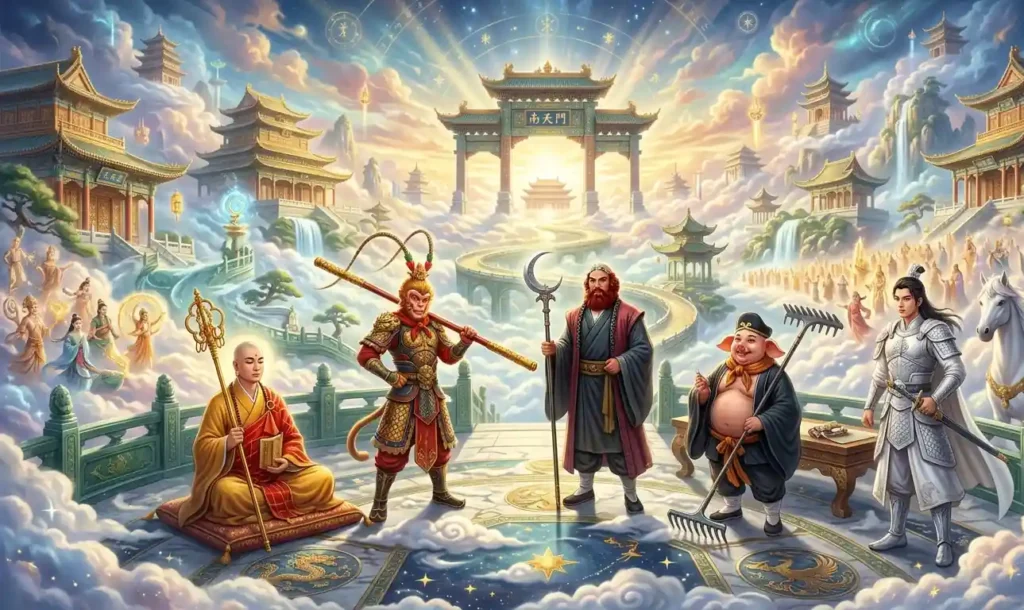
It’s not a story about a powerful monkey who defeats a weak divine court and gets stopped by an even more powerful Buddha. It’s a story about the limits of different kinds of power, about what institutional authority can and cannot do, about what combat capability can and cannot achieve, about what kind of wisdom actually resolves the deepest problems.
Sun Wukong’s combat power defeats every military instrument available. The Buddha’s philosophical demonstration defeats Sun Wukong. The Jade Emperor’s governance authority, undefeated by Sun Wukong, because Sun Wukong never actually broke the cosmic order he presides over, continues after Sun Wukong is imprisoned.
Three different kinds of power. Three different functions. None of them simply better than the others.
The Jade Emperor Gets the Last Word, in a Sense
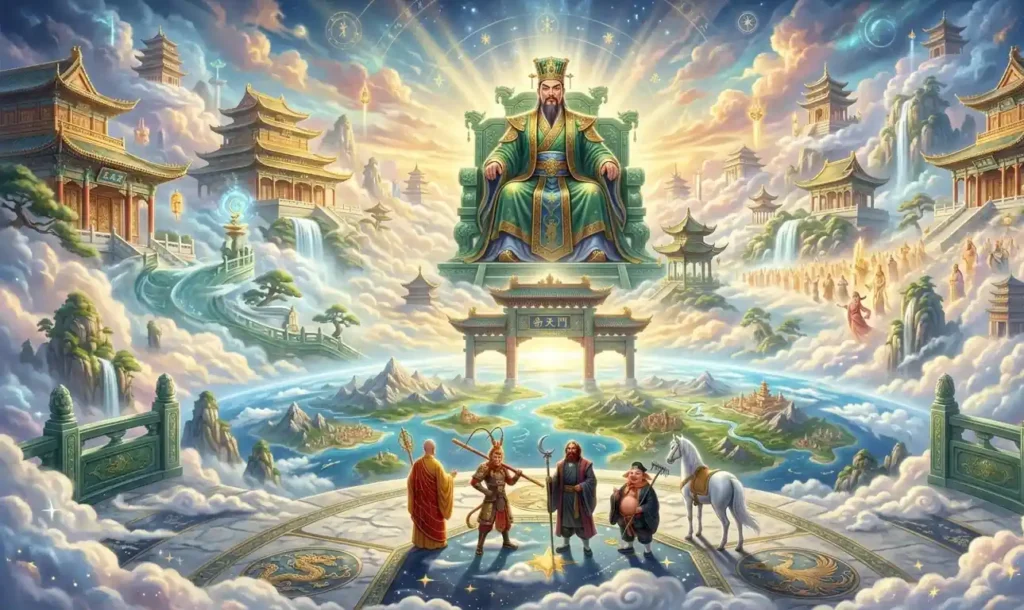
Here’s something the “Jade Emperor is weak” reading completely misses at the end of Journey to the West. The Jade Emperor presides over the ceremony in which Xuanzang and his disciples receive their divine titles.
The Jade Emperor’s authority isn’t diminished by the Sun Wukong episode. The divine court continues. The cosmic order is maintained. What happened was a disruption that required an unconventional solution, not a defeat of the Jade Emperor’s governance.
He was never fighting Sun Wukong. He was managing a disruption to the order he governs. The disruption is eventually resolved. The order continues.
That’s not a weakness. That’s institutional resilience, the capacity of a governance system to survive and incorporate disruptions rather than being destroyed by them.
Jade Emperor vs Sun Wukong: Who Really Won the Rivalry?
Frequently Asked Questions
Is the Jade Emperor actually powerful in Chinese mythology outside Journey to the West?
Yes. His origin story describes 1,750 aeons of cultivation, an inconceivably long period of moral and spiritual development. His authority spans heaven, earth, and the underworld. The weakness shown in Journey to the West serves as a political satire of Ming bureaucracy, not a theological limit on his cosmic power.
Why did Wu Cheng’en portray the Jade Emperor as seemingly weak?
Wu Cheng’en was satirising Ming Dynasty bureaucratic dysfunction: how elaborate institutions can become paralysed by their own procedures when facing novel problems. The heavenly court’s struggle with Sun Wukong mirrors earthly governments confronting issues beyond existing protocols. The exaggeration exposes a real institutional tendency without offering a complete theological portrait.
Is calling the Buddha for help actually a sign of good judgment?
Yes, in my reading. The Jade Emperor eventually recognised that Sun Wukong’s challenge could not be solved through military force alone. It required a higher form of authority that addressed the philosophical problem he embodied. The Buddha’s response, especially the palm scene, confronted Sun Wukong’s incomplete understanding of his place in the cosmos, something force alone could never resolve.
How powerful is the Jade Emperor in Chinese religious tradition?
The Jade Emperor occupies one of the highest positions in the celestial hierarchy and is often described as governing the cosmos itself. His mythic biography includes immense spiritual cultivation spanning countless ages, reflecting extraordinary moral and cosmic authority.
Did the Jade Emperor underestimate Sun Wukong?
Initially, the heavenly court appears to treat Sun Wukong as a manageable nuisance. His rapid rise in power exposed weaknesses in the court’s assumptions and procedures, creating a crisis that required a different approach.
Final Thoughts
what kind of power is being depicted, and what is it being evaluated against?
The Jade Emperor in Journey to the West is being evaluated against Sun Wukong’s combat power. By that metric, he appears weak. But combat power isn’t what the Jade Emperor’s role requires or what his mythology celebrates.
His power is governance. His authority is the legitimate ordering of the cosmos through the divine court system. His wisdom, demonstrated ultimately in correctly identifying that this particular problem required the Buddha’s specific form of power rather than his own, is the kind that keeps the cosmic order functioning across aeons.
Is he weak? Not in any way that actually matters for what he’s supposed to be doing. Is he the right instrument for fighting Sun Wukong? No. But that’s not a weakness. That’s a job description.
The novelist knew exactly what he was doing. The satire is of institutional tendency, not of divine power. And the figure who presides over the ceremony when the pilgrimage succeeds is the same figure who couldn’t personally defeat a monkey, which tells you everything about what kind of power actually endures.
Related Articles
- Jade Emperor: Origin, Powers & Sacred Meaning in Mythology
- What Is the Heavenly Court? Chinese Myth’s Divine Authority
- Jade Emperor Family: The Divine Family of Chinese Mythology
- Are the Jade Emperor & Queen Mother of the West Married?
- 11 Surprising Jade Emperor Facts Most Readers Miss
- Journey to the West: The Chinese Classic Behind Fiction
- Xiwangmu vs Jade Emperor: Who is More Powerful in Chinese Myth?
References
- Andrew H. Plaks – The Four Masterworks of the Ming Novel
- Journey To The West
- Wilt L. Idema – Chinese Vernacular Fiction
- Victor H. Mair – The Columbia History of Chinese Literature
- Stephen Teiser – The Spirits of Chinese Religion
- Records of the Western Regions in the Great Tang Dynasty – Xuanzang
- Jade Emperor Origin Scripture
- The Taoist Body – Kristofer Schipper
- C. T. Hsia – The Classic Chinese Novel
- Kohn, Livia. Daoism and Chinese Culture.