
 By
By Quick Takeaways:
- The Jade Emperor and the Chinese zodiac’s twelve animals are deeply connected. They were selected through a race decreed by the Jade Emperor. The first twelve animals to reach his palace would win a place in the calendar
- Each animal’s arrival method reveals the specific character traits that the zodiac tradition then assigns to people born in that animal’s year
- The rat’s first-place finish through clever opportunism rather than speed is one of mythology’s most efficient character portraits
- The cat’s exclusion because the rat either forgot to wake it or deliberately let it oversleep is one of the most emotionally resonant details in the whole story
- The story isn’t just a fun origin tale. It’s a teaching device about twelve different approaches to achieving a goal
Chinese zodiac Great Race: it’s a story that manages to be simultaneously a charming animal tale, an origin mythology, and a fairly sophisticated set of personality studies all compressed into a single race narrative.
Most people know the summary. The Jade Emperor held a race. Twelve animals arrived. They became the zodiac. The rat came first through cleverness.
The summary is fine. The full story is considerably better.
Why the Jade Emperor Held the Race
The Decree
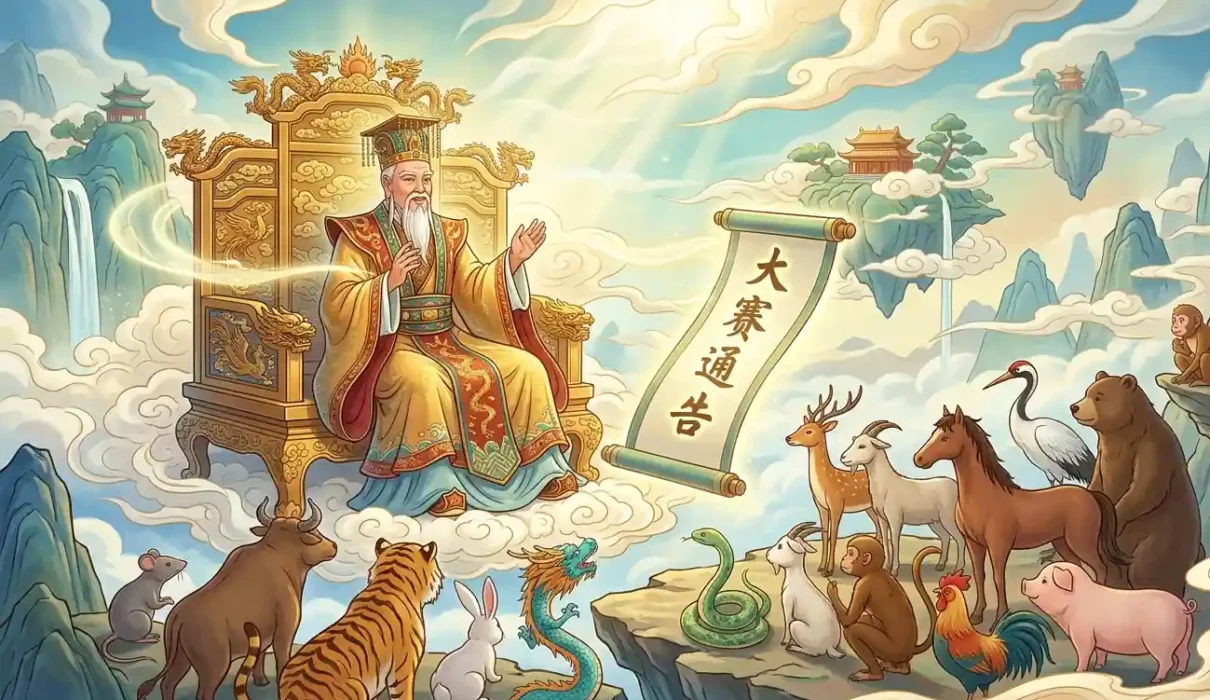
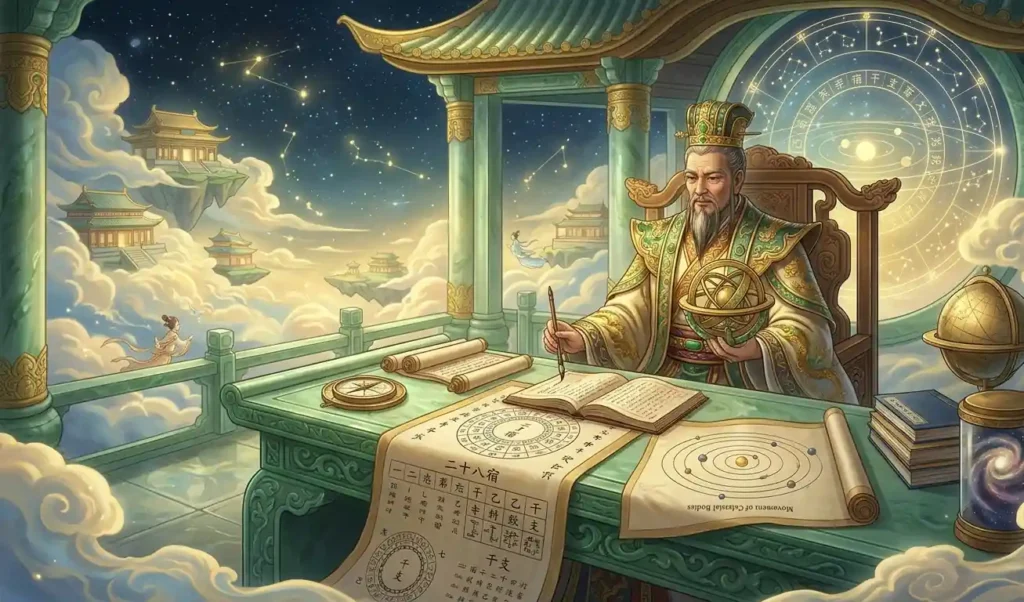
The story begins with the Jade Emperor deciding to create a system for measuring time, a calendar that would help humanity track days, months, and years. He needed twelve markers, and he decided to select them through a specific method. Invite all the animals in the world to a race and grant the first twelve to reach his heavenly palace a permanent place in the calendar cycle.
Some versions say he invited specific animals. Others say the invitation went out to all creatures and only twelve responded in time. Either way, the animals that arrived and in what order would determine the zodiac’s structure.
Why a Race Specifically
why stories choose the specific mechanisms?
A race is perfect for this particular mythological function because it reveals character under pressure and through individual choice. The animals aren’t evaluated on strength, or beauty, or wisdom in the abstract. They’re evaluated on how they actually behave when something genuinely matters to them.
That’s precisely the information a character-based calendar system needs. The zodiac’s purpose is to describe personality types. A race that reveals personality is the correct origin story for it.
The Race: Animal By Animal
The Rat: First Place – Through Cleverness Rather Than Speed
The rat’s first-place finish is the race’s most famous detail, and it earns its fame.
The rat isn’t the fastest animal. It’s not the strongest. By any conventional measure, a rat competing against a horse or an ox in a race shouldn’t come first.
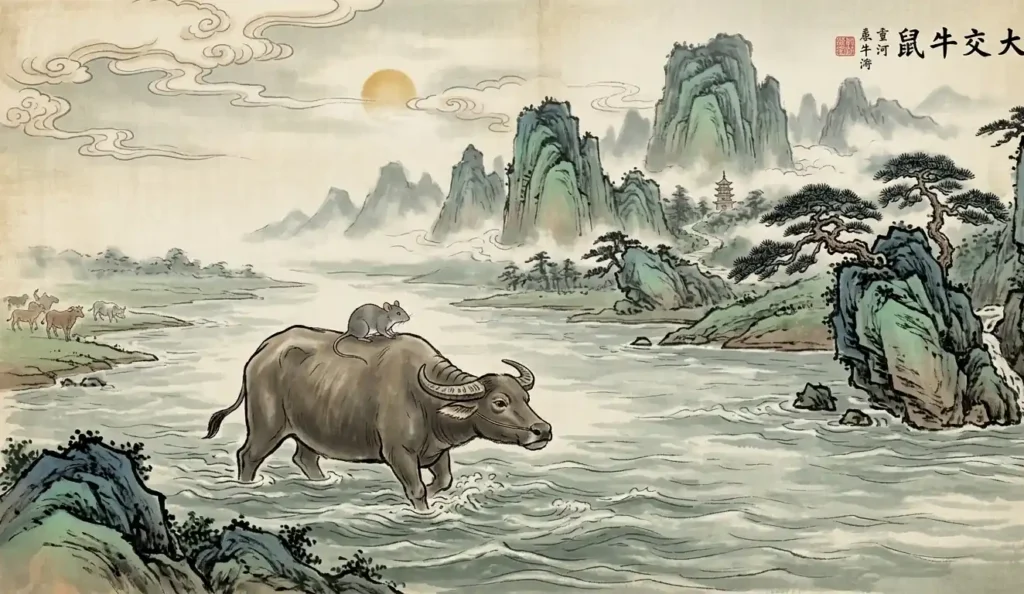
What the rat did: it asked the ox, a kind, generous, powerful animal who would finish the journey easily, for a ride, on the grounds that the rat was small and might struggle to cross the river. The ox agreed. As they approached the palace, the rat jumped from the ox’s head and landed first.
The zodiac’s rat characteristics, clever, resourceful, charming, quick-witted, and occasionally opportunistic, are all present in this arrival method. The rat didn’t cheat in any dishonest sense. It used available resources intelligently and acted decisively at the right moment. Whether that’s admirable or concerning is exactly the ambiguity that makes the rat an interesting zodiac sign.
The Ox: Second Place – Through Sheer Reliable Effort
The ox’s second place is almost as interesting as the rat’s first.
The ox is the strongest animal in the race. It carried the rat across the river without complaint. It worked steadily and consistently. And it arrived second, not because it was tricked so much as because it was too generous and too single-mindedly focused on completing the journey to notice the rat’s positioning until it was too late.
Ox characteristics in the zodiac: diligent, reliable, patient, dependable, occasionally too focused on their path to notice what’s happening around them. The race arrival captures all of this in a single moment.
The Tiger: Third Place – Strength Against Adversity
The tiger struggled significantly with the river crossing, its enormous strength making the current harder to fight rather than easier. It arrived third, tired and damp, having refused to ask for help and having fought through every obstacle through pure determination.
Third place for the tiger perfectly encodes its zodiac character: brave, powerful, competitive, determined, occasionally too proud to accept assistance.
The Rabbit: Fourth Place – Patience and Ingenuity
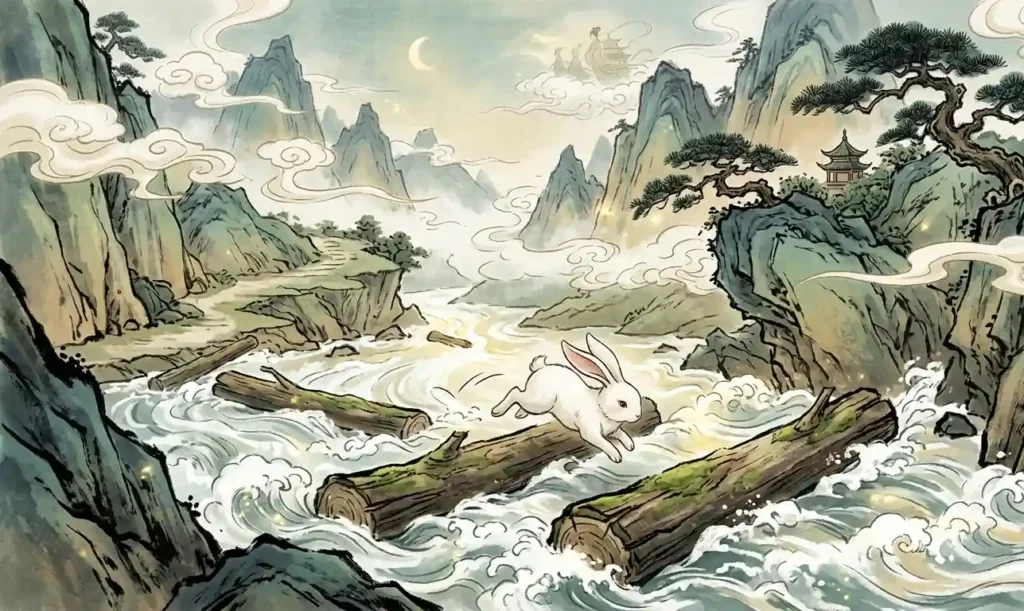
The rabbit couldn’t swim well. Rather than entering the water, it hopped from stone to stone across the river and grabbed onto a floating log to make the crossing.
Fourth place through finding a completely different route to the same destination, which is exactly what the rabbit zodiac sign represents: cleverness, caution, finding elegant solutions, and preferring to navigate around obstacles rather than through them.
The Dragon: Fifth Place – The Surprising Result
This is the one that surprises people most consistently, because the dragon is the most cosmically powerful of all the zodiac animals. Why did it finish fifth?
Because it stopped to help.
The dragon was flying easily over the race when it noticed a village suffering from drought below. It stopped to bring rain. Then it saw the rabbit struggling on its log in the river and blew a gust of wind to push the log to shore.
When it arrived, the Jade Emperor understood immediately and told the dragon its compassion was admirable. Fifth place for the most powerful animal in the race is one of the story’s most deliberate choices. Power alone doesn’t win, but compassion costs you, and the cost is accepted willingly. The dragon zodiac characteristics of benevolence, confidence, and the willingness to use power for others’ benefit are all encoded here.
The Snake: Sixth Place – The Surprising Stealth
The horse almost beat the snake but didn’t see it coming.
The snake had wrapped itself around the horse’s hoof for the journey, hitching a ride without the horse’s knowledge. When the horse arrived and was startled by the snake uncoiling beside it, the snake slipped ahead in the confusion.
Snake zodiac characteristics: intuitive, mysterious, private, often achieving goals through methods others don’t notice until they’ve already worked. The arrival method is a bit uncomfortable, which is exactly right for the snake. It’s not warmly admired but it is consistently effective.
The Horse: Seventh Place – Nearly Foiled by its Own Energy
The horse would have arrived sixth but was startled by the snake. It’s a lesson in how a single unexpected disruption can cost you a position.
Horse characteristics, energetic, free-spirited, sometimes undone by their own reactivity, are present in this near miss. The horse had more than enough ability. Its finish position reflects a moment of lost composure at the wrong time.
The Goat, Monkey, and Rooster: Eighth, Ninth, Tenth – Cooperation Rewarded
These three arrived together, having cooperated during their journey. The goat and monkey paddled a raft they found while the rooster cleared weeds. The Jade Emperor praised their teamwork and assigned their order by disposition. The goat’s gentle nature placed it eighth, the monkey’s clever energy ninth, the rooster’s industrious reliability tenth.
This group arrival is the race’s most explicitly cooperative moment and the only one where the Jade Emperor directly comments on and rewards the method rather than simply acknowledging the order of arrival.
The Dog: Eleventh Place – Because it got Distracted Playing
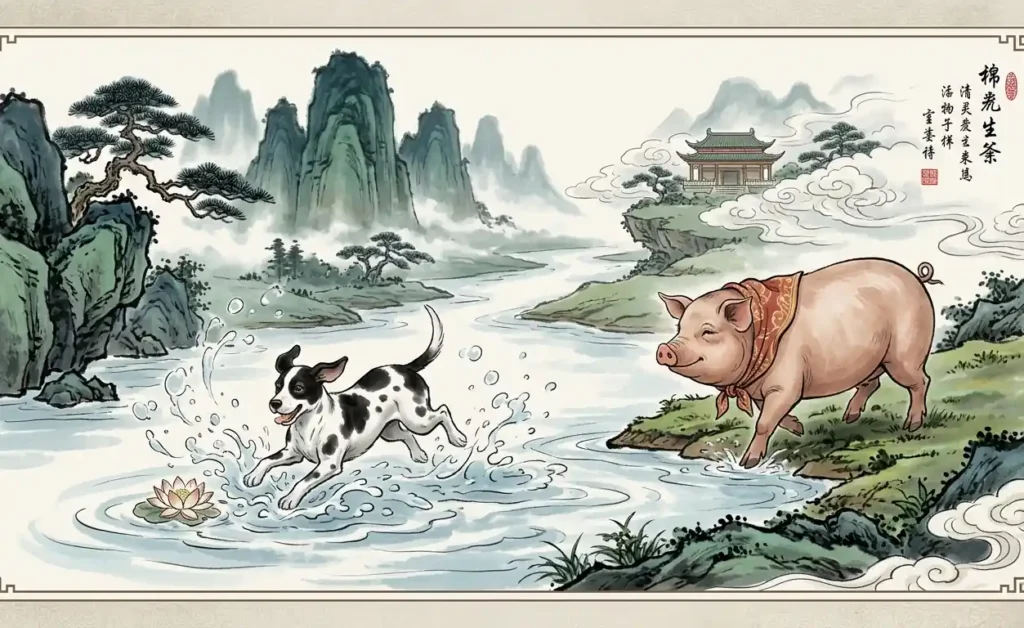
The dog is one of the strongest swimmers among the animals. It should have finished much earlier.
It spent so long playing in the river that it arrived eleventh, having simply enjoyed the journey too much to hurry. Eleventh place for an animal that could have done much better because having fun mattered more than winning.
Dog zodiac characteristics: loyal, playful, honest, sometimes prioritising enjoyment and relationship over advancement. The arrival perfectly captures a personality type that’s genuinely loveable precisely because ambition isn’t its first instinct.
The Pig: Twelfth Place – Stopped to Eat and Nap
The pig arrived last among the twelve finishers. It had stopped to eat, felt sleepy, taken a nap, woken up, and continued to the palace.
Twelfth place for a pig that stopped for food and rest along the way. Pig zodiac characteristics: good-natured, indulgent, sincere, enjoying life’s pleasures without excessive urgency. The pig isn’t troubled by finishing last. It had a good meal and a comfortable nap. From a certain perspective, that’s not a bad result.
The Cat: Why it’s not in the Zodiac
The Most Asked Question About the Race
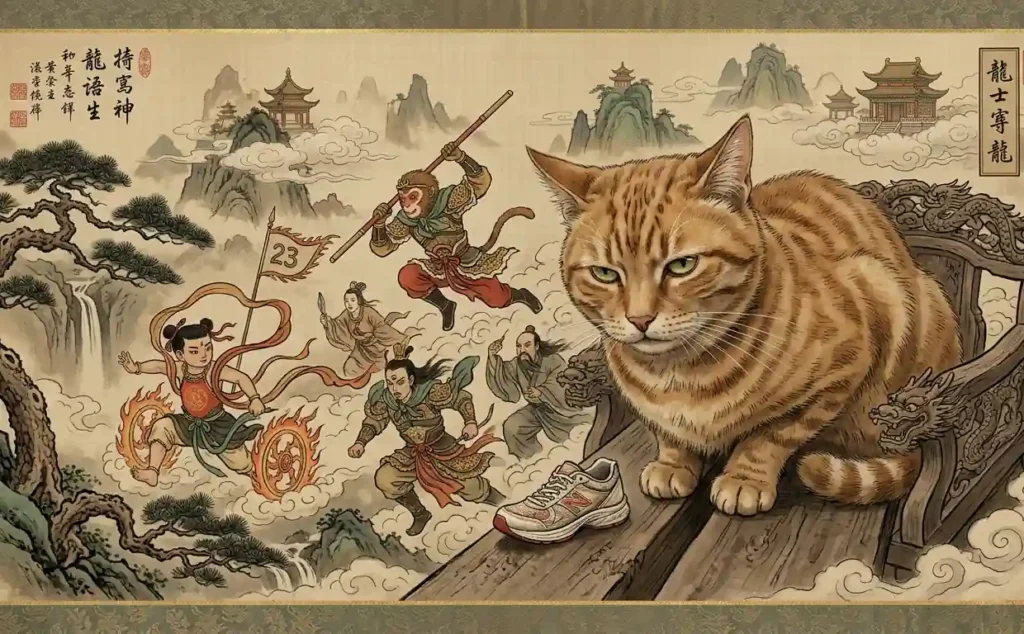
Every time I discuss the Chinese zodiac, someone asks about the cat. Where is it? Why isn’t it in the zodiac? And the story has an answer that’s been emotionally resonant for centuries.
The rat and the cat were friends. When the Jade Emperor’s invitation came, the cat, a heavy sleeper, asked the rat to wake it so they could travel together.
The rat either forgot, or deliberately didn’t bother, or made a calculated decision that the cat’s swift reflexes would make it a dangerous competitor for a limited number of palace positions. Depending on the version you’re reading, the rat’s motivation ranges from thoughtless to calculating.
The cat slept through the race. It woke to find the zodiac complete and its name nowhere in it.
This is why, the story says, cats and rats don’t get along. The enmity encoded in that detail has been a satisfying explanation for a real observable behavior pattern for a very long time.
The Vietnamese Zodiac has a Cat Instead of a Rabbit
Worth knowing: the Vietnamese zodiac replaces the rabbit with a cat. One tradition says this is because the Chinese word for rabbit (mǎo) sounds similar to the Vietnamese word for cat, and the Vietnamese tradition adopted the sound rather than the specific animal.
This means there’s a parallel zodiac tradition where the cat made it. It arrived fourth, in the position the rabbit holds in the Chinese zodiac. Its characteristics in the Vietnamese system are largely similar to those of the rabbit in the Chinese cautious, gentle, diplomatic, and clever.
The cat’s exclusion from the Chinese zodiac and inclusion in the Vietnamese one is one of comparative mythology’s most charming small divergences.
What The Story is Actually Teaching
A Character Study Disguised as a Race
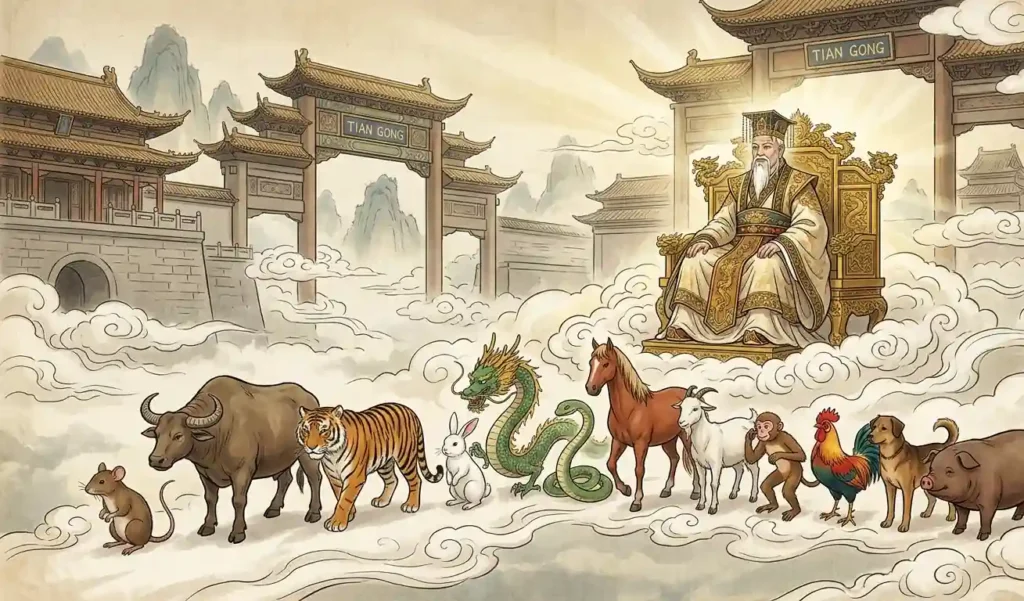
The Great Race is a teaching story as much as an origin story.
Every arrival method encodes a personality trait that the zodiac then assigns to millions of people born in that animal’s year. The rat’s opportunistic cleverness. The ox’s reliable generosity. The dragon’s compassionate use of power. The dog’s preference for play over ambition. The pig’s wholehearted enjoyment of life.
The Jade Emperor’s race isn’t just selecting animals for a calendar. It’s revealing twelve distinct approaches to achieving a goal, and every approach has both advantages and costs.
The Jade Emperor’s Role as Cosmic Judge
What I find most interesting about the Jade Emperor’s role in this story is how he responds to different arrival methods.
He doesn’t penalise the rat for being clever. He praises the dragon for stopping to help. He acknowledges the cooperative arrival of the goat, monkey, and rooster with approval. He accepts the dog’s lateness without criticism.
The Jade Emperor isn’t running a race that values only speed. He’s watching how each animal navigates the challenge. The final positions reflect each animal’s genuine character, not just who ran fastest.
That’s good mythology. And good mythology about cosmic authority: the supreme ruler who sees everyone clearly and responds to who they actually are.
Frequently Asked Questions
Why are there twelve animals specifically?
Twelve corresponds to the twelve months of the Chinese lunar calendar and other twelve unit systems in Chinese cosmology. The zodiac follows a twelve year cycle, with each year linked to a different animal. The race did not determine the number twelve. It was created to fill twelve positions already required by the calendar.
Do Chinese people actually believe this story happened literally?
The Great Race is generally understood as folk mythology rather than a literal historical event. It explains the zodiac’s origins through a memorable story that highlights each animal’s character. While the race itself is seen as mythology, the zodiac’s personality associations are often used practically and remain culturally significant.
Which zodiac year is considered most auspicious?
The Dragon year is widely considered the most auspicious in Chinese culture, often leading to higher birth rates as parents hope for children born under the most powerful zodiac sign. The dragon’s fifth place finish in the race is often seen as evidence that the zodiac is not a power ranking but a reflection of character and values.
Why are there only twelve animals in the Chinese zodiac?
The zodiac follows a twelve year cycle, reflecting the importance of the number twelve in the Chinese lunar calendar and traditional cosmology.
Are all versions of the Great Race story the same?
No. Different regions and traditions tell the story with slight variations, though the core idea of a race determining the zodiac order remains consistent.
Final Thoughts
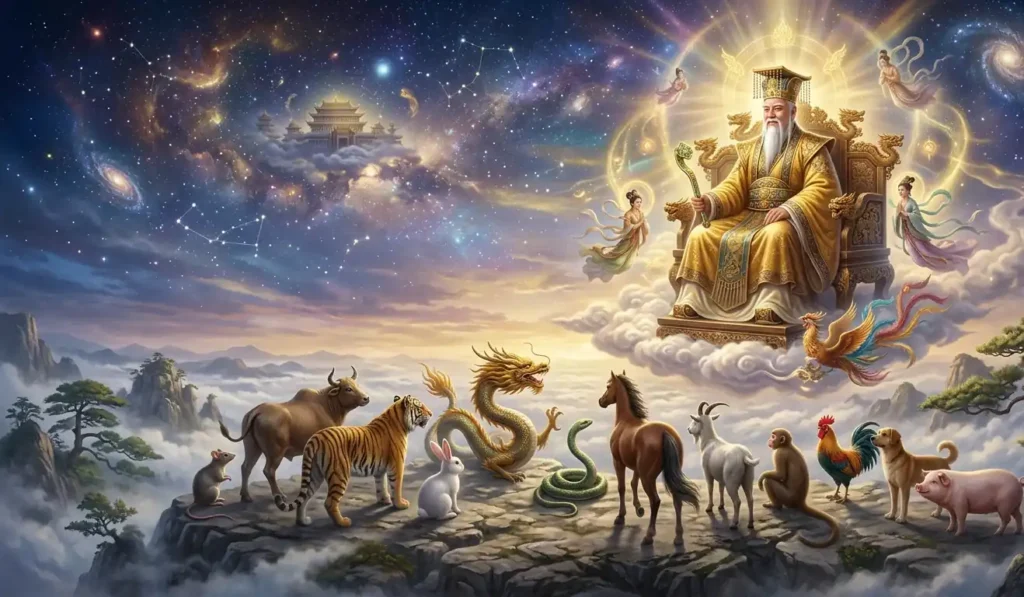
The Chinese zodiac Great Race has survived as a story for centuries because it’s doing what the best origin mythology always does. Explaining something real through a narrative that’s memorable enough to carry the explanation forward across generations.
The zodiac personality associations aren’t arbitrary. They’re grounded in twelve specific animal behaviours during a specific journey, observed by a supreme cosmic authority and embedded in the calendar permanently.
Twelve animals. One race. A complete personality taxonomy and a cat with a very long memory for grievances.
Related Articles
- Jade Emperor: Origin, Powers & Sacred Meaning in Mythology
- What Is the Heavenly Court? Chinese Myth’s Divine Authority
- Who Was the Jade Emperor Before He Became a Supreme Ruler?
- Jade Emperor Family: The Divine Family of Chinese Mythology
- Are the Jade Emperor & Queen Mother of the West Married?
- 11 Surprising Jade Emperor Facts Most Readers Miss
- 9 Divine Powers of the Jade Emperor [Ranked by Strength]
References
- Birrell, Anne. Chinese Mythology: An Introduction.
- Major, John. Heaven and Earth in Early Han Thought.
- Kohn, Livia. Daoism and Chinese Culture.
- Allan, Sarah. The Shape of the Turtle.Hanshu (Book of Han).
- Shiji (Records of the Grand Historian).
- Tao Te Ching – Translated by J. Legge
- Daozang – Daoist Canon
- Investiture Of The Gods
- Journey To The West
- Jade Emperor Origin Scripture
- The Taoist Body – Kristofer Schipper
- Fortune-tellers And Philosophers: Divination In Traditional Chinese Society – Richard J Smith