
 By
By Quick Takeaways:
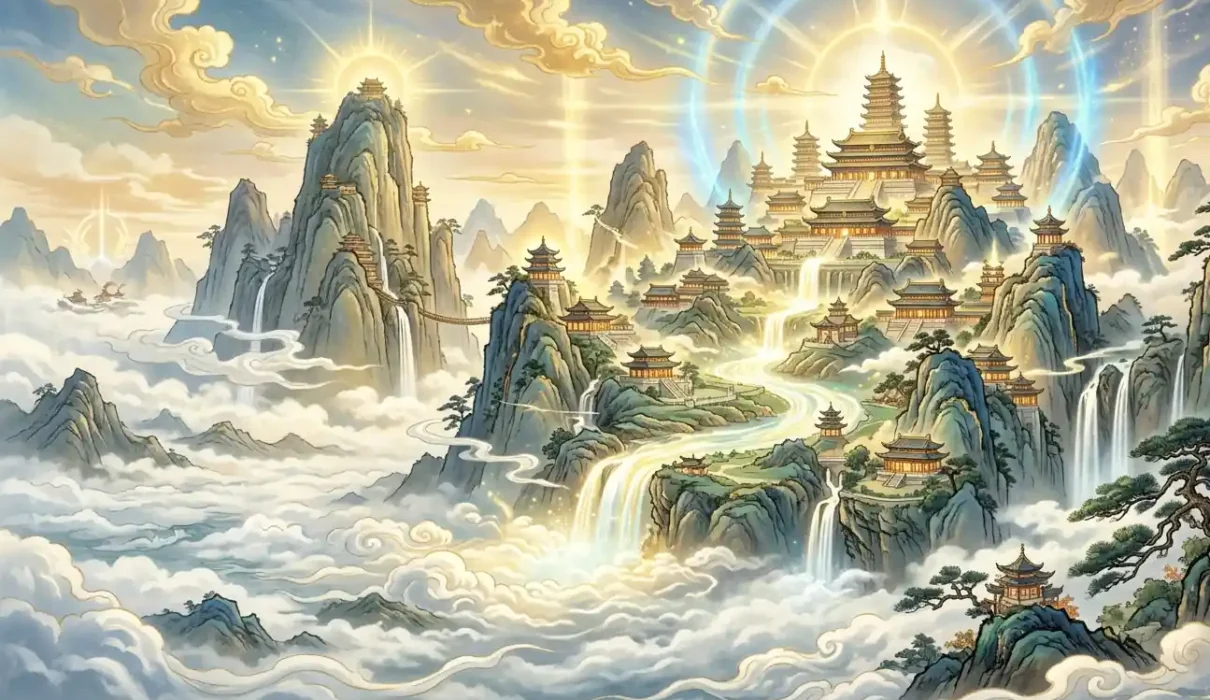
- The Kunlun Mountains (Kūnlún Shān) are the most sacred site in Chinese mythological geography, the axis mundi, where heaven and earth connect
- They’re the home of Xiwangmu (Queen Mother of the West), the location of the divine peach garden, and the source of China’s four sacred rivers
- The mythological Kunlun is simultaneously inspired by the real Kunlun mountain range in western China and a cosmic location that transcends ordinary geography
- Their status as the world’s center, the mountain around which all of creation is organized, gives everything that happens there cosmic significance
- Visiting or reaching Kunlun is one of Chinese mythology’s defining heroic achievements, a journey that marks the exceptional
Sacred geography has always fascinated me more than most aspects of mythology. There’s something uniquely compelling about how cultures identify specific physical locations as points where the ordinary world and the divine world touch, where the membrane is thinner, where the cosmic and the terrestrial meet.
China’s answer to that question is Kunlun. And after years of following mythology, I’m convinced that Kunlun is one of world mythology’s elaborate and philosophically sophisticated examples of sacred mountain tradition.
It’s not just the home of the Queen Mother of the West. It’s the world’s center. The axis around which everything else turns.
What Kunlun Actually is
The Real Mountain Range
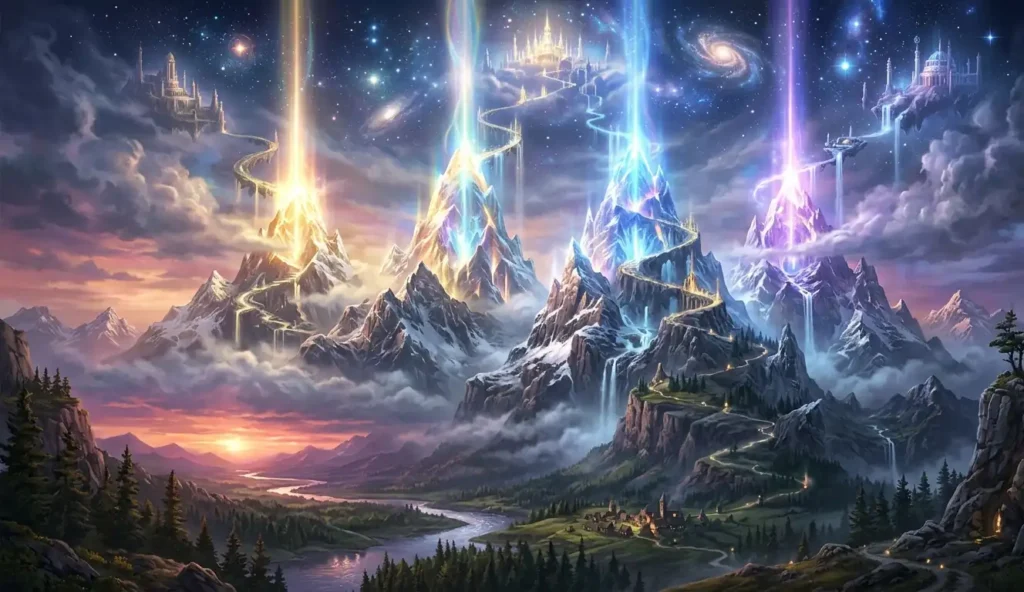
The Kunlun Mountains are a genuine geographic feature, one of Asia’s longest mountain ranges, running approximately 3,000 kilometers along the northern edge of the Tibetan Plateau and forming a natural boundary between the Tarim Basin and the Tibetan highlands.
The real Kunlun range is significant, as it includes peaks above 7,000 meters and was historically an impenetrable western boundary for Chinese civilization. The Han Dynasty general who first mapped this region found the mountains so formidable and so distant from the Chinese heartland that they felt genuinely otherworldly.
That combination, real, enormous, impossibly remote, located in the mysterious far west, made the Kunlun range the natural anchor for China’s mythological cosmic mountain tradition.
The Mythological Kunlun
The mythological Kunlun shares the name and the general westward location of the real mountain range but is something qualitatively different.
In Chinese cosmological thinking, the mythological Kunlun is the axis mundi, the cosmic pillar connecting heaven and earth, the center point around which all of creation is organized. This is not a metaphorical claim. It’s a cosmological one.
The mythological Kunlun’s characteristics, as described across classical texts:
- Located at the center of the world (despite the real range being in the west, the mythological location is the cosmic center, not compass direction)
- Reaches from the earth’s foundation to the heavenly realm
- The source of the four sacred rivers that water all of creation
- The residence of Xiwangmu and the immortals
- The location of the divine peach garden
- Guarded by supernatural beings that prevent the unworthy from approaching
The gap between the real Western mountain range and the cosmic axis mundi is philosophically deliberate. The real Kunlun provided the geographic anchor. The mythological tradition built something cosmologically complete on top of it.
The Axis Mundi: What it Means to be the World’s Center

The Concept of the Cosmic Axis
Every major world mythology produces an axis mundi, a central point where vertical cosmic connection happens. The Norse Yggdrasil connects nine worlds through its trunk. The Hindu Mount Meru is the cosmic mountain around which the universe is organized. The Greek Mount Olympus is where the divine and mortal worlds most directly interact.
Kunlun is China’s answer to this universal mythological structure, and it has distinctive features that reflect specifically Chinese cosmological thinking.
Why Rivers Matter Here
One of Kunlun’s most specifically Chinese mythological characteristics is its role as the source of the four rivers that water all of creation. Water governance is so central to Chinese civilization that the Yellow River and Yangtze River were civilizational foundations, and the cosmic mountain’s primary earthly function is as a hydrological source.
The four rivers flowing from Kunlun connect cosmic geography directly to agricultural and civilizational sustenance. This isn’t just a poetic detail. It encodes the Chinese understanding that the cosmic center’s primary gift to the human world is the water that makes life possible.
This is the same logic that makes the Dragon Kings the most practically important divine figures in Chinese folk religion. Water is not an incidental cosmological element. It’s the fundamental connection between divine provision and human survival.
Xiwangmu’s Mountain: The Sacred Palace
What Kunlun Looks Like in Mythology
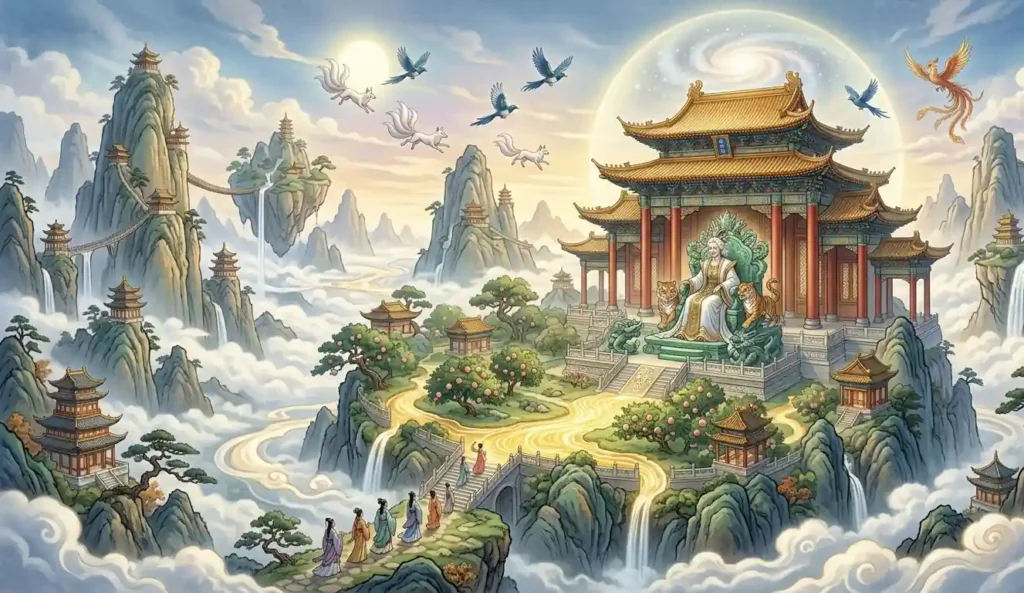
Classical texts describe Kunlun’s mythological form with extraordinary specificity. The Shanhaijing (Classic of Mountains and Seas) and later Daoist texts paint a picture that’s part architectural wonder and part natural impossibility:
The physical description includes:
- Nine-tiered jade palace complexes on the mountain’s summit
- Jade pools and jade springs producing waters with immortality-conferring properties
- Gardens of miraculous herbs growing at altitudes where no ordinary plants survive
- Rivers of fire surrounding the mountain’s approaches are a natural barrier that only the truly exceptional can cross
- A forest of jade trees bearing fruits that sustain immortal life
The architectural specificity is interesting. Most sacred mountains in world mythology are described in primarily natural terms: vast, beautiful, otherworldly. Kunlun is consistently described with the kind of architectural and spatial detail that suggests a genuine location where beings actually live and work.
This reflects Xiwangmu’s mythology. She doesn’t just haunt Kunlun as a nature spirit. She presides over it as a divine ruler with a real court, real administrative functions, and real relationships with the immortals who inhabit or visit the mountain.
The Jade Pool
The Yaochi (Jade Pool or Jasper Pool) is the most specifically important location on Kunlun, the pool near Xiwangmu’s palace that produces waters associated with immortality and where the great divine gatherings take place.
The Jade Pool is where Xiwangmu receives worthy guests, including the mythological King Mu of Zhou, one of Chinese mythology’s most interesting mortal visitors to the divine realm.
King Mu’s visit to Kunlun, recorded in the Mu Tianzi Zhuan (Account of the Son of Heaven Mu), a classical text of uncertain date, is one of Chinese mythology’s most ancient accounts of human-divine encounter. He drove his eight famous horses to Kunlun, met Xiwangmu at the Jade Pool, was received with songs and feasting, and left with the specific quality of encounter that only Kunlun enables: a genuine meeting with the divine, on the divine’s home ground.
The Divine Peach Garden
The Pantao Yuan (Flat Peach Garden) on Kunlun is where the immortality peaches grow, the trees that produce peaches ripening on 3,000, 6,000, and 9,000-year cycles, each tier conferring a progressively more complete immortality.
The garden’s location on Kunlun isn’t incidental. The axis mundi, the cosmic center where heaven and earth are most directly connected, is the correct location for the substances that bridge the mortal and immortal conditions.
Immortality grows at the world’s center. To reach immortality’s source, you must reach the world’s center. The geography encodes the theology.
The Journey to Kunlun: What it Represents
Who Gets to Go
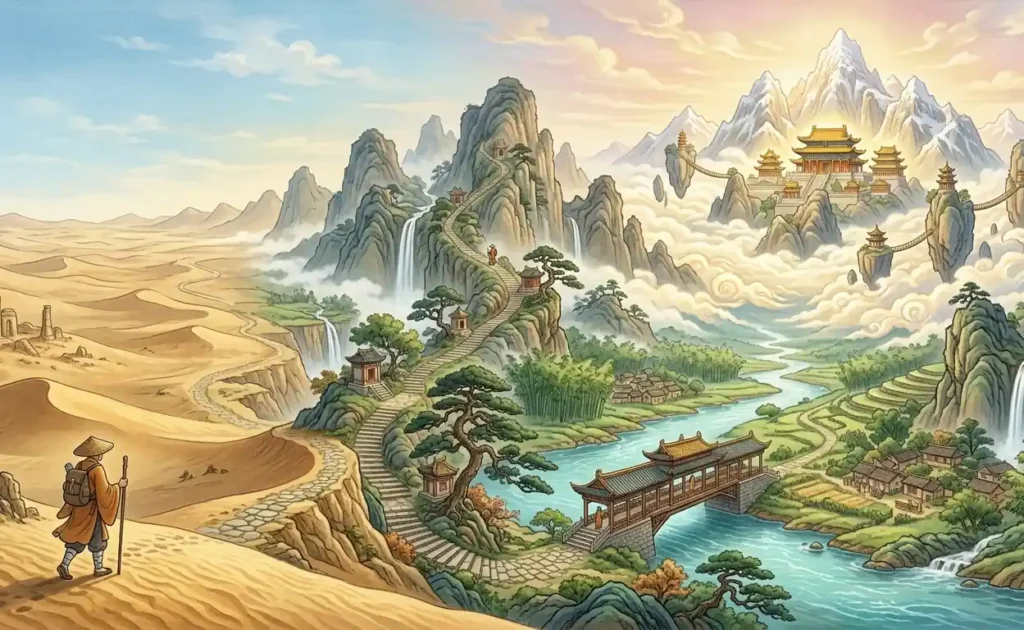
One of the most consistent features of Kunlun mythology is its inaccessibility to ordinary mortals. The mountain is surrounded by barriers:
- Rivers of weak water (Ruò Shuǐ) – water so insubstantial that nothing floats on it, making crossing impossible by ordinary means
- Burning mountains – fire that ordinary travelers cannot pass
- Supernatural guardians whose challenge only the exceptional can meet
- The vast distance itself – Kunlun is located in the mythological west, beyond the world’s ordinary geography
These barriers aren’t obstacles to be overcome by force. They’re filters that distinguish ordinary mortals from those whose cultivation, virtue, or divine appointment makes them worthy of reaching the mountain.
This filtering function is philosophically significant. Kunlun isn’t just the world’s center. It’s the world’s center accessible only to those who’ve already become exceptional enough to deserve it. The journey to Kunlun is itself a measure of spiritual advancement.
The Exceptional Visitors
Chinese mythology records several mortal figures who reached Kunlun, and the list is instructive because it shows what “exceptional enough” actually means in this tradition:
King Mu of Zhou: Exceptional because of his virtue as a ruler and his determination to seek divine wisdom. His visit is recorded as a genuine historical-mythological event in one of China’s oldest texts.
Yi, the divine archer: Who received the immortality elixir from Xiwangmu as reward for his cosmic service in shooting down nine of the ten suns. His receipt of the elixir on Kunlun connects his solar heroism directly to immortality’s source.
Various Daoist cultivators: Whose advanced practice brought them within reach of the mountain’s deeper levels, a category that in classical texts could include practitioners from across Chinese history who achieved the cultivation necessary to approach the divine.
What these figures share isn’t birth status, military power, or wealth. It’s some form of exceptional achievement or virtue that establishes their right to encounter the divine on its own ground.
Eight Immortals: Symbols, Sacred Roles & Daoist Meaning
Kunlun in Daoist Cultivation Tradition
The Mountain as Cultivation Goal
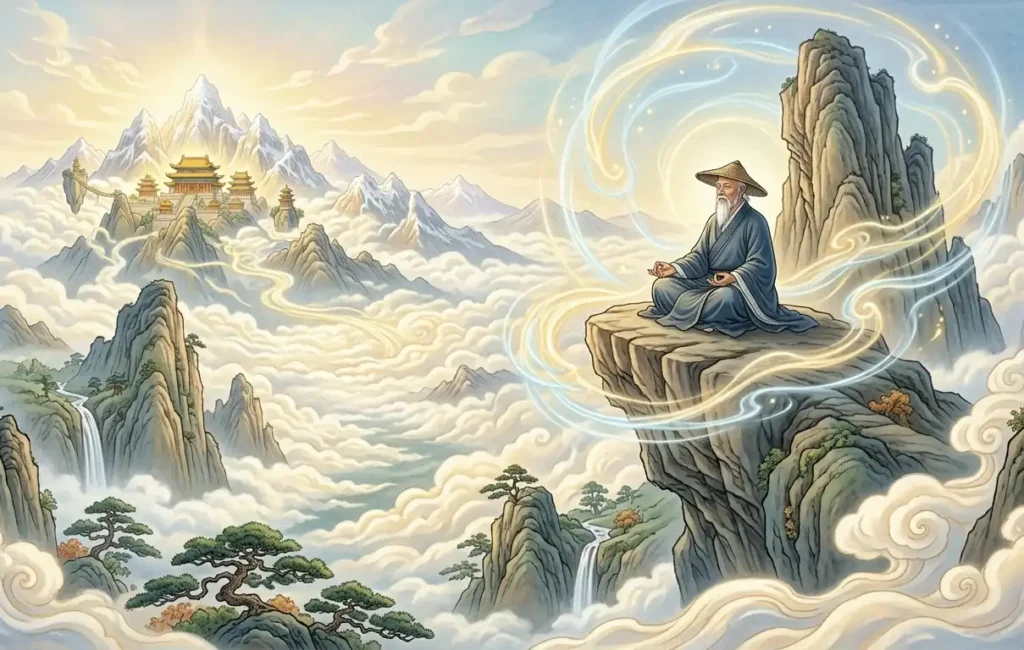
In Daoist cultivation practice, Kunlun functions not just as a mythological location but as a cultivation destination, a place that advanced practitioners might theoretically reach through developing sufficient spiritual refinement.
This isn’t purely metaphorical. The Daoist tradition’s understanding is that the mythological and the physical overlap in specific locations. Sacred mountains are places where the qi concentration and the cosmic connection make advanced cultivation more accessible than elsewhere.
Kunlun represents the apex of this thinking, the location where the cosmic and terrestrial most completely overlap, where the veil between ordinary reality and the Dao’s own nature is thinnest.
The Internal Kunlun
In neidan (internal alchemy) practice, Kunlun also has an internal correspondence. Some traditions identify the crown of the head, the upper dantian, as the body’s internal Kunlun: the axis mundi of the individual microcosm, the point of highest cosmic connection within the practitioner’s own body.
The external Kunlun and the internal Kunlun mirror each other: the world’s centre and the practitioner’s centre are both points where cosmic connection is most available.
This microcosm-macrocosm correspondence is one of the most elegant features of Chinese cosmological thinking, and Kunlun is where it’s expressed most precisely.
Frequently Asked Questions
Are the real Kunlun Mountains and the mythological Kunlun the same place?
They share a name and a western location, but they are distinct. The real Kunlun is a mountain range in western China. The mythological Kunlun is a cosmic center, home to Xiwangmu and source of the four sacred rivers. The real range inspired the myth, but the mythological Kunlun is a cosmological realm.
Can ordinary people visit Kunlun?
The real Kunlun range can be visited by travellers and hikers in western China. The mythological Kunlun, home to Xiwangmu, the Jade Pool, and the peach garden, exists only in myth. For Daoist practitioners, it was both a geographic reference and a state of consciousness reached through cultivation.
What is the Jade Pool (Yaochi) and where is it?
The Yaochi, or Jade Pool, lies near Xiwangmu’s palace on mythological Kunlun. It is where she receives worthy guests and hosts the Pantao Banquet. Its waters are linked to immortality and divine vitality. In folk tradition, sacred pools and lakes named Yaochi are seen as earthly reflections of this cosmological original.
Why is Kunlun associated with the west specifically?
In classical Chinese cosmology, the west is associated with the White Tiger, the Metal element, and the refining, completing energy of autumn. It is also the direction of sunset, marking transition from the active world to what lies beyond. Xiwangmu’s connection to the western wilderness naturally aligns her with a mountain carrying this profound cosmological significance.
What role do the Peaches of Immortality play in Kunlun mythology?
The Peaches of Immortality grow in Xiwangmu’s celestial garden on Kunlun. According to legend, those who eat the ripe peaches gain extraordinary longevity or immortality.
Final Thoughts
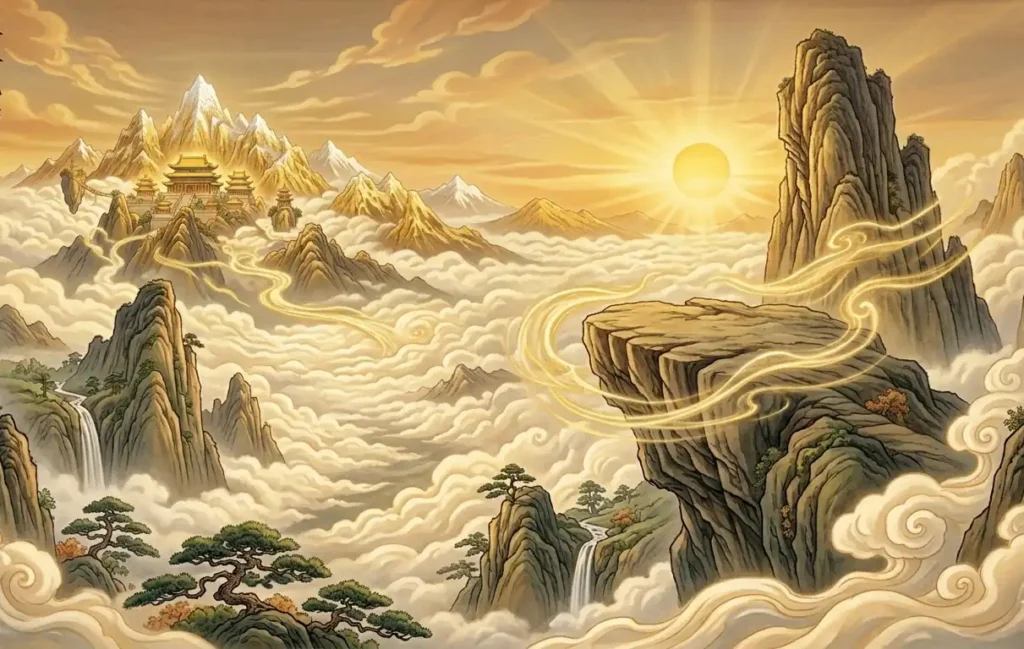
Kunlun stands out even within this remarkable global tradition because of how completely it integrates every dimension of Chinese cosmological thinking. It’s the axis mundi that connects heaven and earth. It’s the hydrological source that connects cosmic provision to agricultural survival. It’s Xiwangmu’s palace where the immortality tradition is governed. It’s the goal of the exceptional mortal who seeks divine encounter. It’s the internal geography of the advanced practitioner’s own body.
All of those functions, in one mountain. The real range in western China provided the geographic anchor. The mythological tradition built the cosmos around it.
That’s sacred geography at its most complete. And it’s still there, both the real mountains and the mythological ones, waiting for whoever is exceptional enough to reach them.
Related Articles
- Pantao Banquet: Queen Mother of the West’s Heavenly Feast
- The Peaches of Immortality: The Sacred Fruit of Eternal Life
- Yao Chi: The Sacred Jade Pool of Xiwangmu & Chinese Myth
- Xiwangmu vs Jade Emperor: Who is More Powerful in Chinese Myth?
References
- Kohn, Livia. Daoism and Chinese Culture.
- Shanhaijing (Classic of Mountains and Seas).
- Shiji (Records of the Grand Historian).
- Huainanzi
- Transcendence and Divine Passion: The Queen Mother of the West in Medieval China – Suzanne Elizabeth Cahill
- Fabrizio Pregadio – The Encyclopedia of Taoism.
- Mircea Eliade – The Sacred and the Profane.
- Mu Tianzi Zhuan (Account of King Mu).