
 By
By Quick Takeaways:
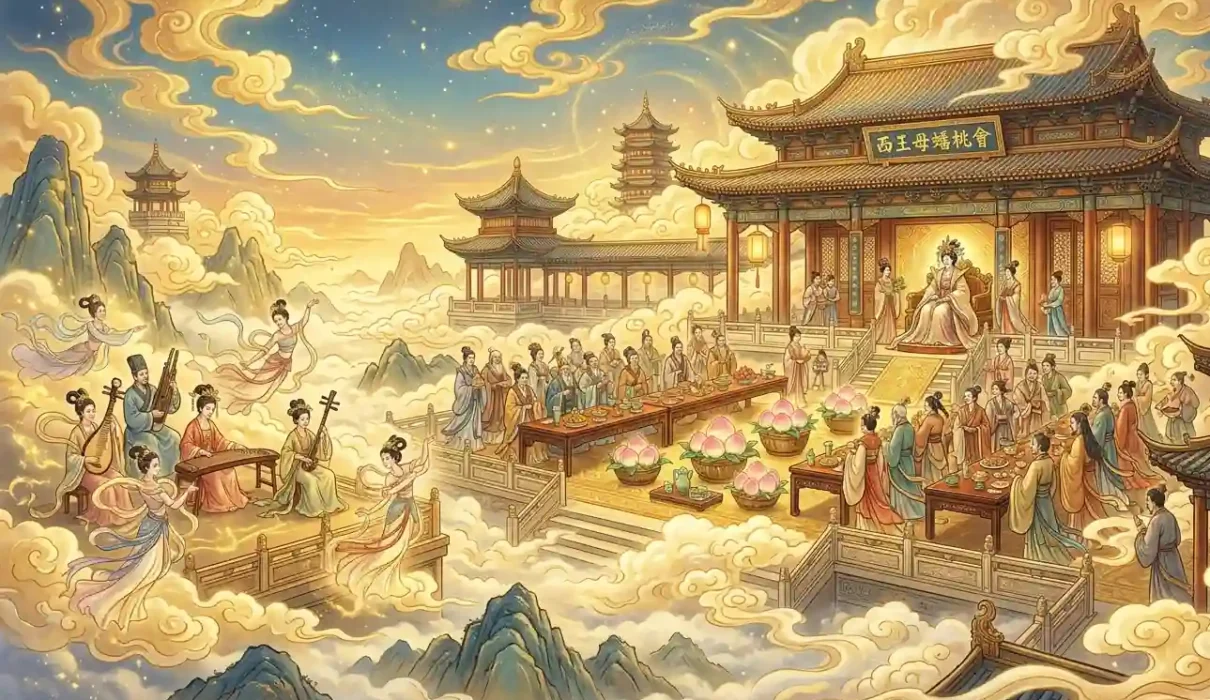
- The Pantao Banquet (Pántáo Shènghuì) is a divine feast held when Xiwangmu’s immortality peaches ripen every 3,000, 6,000, or 9,000 years, depending on the tier
- Its primary function is not social entertainment but cosmic renewal. The banquet replenishes the divine vitality of the immortal beings who govern the cosmos
- The guest list encodes the entire Chinese divine hierarchy, who gets invited, at which tier, and reveals each figure’s standing in the divine order
- Sun Wukong’s exclusion from the guest list despite being given a prestigious-sounding garden role was a specific insult that escalated his entire rebellion
- The banquet’s disruption by Sun Wukong was a genuine cosmic crisis: a scheduled maintenance ceremony for the divine order was prevented from occurring
I want to make a case that the Pantao Banquet is one of the most underrated events in Chinese mythology.
Most discussions of it focus on Sun Wukong’s theft, which is understandable, because that’s the most dramatic part. But the theft’s significance only makes sense if you understand what the Pantao Banquet actually is. And what it actually is turns out to be considerably more important than a gathering of gods eating peaches.
The Pantao Banquet is a cosmic maintenance ceremony. And when Sun Wukong disrupted it, he didn’t just steal some fruit. He interrupted the scheduled renewal of the divine beings who keep the universe running.
That’s the detail most accounts miss. Let me fill it in properly.
What the Pantao Banquet Actually is
The Cosmic Renewal Function
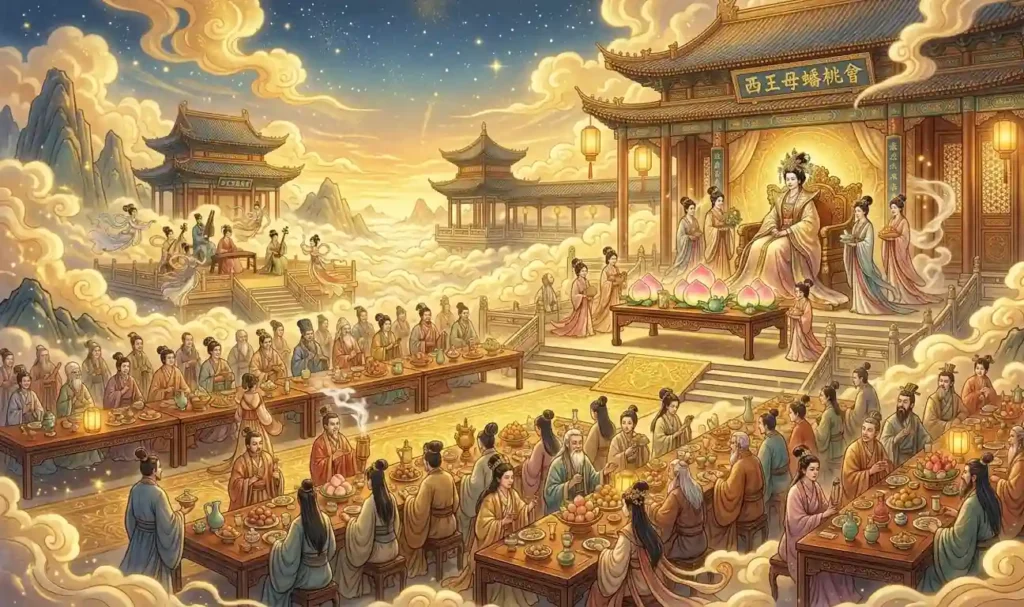
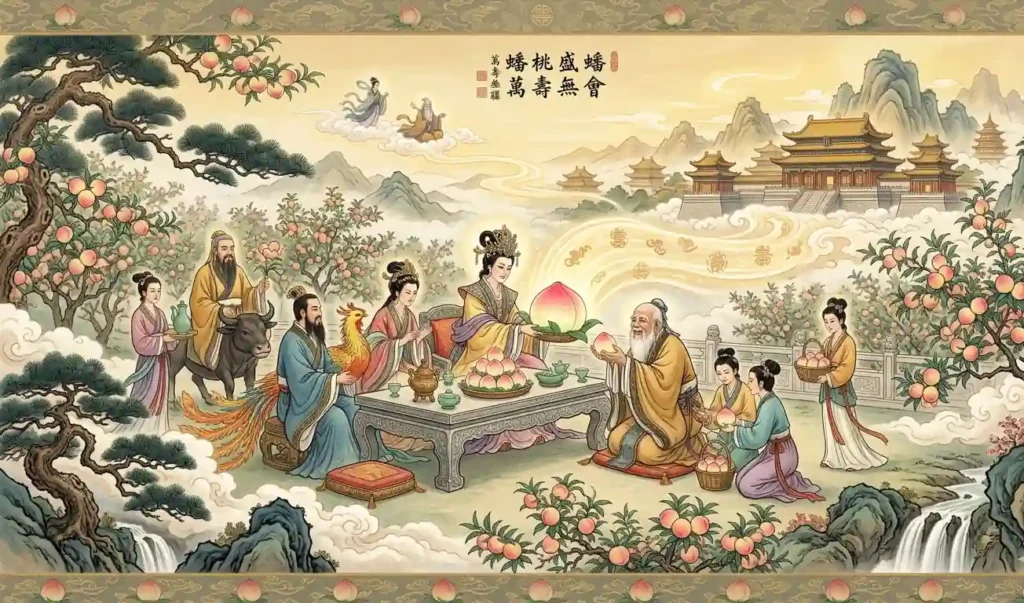
The Queen Mother of the West and Jade Emperor co-host the Pantao Banquet. The banquet occurs at Xiwangmu’s garden on Kunlun Mountain, using Xiwangmu’s peaches. The hosting relationship is cosmologically precise: the supreme administrator of heaven organizes the event, but the event’s substance, the immortality peaches, comes from the tradition’s specific keeper of the immortality domain.
The banquet’s primary function is renewal. The immortal beings who govern the cosmos, divine generals, celestial ministers, star officials, and the exalted figures whose sustained existence maintains the cosmic order don’t maintain their vitality indefinitely without replenishment.
The Pantao feast is how they replenish it. The immortality peaches consumed at the banquet extend and refresh the divine vitality that makes continued governance possible.
This is a cosmological claim worth sitting with: the Chinese divine tradition understands immortality not as a permanent unconditional state but as something that requires periodic renewal. Even immortals need maintenance. The banquet is that maintenance, occurring on the schedule that the peach trees’ ripening cycle dictates.
Why a Feast Specifically
The feast format isn’t arbitrary either. In Chinese culture, the shared meal is one of the most powerful bonding and renewing social acts. Important relationships are maintained through shared eating. Hierarchies are expressed through who eats together and in what arrangement.
The Pantao Banquet is simultaneously cosmic renewal and social renewal, the gathering of the heavenly court in a specific ritual configuration that reinforces the relationships and hierarchies that make collective governance possible.
The feast maintains not just individual immortal vitality but the social fabric of the divine order itself.
The Ripening Cycles: Three Grades of Banquet
The Timing Determines Everything
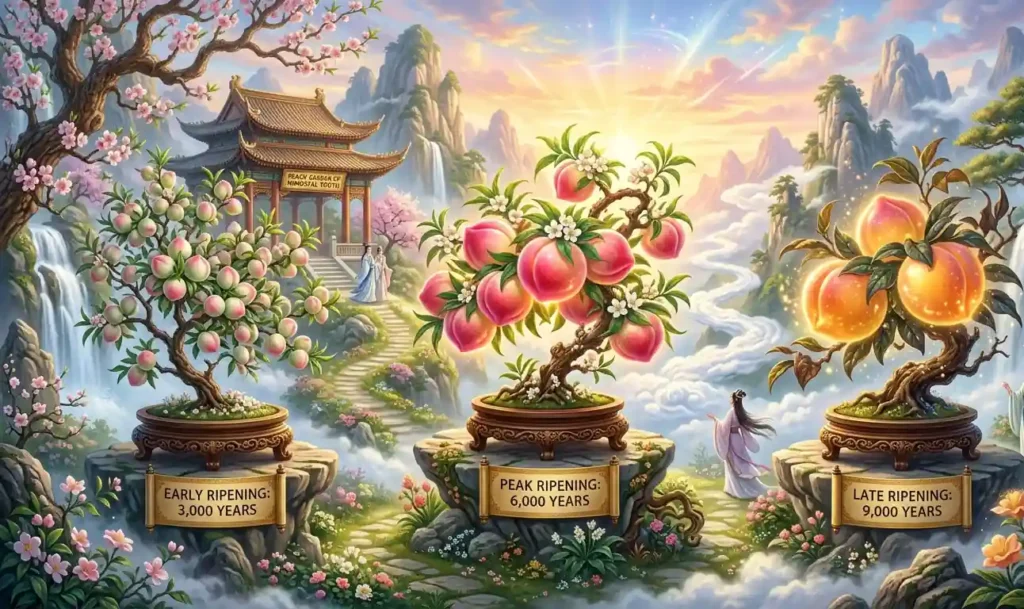
The Pantao Banquet doesn’t happen on a fixed calendar schedule. It happens when Xiwangmu’s peaches ripen, and different tiers of peaches ripen on different timescales:
The 3,000-year tier: When the first-tier peaches ripen, a banquet is held at which the immortals and divine figures appropriate to this tier of fruit receive its benefits.
The 6,000-year tier: A more significant banquet, with correspondingly more exalted guests and more profound renewal.
The 9,000-year tier: The most sacred banquet, held when the supreme peaches ripen, attended by the highest divine figures and conferring the most complete immortal renewal. This is the banquet that Sun Wukong disrupted.
The ripening-based schedule means the Pantao Banquet isn’t predictable by ordinary cosmic time. It happens when the natural cycle of the divine peach trees determines. This makes the disruption of any specific banquet particularly significant: there won’t be another opportunity for thousands of years.
The Guest List: Who Gets Invited
Why the Guest List Matters
Who attends the Pantao Banquet at which tier is one of Chinese mythology’s most specific expressions of divine hierarchy, and it’s more revealing than most explicit hierarchy descriptions precisely because it’s expressed through the intimate language of shared dining.
You can tell everything about a social structure by looking at who eats together at the most important occasions.
The Invited Figures
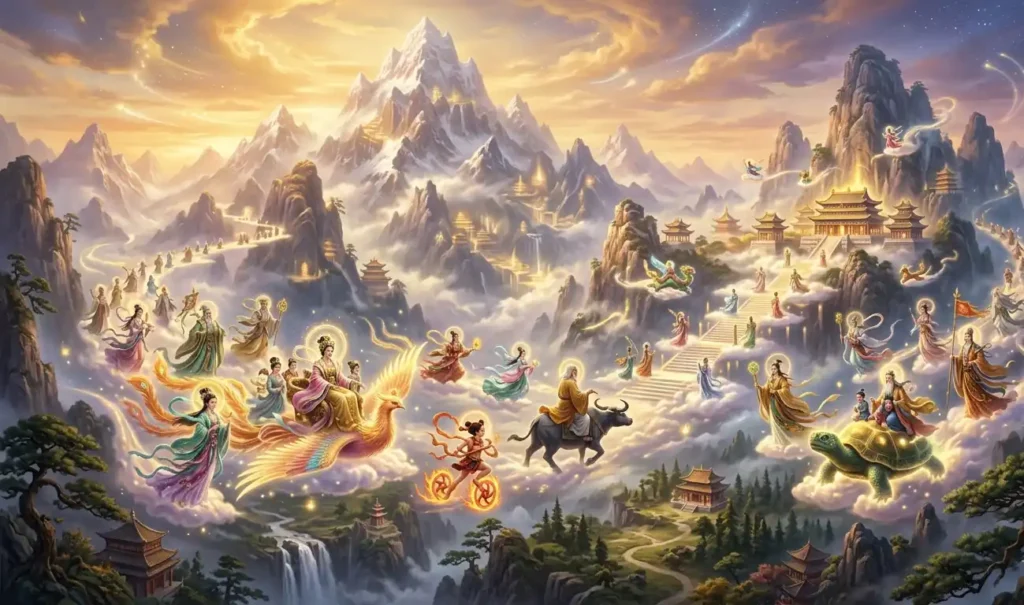
The classical accounts describe the most significant Pantao Banquet, the 9,000-year tier as attended by:
- The Three Pure Ones (Sanqing): Yuanshi Tianzun, Lingbao Tianzun, and Daode Tianzun – the highest tier of the Daoist theological hierarchy
- The Four Heavenly Kings: The directional guardians of the divine court
- The Eight Immortals: He Xiangu, Lü Dongbin, Li Tieguai, and their companions
- The Five Elders of the Five Regions: Cosmic governors of the five elemental directions
- Xiwangmu herself: As the host and garden’s mistress
- Various celestial ministers and divine officials: Whose standing merits inclusion at this tier
This guest list encodes the entire Chinese divine hierarchy in a single gathering. The Three Pure Ones’ presence confirms that even the transcendent metaphysical tier participates in the renewal ceremony. The Eight Immortals’ presence confirms that achieved cultivation grants access to the highest divine gatherings.
The Notable Absences
Who doesn’t get invited is as revealing as who does.
Local earth gods, village deities, and lower-tier divine officials receive fruit from lower-tier harvests at lesser occasions, not from the supreme banquet. The guest list filtering reflects the specific grade of immortal vitality that each being needs and can receive.
And then there’s the specific absence that drove the crisis: Sun Wukong.
Sun Wukong’s Exclusion: The Insult That Changed Everything
The Specific Slight
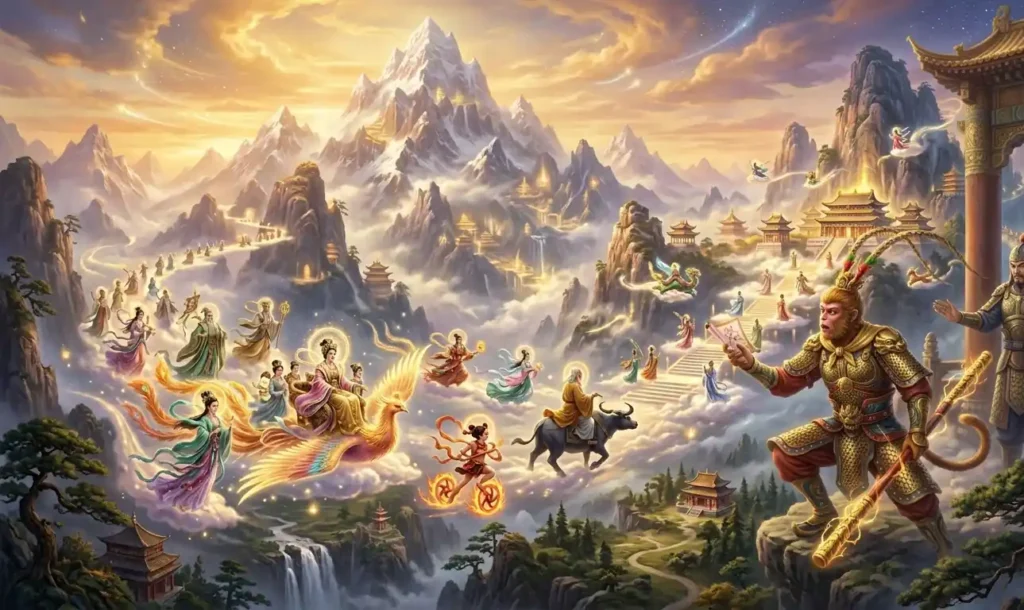
When Sun Wukong was causing problems in the divine court with his Great Sage Equal to Heaven demands, the Jade Emperor offered him a position: Superintendent of the Pantao Garden. A grand-sounding title, an important location, genuine responsibilities.
What he wasn’t offered was a banquet invitation.
The Superintendent manages the garden. The guests eat the fruit. The distinction encodes exactly the hierarchical gap that Sun Wukong’s rebellion was protesting: he’s capable enough to guard the supreme immortality source, but not recognized enough to participate in what that source provides.
This specific exclusion is the Jade Emperor’s administration at its most bureaucratically obtuse. They gave Sun Wukong a role that put him in daily contact with the object of his exclusion. He walked among the peach trees every day, watching the fruit develop, knowing that when they ripened he would be serving a banquet he wasn’t attending.
The Escalation Logic
Understanding this makes Sun Wukong’s subsequent theft considerably more psychologically coherent.
He doesn’t steal the peaches out of pure mischief. He takes them because the denial of the guest invitation was, in his framework, a denial of recognition that his capability warranted. If his power places him above the divine generals who will attend the banquet, the logic of capability-equals-standing that Sun Wukong operates on demands that he should be at the table.
Since he’s not invited to eat legitimately, he eats illegitimately. The form of the protest matches the nature of the insult perfectly.
Twenty years of mythology has made me attentive to the specific logic of divine provocations. Sun Wukong’s theft isn’t random. It’s the direct response to a specific institutional message about his standing.
The Crisis: What Disruption Actually Meant
The Banquet That Didn’t Happen
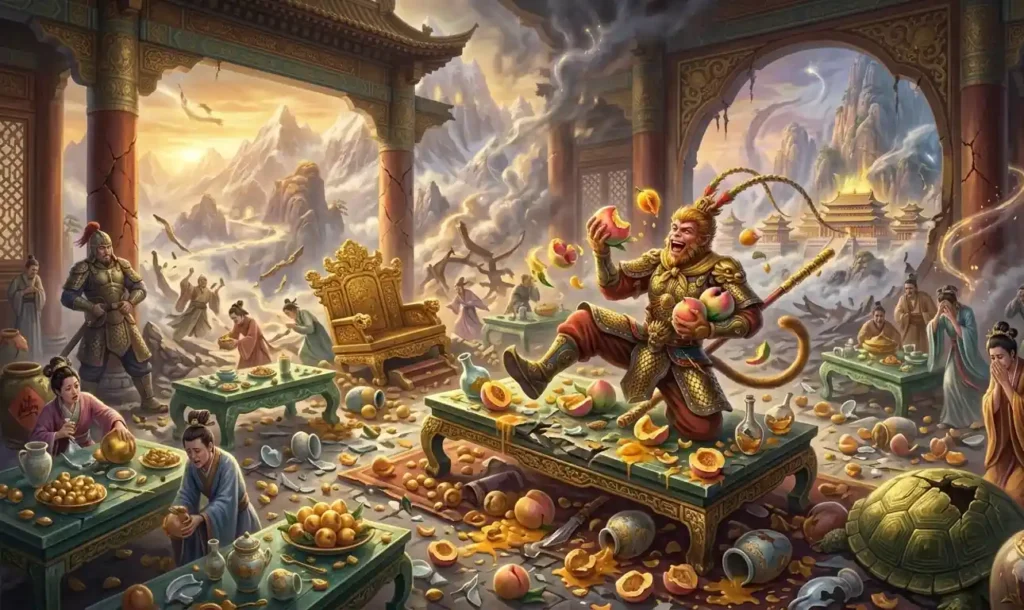
When Xiwangmu discovered the extent of the damage peaches consumed, wine drunk, and Laozi’s pills eaten as an encore, the immediate problem wasn’t the loss of the fruit itself.
The immediate problem was that the 9,000-year tier Pantao Banquet couldn’t happen.
The divine beings who were supposed to receive renewal at this banquet, the Three Pure Ones, the Eight Immortals, the highest divine figures, didn’t get it. The scheduled cosmic maintenance cycle was broken.
The next opportunity for this tier of renewal is 9,000 years away. From a cosmic governance perspective, this is not a minor inconvenience.
Why the Divine Court Mobilized So Completely
This context explains why the divine court’s response to Sun Wukong was so total. Every available general was sent. Multiple waves of celestial armies were deployed. Laozi himself participated in the suppression attempt.
The response looks disproportionate to a theft story. It makes complete sense as a response to the disruption of a cosmic maintenance ceremony.
When the people responsible for maintaining the universe’s functioning have their renewal cycle broken by a single being’s deliberate action, that being becomes the highest priority problem in the entire divine administration.
Journey to the West: The Chinese Classic Behind Fiction
The Banquet in Broader Chinese Tradition
The Birthday Banquet Echo
The Pantao Banquet echoes throughout Chinese folk religious practice in the tradition of birthday banquets for elderly people, particularly milestone birthdays at 60, 70, 80, and beyond.
At these celebrations, the birthday peach bun appears as the centerpiece offering, shaped to evoke the divine peach, expressing the wish for the birthday person to partake in the longevity the Pantao represents. The private birthday table is a domestic reflection of the cosmic feast.
This parallel between the divine banquet and the human birthday celebration reflects Chinese mythology’s characteristic movement between cosmic and intimate scales. The most important divine event and the most personal human celebration share the same symbolic vocabulary.
Xiwangmu’s Role Versus the Jade Emperor’s Role
The Pantao Banquet clarifies something that can seem ambiguous about the relationship between Xiwangmu and the Jade Emperor: who actually runs this event?
The Jade Emperor convenes and hosts it. Xiwangmu’s garden and peaches make it possible. Neither could hold the banquet without the other, which is a precise expression of how their cosmic domains relate.
The Jade Emperor governs the structure within which everything operates. Xiwangmu governs the specific provision of immortality. The banquet requires both: the administrative framework and the actual substance. Their collaboration at the Pantao is the divine court’s most complete expression of complementary authority in action.
Frequently Asked Questions
Why is the banquet called Pantao specifically?
Pantao refers to the peach variety borne by Xiwangmu’s divine trees. Often depicted as rounder and more richly colored than ordinary peaches, it is sometimes called the flat peach. The name distinguishes the sacred fruit from cultivated peaches while evoking broader cosmological imagery in Chinese tradition.
How often does the Pantao Banquet occur?
The banquet occurs when the peaches ripen on a 3,000, 6,000, or 9,000-year cycle, depending on which tier of trees is producing. Different tiers of gathering happen on different timescales. The most significant banquet, the 9,000-year tier that Sun Wukong disrupted, is by definition the rarest and most important.
Was Sun Wukong ever invited to a Pantao Banquet after his rehabilitation?
The texts do not explicitly address this, but his elevation to Victorious Fighting Buddha at the end of Journey to the West, a title reflecting genuine cosmic standing, would logically place him among those who attend at the appropriate tier. His exclusion is resolved through earned wisdom and cosmic recognition rather than demonstrated capability alone.
Does the Pantao Banquet still occur after Sun Wukong’s disruption?
In the mythology’s internal logic, yes. The gardens were eventually restored, new peaches would ripen in later cycles, and the divine court could hold another banquet when conditions allowed. Sun Wukong’s disruption was catastrophic but not permanent. The cosmic order is resilient rather than fragile: it can be interrupted, yet ultimately restores itself.
Are the peaches based on a real fruit?
Yes. The mythological pantao is linked to a real variety of peach known as the flat peach or donut peach, though the divine fruit possesses supernatural qualities far beyond those of ordinary peaches.
Final Thoughts
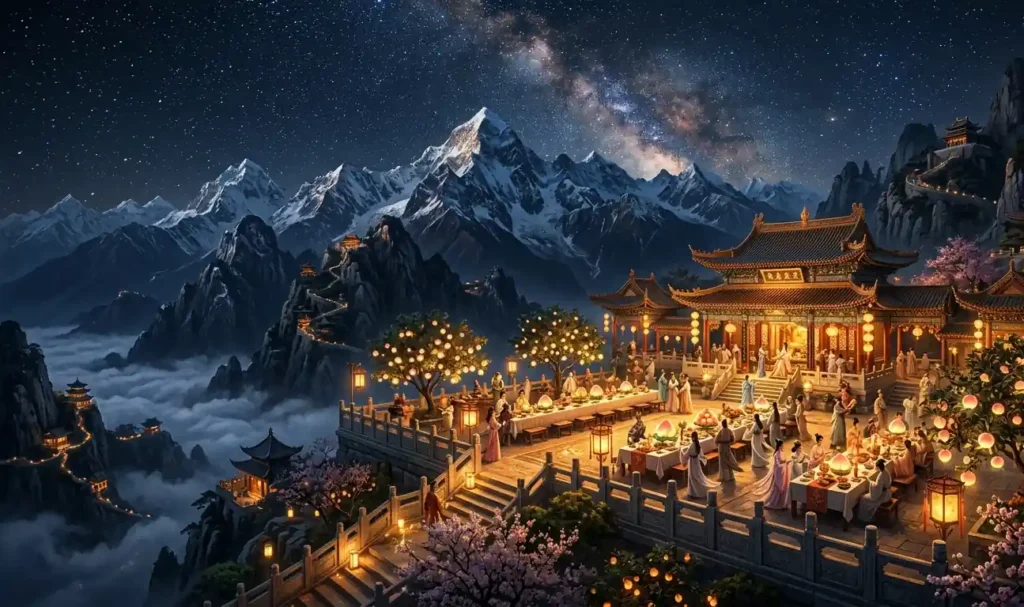
The Pantao Banquet rewards close attention in a way that its surface description of gods eating immortality peaches doesn’t quite suggest.
What you find when you look closely is a carefully constructed cosmic mechanism: the scheduled renewal of divine vitality that makes continued governance possible, hosted by the supreme administrator in collaboration with the specific keeper of the immortality domain, attended by the complete hierarchy of divine beings in a guest list that expresses their standing precisely.
Sun Wukong’s disruption of this feast is one of Chinese mythology’s most significant acts of cosmic disruption, not because he stole some fruit, but because he prevented a maintenance ceremony that the universe depends on. The divine court’s total mobilization against him makes complete sense in this context.
And then there’s the birthday peach bun on the celebration table, the most intimate expression of the same mythology that produced the cosmic feast. Twenty years of mythology have shown me that the most durable mythological ideas are the ones that operate equally well at cosmic and personal scales simultaneously.
The Pantao Banquet does exactly that. A feast for the gods. A wish for a long life. The same symbolic vocabulary, the same underlying idea, expressed at completely different scales.
That’s mythology working exactly as it should.
Related Articles
- Yao Chi: The Sacred Jade Pool of Xiwangmu & Chinese Myth
- The Peaches of Immortality: The Sacred Fruit of Eternal Life
- Kunlun Mountains: The Sacred Home of China’s Queen Mother
References
- Birrell, Anne. Chinese Mythology: An Introduction.
- Kohn, Livia. Daoism and Chinese Culture.
- Shanhaijing (Classic of Mountains and Seas).
- Journey To The West
- The Taoist Body – Kristofer Schipper
- Eberhard, Wolfram. A Dictionary of Chinese Symbols.
- Lewis, Mark Edward. The Construction of Space in Early China.
- Mu Tianzi Zhuan
- Daozang – Daoist Canon
- The Legend of Chang’e and Hou Yi
- Yun Ji Qi Qian
Written by Batin Khan | Mythology and philosophy reader across world cultures (20 years), Cultivation novels reader for the past 10 years | Specialist in Xianxia, Eastern and Western mythological traditions, and fantasy worldbuilding