 By
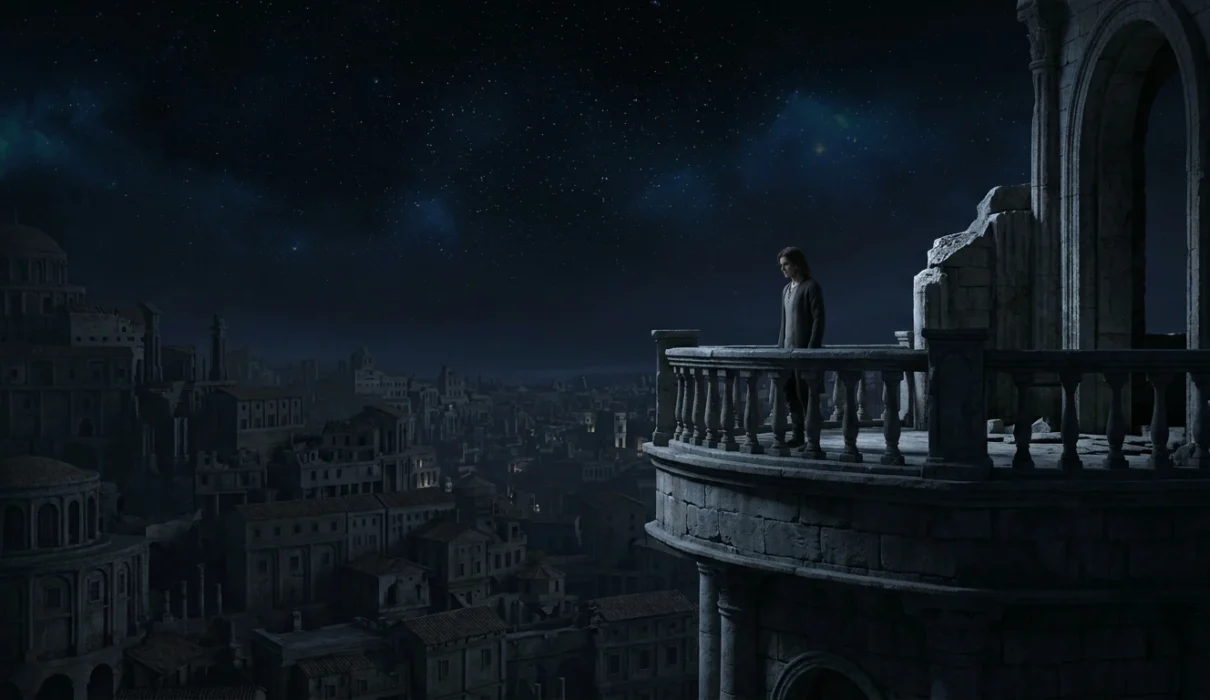
By Eos asked Zeus to make Tithonus deathless. She got exactly that and forgot to ask for the second thing.
Greek had separate words for these. Athanatos meant deathless. Agēraos meant ageless. They were understood as two distinct gifts requiring two distinct requests, and the entire Tithonus myth exists to demonstrate what happens when you secure one without the other.
Modern fantasy hands characters both in a single package, making them immortal, and then wonders why they stop being interesting.
The Myth That Names the Problem
What Eos Truly Asked For
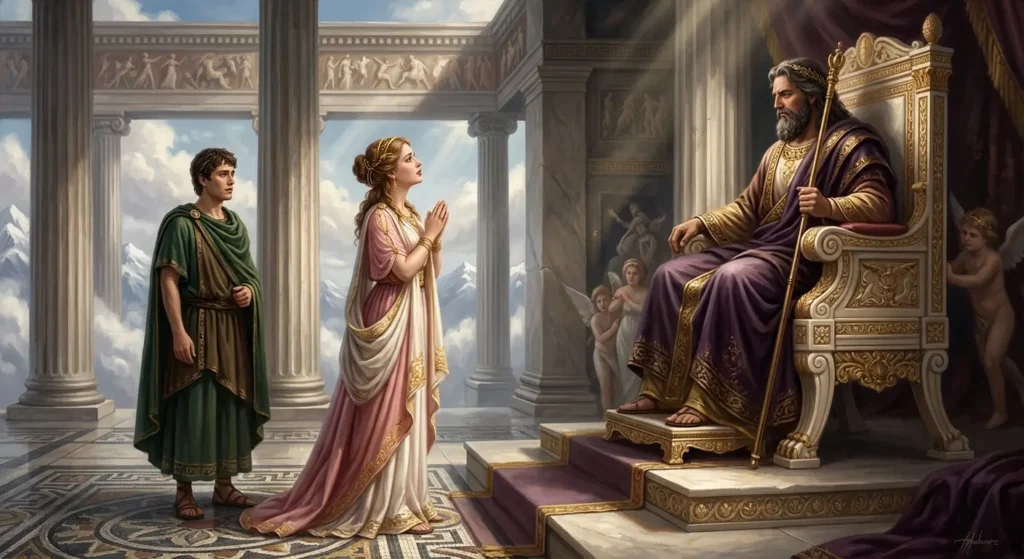
The fullest early account appears in the Homeric Hymn to Aphrodite, lines 218 to 238, composed around 600 BCE. Eos abducts Tithonus, a Trojan prince and brother of Priam, and asks Zeus to make him immortal so they can be together always.
Zeus grants precisely what she requested. But she does not ask that he remain young. The poem then describes his body succumbing to old age until he can no longer move.
The hymn frames her omission as a consequence of being distracted by love, which is a human failure of contract drafting.
What Happened Next
Tithonus aged. Kept aging. The hymn describes him eventually unable to move or lift his limbs.
Eos’s solution is one of the more quietly devastating images in Greek literature. She laid him in a room and shut the shining doors, and there he babbles endlessly, with none of the strength he once had in his supple limbs.
She didn’t stop loving him. She just closed the door.
The Cicada Ending
Later versions have Eos transform him into a cicada, an insect the Greeks associated with longevity and morning song.
Scholar Richard Janko has argued that the hymn’s unexplained reference to Tithonus’s ceaseless voice shows its composer already knew the cicada version and deliberately suppressed it, because a transformation offering even partial relief would have undercut the warning Aphrodite needed the story to deliver.
Narrative Runs on Scarcity
Every Dramatic Choice Spends Something Limited
Here’s the mechanism underneath the title’s complaint, and I think it’s more precise than the usual answer.
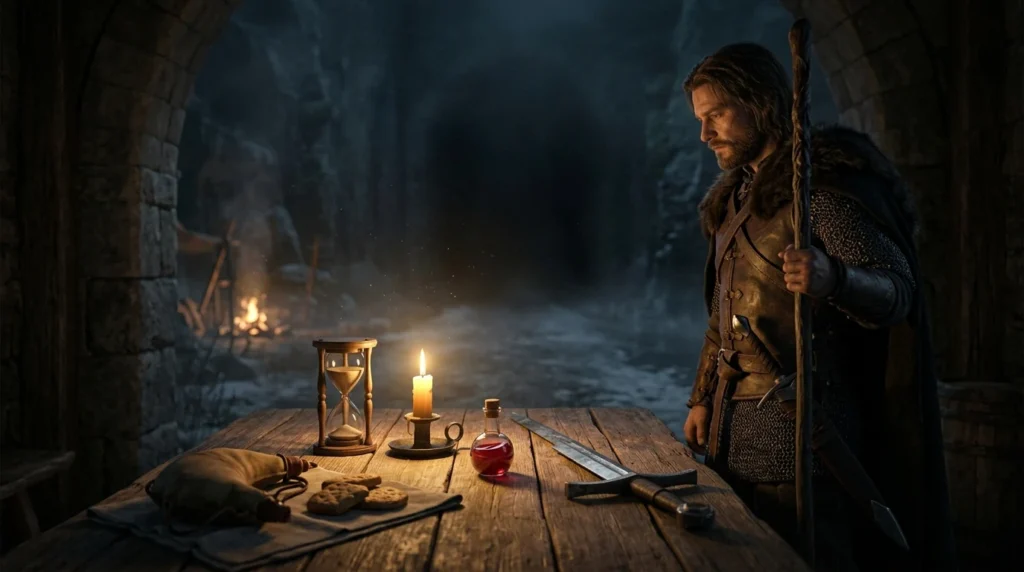
A character’s decision only reveals anything about them if it costs something. Choosing to help a friend matters because the time, risk, or resource spent could have gone elsewhere. Remove the cost and the choice stops carrying information.
Deathless Plus Ageless Removes All Scarcity At Once
An immortal, ageless character has unlimited time. No problem is urgent, because it can be addressed next century instead.
They have unlimited attempts. Failure costs nothing, since there’s always another try.
They have unlimited capability, since nothing deteriorates. And they face no deadline, ever, on anything.
Why “No Stakes” Is the Wrong Diagnosis
Readers usually say immortal characters lack stakes, and I’d push slightly past that.
Death isn’t the only stake available. Plenty of gripping fiction runs on characters who are never in mortal danger. What breaks is scarcity, and death is simply the most obvious scarcity to remove.
Take away the possibility of running out of anything and there’s nothing left for a choice to trade against.
Restoring Scarcity Along a Different Axis
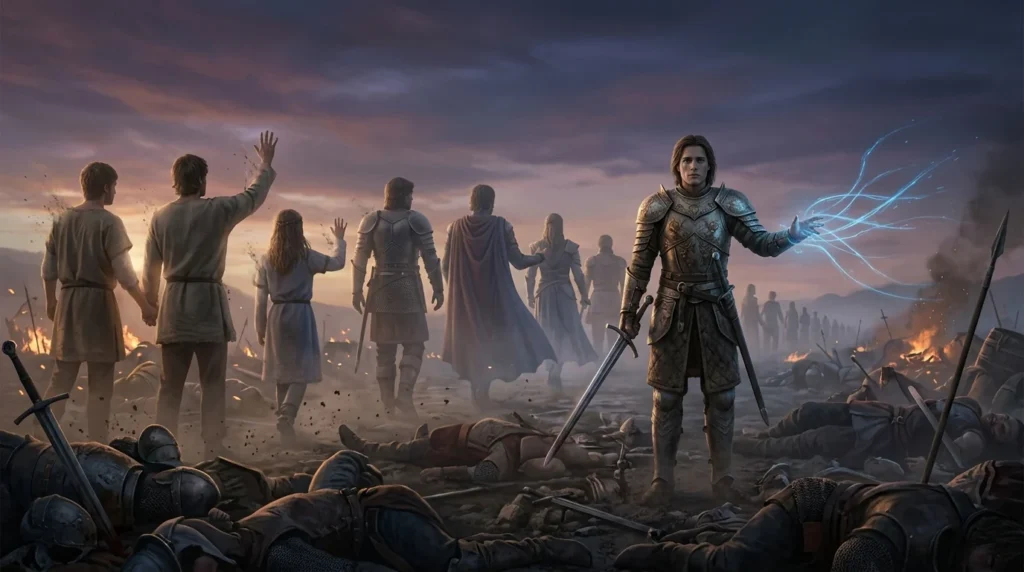
Tithonus: Scarcity of Capability
He can’t die and he can’t function. What’s running out is his body, continuously, forever.
That’s a genuine, escalating deficit, and it’s why he remains one of the most disturbing figures in Greek mythology despite doing absolutely nothing.
The Olympians: Scarcity of Freedom
The Greek gods are deathless and ageless both, and they’re still constrained, which is the detail that makes them work.
In Book Sixteen of the Iliad, Zeus grieves over the impending death of his own son Sarpedon and considers saving him. Hera warns that doing so would invite every other god to rescue their favorites, unraveling divine order entirely.
Zeus lets his son die. The king of the gods, deathless and ageless, has a scarcity of permissible action, and that constraint is what makes the scene land.
Swift’s Struldbrugs: Scarcity of Social Position
Jonathan Swift built a version of Tithonus’s condition into Book Three of Gulliver’s Travels, on the island of Luggnagg.
The struldbrugs are born immortal, identifiable at birth by a mark, and they age without dying. Swift adds a mechanism the Greek myth doesn’t have. At eighty, they’re declared legally dead, losing the ability to hold property.
Society itself becomes the scarce resource. They can’t participate in it, can’t own anything, and can’t leave.
Tolkien Solved This Three Different Ways
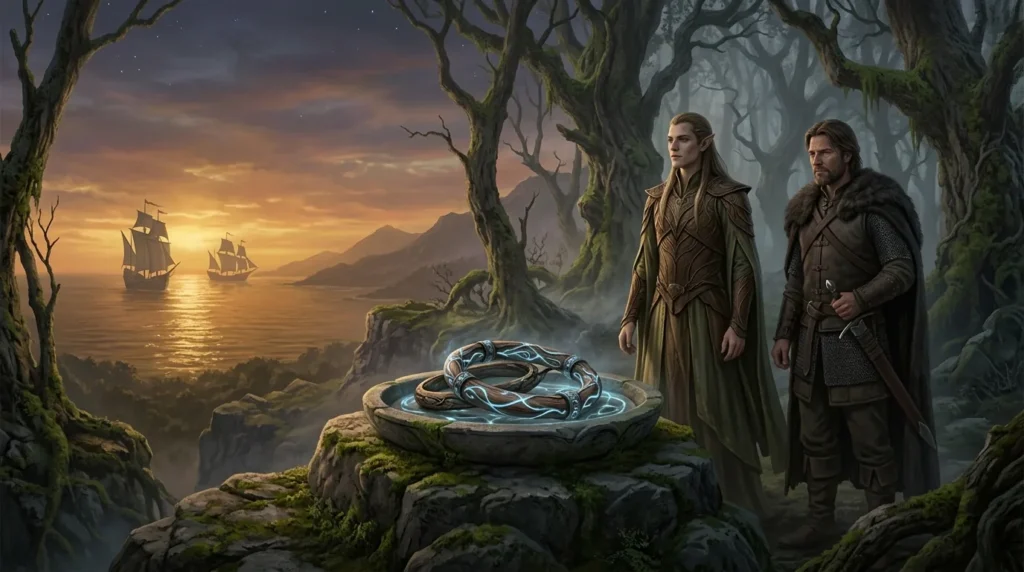
The Elves Are Bound to the World
Tolkien’s elves don’t die of age, and they’re not free. Their immortality is tied to the life of Arda itself, meaning they can’t escape the world, only endure it.
Galadriel’s phrase for what this feels like is fighting the long defeat, watching everything they love to diminish across ages while being unable to either save it or depart from it.
Elves in Tolkien can also die of grief, which is a scarcity mechanism operating directly on the thing immortality was supposed to protect.
Death Is Explicitly Called a Gift
The most radical move in Tolkien’s cosmology is calling human mortality the Gift of Men, something the elves envy rather than pity.
Humans leave the world when they die and go somewhere beyond it. Elves cannot. Immortality, in this framework, is the lesser inheritance, and the whole legendarium takes that position seriously rather than treating it as a consolation.
The Istari Were Deliberately Limited
Gandalf is a Maia, a spirit of enormous power, and he arrives in Middle earth wearing an old man’s body.
Tolkien’s own material indicates this embodiment was deliberate, imposed so the Istari would experience real weariness, fear, and physical limitation rather than operating as unconstrained powers.
Gandalf can be exhausted. Gandalf can be wounded. Gandalf falls in Moria. A being who couldn’t do any of those things wouldn’t be a character at all.
The Ring Stretches Rather Than Extends
One line from Fellowship does more work on this subject than most fantasy novels manage in full.
Bilbo describes himself as thin, sort of stretched, like butter scraped over too much bread. The Ring extends his life without adding anything to it, and the scarcity it creates is a scarcity of self.
Same quantity of person, distributed across too much time.
A Test You Can Apply
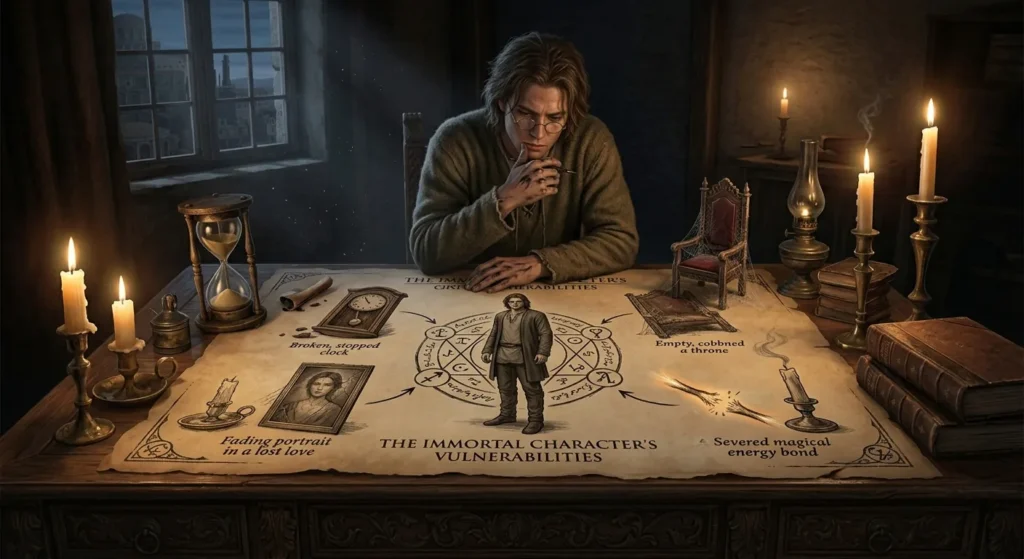
Four questions will tell you within a page whether an immortal character is going to work.
What is scarce for them? If the honest answer is nothing, the character is inert.
What can they lose and not get back? Reputation, a specific relationship, their own coherence, a capability that degrades.
What does waiting cost them? If waiting costs nothing, they have no reason to act in any given scene.
What are they running out of? Tithonus runs out of body. Tolkien’s elves run out of world. Struldbrugs run out of legal existence.
Any answer works. No answer is the problem.
Sometimes the Boredom Is the Point
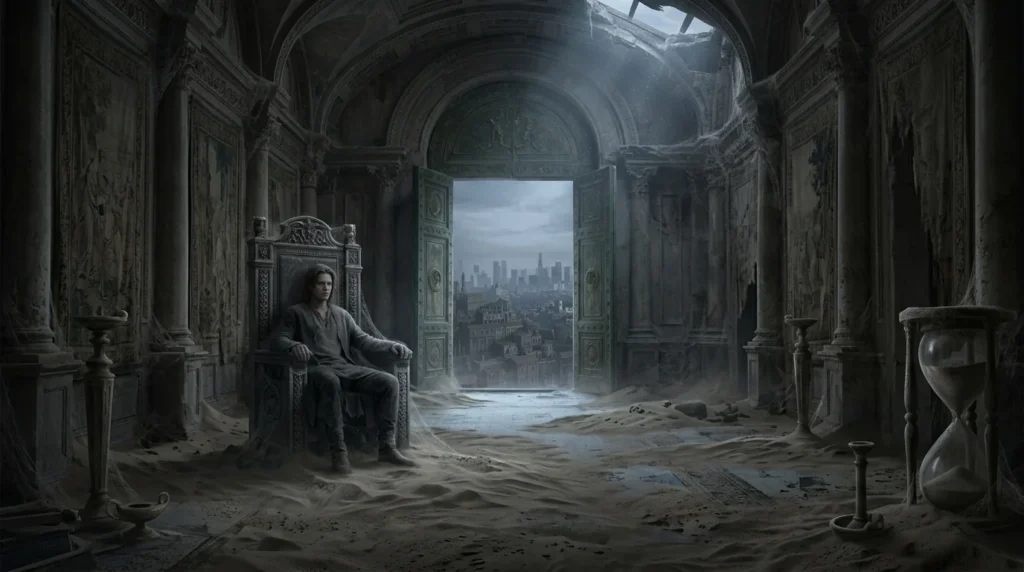
Tithonus in his sealed room is truly inert, and that’s precisely the horror the myth is delivering.
Sappho used him in Fragment 58, a poem substantially recovered from papyrus in 2004 and translated into English by Martin West the following year, to reflect on her own aging. Tennyson opened his Tithonus with the woods decaying and falling, and built the entire poem around a speaker who wants to die and can’t.
Neither is trying to make Tithonus interesting as an active character. They’re using his stasis as a mirror, which is a legitimate use of a figure with no scarcity left.
Cosmic Horror Wants Inertness
Lovecraftian entities and their descendants are deliberately indifferent, unchanging, and unmotivated by anything humans recognize.
Their failure to function as characters is the actual effect. Giving one a scarcity would humanize it and destroy what it’s for.
I May Also Be Describing a Modern Problem
There’s a fair objection that ancient audiences didn’t need immortals to be dramatically interesting in the way I’m demanding.
Gods in Homer function partly as explanations for natural and psychological forces, and a Greek audience may not have wanted Zeus to have a character arc.
Applying contemporary expectations about character development to figures who were serving a different purpose entirely is its own kind of anachronism, and I’d rather flag that than pretend my framework is universal.
Frequently Asked Questions
Does Elrond’s family have a choice about immortality in Tolkien’s work?
Yes. The Half-elven were granted a choice between elvish immortality and mortal death, which Elrond and Elros exercised in opposite directions, and which becomes a genuine source of grief in Arwen’s story specifically.
Is the Wandering Jew legend related to the Tithonus tradition?
They share the structure of undesired deathlessness, though the Wandering Jew is a medieval Christian legend involving a curse of endless wandering rather than physical decay, making the scarcity one of rest and belonging rather than bodily capability.
Did any ancient Greek actually seek immortality, or was it purely mythological?
The myths generally treat mortal attempts to obtain divine privileges as dangerous overreach. Greek religious practice focused more on favorable afterlife outcomes, as in the Eleusinian Mysteries, than on avoiding death in the body.
How does vampire fiction handle the scarcity problem?
Usually through dependency and moral cost. A vampire needs blood, which creates a recurring resource constraint, and obtaining it typically requires harming someone, which creates a moral scarcity that accumulates over centuries.
Is Tithonus depicted in surviving Greek art?
Yes. Fifth century Athenian vase painting includes pursuit scenes showing him as a lyre holding youth, notably an oinochoe by the Achilles Painter dated roughly 470 to 460 BCE, depicting him before rather than after his decline.
Final Thoughts
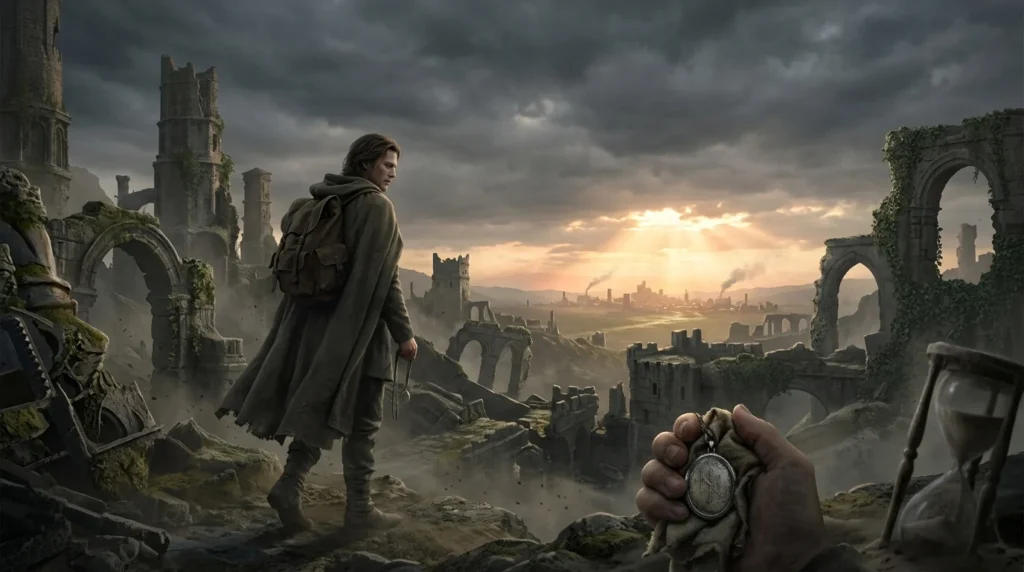
Eos got the wording wrong and spent eternity listening to her husband babble behind a closed door.
Modern fantasy gets the wording right and hands characters both gifts at once, then discovers there’s nothing left to write about them. The Greeks needed two words for a reason, and the reason was that only one of those gifts is any good on its own.
Related Articles
- Why Daoist Masters Pursued Immortality [The Real Reasons]
- Eight Immortals: Symbols, Sacred Roles & Daoist meaning
- How to Become Immortal According to Chinese Myth & Daoism
- How Fast Would You Die in a Cultivation Novel World?
- The Peaches of Immortality: The Sacred Fruit of Eternal Life
- How Great Fantasy Writers Adapt Mythology Without Stealing
References
- Hymn 5 to Aphrodite
- Tithonus, Eos and the cicada in the Homeric Hymn to Aphrodite
- Homer, The Iliad, Book 16
- Gulliver’s Travels
Written by Batin Khan, a curious free spirit who loves reading and exploring the worlds of fantasy, mythology, and ancient stories. Through this blog, Batin hopes to share that sense of wonder with readers while building an exciting future along the way.